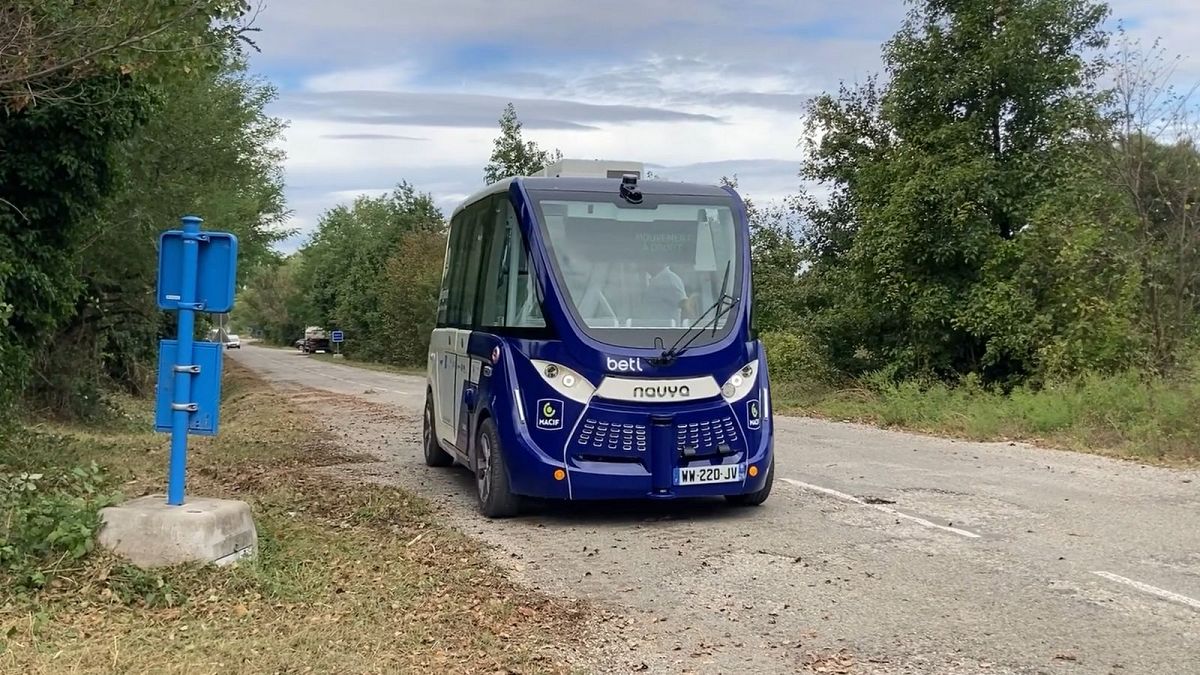
Driverless Shuttles: A New Era of Mobility in Rural France

In the picturesque yet sparsely populated region of Val de Drôme – Crest in southeastern France, a quiet revolution is underway. The deployment of self-driving shuttles is transforming the way residents navigate their rural surroundings. This initiative, launched in 2020, is part of a broader European effort to harness automated electric vehicles (EVs) as a viable public transport solution in areas where traditional services are often lacking.
Yann Arnaud, director of responses to customer needs and innovation at the French insurance company MACIF, emphasized the potential of these shuttles during a conversation with Euronews. “We are trying to ensure that this is a new means of travel and mobility for people living in suburban or rural areas,” he stated, highlighting the project’s aim to reduce isolation and improve accessibility.
Driverless shuttle in operation

Technology and Safety

The shuttles operate on a predefined 5 km route, making seven stops over a 20-minute journey. A control operator oversees the operation to ensure safety. Benjamin Beaudet, general director at Beti, the operator of the automated shuttles, explained that the technology aligns with the European vision for automated vehicles. The shuttles “learn” their routes and compare real-time observations with pre-learned data to navigate safely.
In contrast to American and Chinese companies like Waymo, Uber, and Tesla, which focus on self-driving taxis with flexible routes, the European approach prioritizes defined paths, enhancing safety and predictability.

Addressing Rural Needs

The introduction of these shuttles in Val de Drôme – Crest, where the population density is significantly lower than the national average, has been met with positive feedback. Residents appreciate the newfound mobility options, especially in areas where alternatives are limited. Arnaud noted, “The question of acceptability arises when you have the luxury of having other options. When you don’t have a choice, you’re very happy to have [the shuttle].”
This sentiment underscores the potential of driverless vehicles to address mobility challenges in rural areas, particularly for the elderly and those without access to personal transportation.

Challenges and Future Prospects

Despite the promising start, scaling these projects to permanent services remains a challenge. High costs, logistical hurdles, and technological requirements, as outlined in an Open Research Europe article, pose significant barriers. The EU has invested €159 million in research and innovation related to automated mobility since 2021, yet achieving commercial viability continues to be elusive.
The success of initiatives like AVENUE and SHOW, which have conducted pilot projects across Europe, including in Crest, offers hope. However, transitioning from pilot programs to sustainable, everyday solutions requires overcoming substantial obstacles.
As Europe continues to explore the potential of automated vehicles, the experiences in rural France provide valuable insights into the future of mobility. With continued innovation and investment, driverless shuttles could become a cornerstone of public transport in remote areas, offering a greener, more accessible alternative to traditional car use.

More Articles

Getting licensed or staying ahead in your career can be a journey—but it doesn’t have to be overwhelming. Grab your favorite coffee or tea, take a moment to relax, and browse through our articles. Whether you’re just starting out or renewing your expertise, we’ve got tips, insights, and advice to keep you moving forward. Here’s to your success—one sip and one step at a time!

Investopedia’s Guide to Choosing the Best Online Real Estate Schools

Through meticulous research and evaluation, Investopedia offers a comprehensive guide to finding the best online real estate schools.

By |July 5, 2025|Categories: Article, Education, Real Estate|Tags: , |0 Comments

California Bar Exam Faces AI Controversy

The State Bar of California has recently come under fire after disclosing that artificial intelligence was used to develop some of the multiple-choice questions in their February bar exam, stirring up a storm of controversy.

Streamlining Professional Licensing in Pennsylvania: A New Comprehensive Guide

In the heart of Pennsylvania, the Department of State has introduced a comprehensive Licensure Processing Guide aimed at streamlining the application process for various professional licenses. This initiative is designed to provide transparency and efficiency, ensuring that applicants are well-informed about the expected timelines and steps involved in obtaining their licenses.

Navigating Executive Orders: Littler Mendelson’s Tracker

Littler Mendelson P.C. has emerged as a crucial resource for businesses navigating the complexities of executive orders. Their comprehensive Executive Order Tracker offers an insightful analysis of the Trump administration's executive orders, focusing specifically on those impacting labor and employment directives during the First 100 Days.

By |July 5, 2025|Categories: Article, Business, Politics|Tags: , |0 Comments

Turning the Corner on Commercial Real Estate: A Generational Opportunity for Strategic Growth

In a world grappling with high inflation, fluctuating interest rates, and the looming impacts of climate change, the commercial real estate sector stands at a crossroads. According to the 2025 Commercial Real Estate Outlook by Deloitte, this industry is poised for a transformation, offering a generational opportunity for strategic growth.

Controversy Surrounds Chicago Board of Education’s Search for Interim CEO

The Chicago Board of Education has recently narrowed its search for an interim CEO to three candidates, amidst a backdrop of controversy and scrutiny. Macquline King, Alfonso Carmona, and Nicole Milberg are under consideration, with King facing allegations of negligence from her time as a principal.