Amid a backdrop of political maneuvering and administrative scrutiny, a memo from the Trump administration has sent ripples through the corridors of federal agencies. The directive, issued on a Monday night, mandated a temporary freeze on funding for a wide array of governmental programs, leaving agency officials and affiliated organizations grappling with uncertainty. Schools, hospitals, and states, all reliant on federal support, found themselves ensnared in a web of confusion.

As the order loomed, a federal judge intervened, blocking its implementation just as it was about to take effect. The directive was accompanied by a spreadsheet cataloging approximately 2,600 programs now under review. This sweeping list spans virtually every federal initiative that allocates funds, even touching on programs like Medicare, which officials assured would remain unaffected.

At the heart of this scrutiny lies a directive from the Office of Management and Budget, which seeks to ensure these programs do not “advance Marxist equity, transgenderism, and Green New Deal social engineering policies.” Agencies were tasked with answering probing questions about each budget line, including whether a program “promotes gender ideology.”

While the Trump administration has reassured the public that direct payments to Americans are not at risk, the list encompasses numerous programs that provide vital aid to millions. Programs like Medicaid and Head Start, which are funded through grants to states, local governments, or nonprofits, have already reported interruptions. The Office of Management and Budget has highlighted certain programs where these disruptions have occurred or where no freeze will be implemented.

The extensive nature of the list, which even includes interest payments on the federal debt, raises questions about whether it reflects mere oversights and contradictions or signals broader ambitions of the administration. The programs, alongside their estimated annual spending for 2024, encapsulate much of the federal government’s influence on American life.

For a deeper dive into this unfolding story, the original article from The New York Times offers a comprehensive analysis of the situation.

More Articles

Getting licensed or staying ahead in your career can be a journey—but it doesn’t have to be overwhelming. Grab your favorite coffee or tea, take a moment to relax, and browse through our articles. Whether you’re just starting out or renewing your expertise, we’ve got tips, insights, and advice to keep you moving forward. Here’s to your success—one sip and one step at a time!

Artificial Intelligence in Diagnostics: A Revolution in Healthcare

The global market for artificial intelligence in diagnostics is poised for remarkable growth, with projections estimating it to reach USD 7.3 billion by 2032.

By |December 10, 2024|Categories: Article, Artificial Intelligence, Healthcare|Tags: , |0 Comments

Revolutionizing Medical Education with Extended Reality

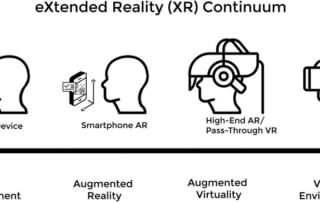
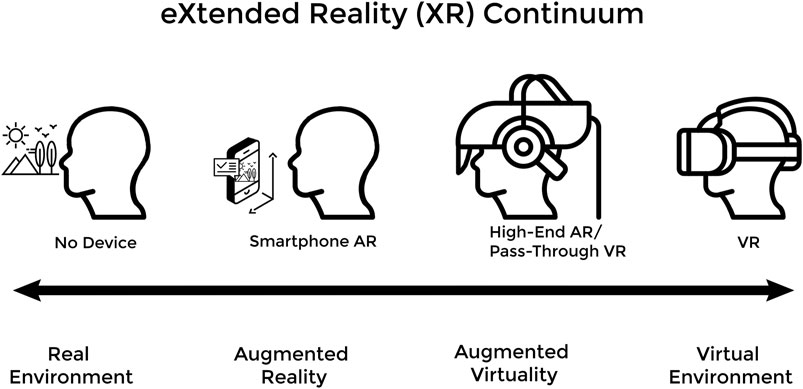
In the ever-evolving landscape of medical education, a new player has emerged, promising to revolutionize the way future doctors are trained. The integration of eXtended Reality (XR) technologies is reshaping the educational landscape by addressing the limitations of traditional methods.

Genetic Testing: A New Dawn in Healthcare

Genetic testing represents more than just a scientific advancement; it signifies a fundamental shift in how we approach health and wellness.

Sustainable Architecture: Blending Innovation with Ecological Responsibility

The journey toward sustainable architecture is ongoing, with each project serving as a beacon of what's achievable when creativity meets ecological awareness.

By |December 9, 2024|Categories: Architecture, Article, Sustainability|Tags: |0 Comments

AI in Clinical and Molecular Diagnostics: A Market on the Rise

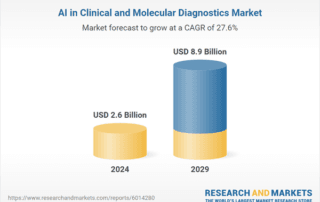
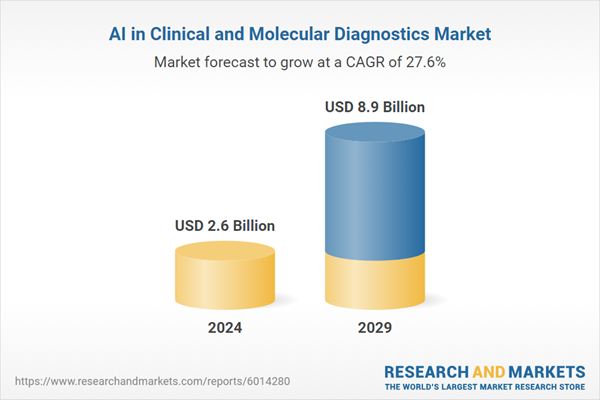
AI in Clinical and Molecular Diagnostics Market is set to experience remarkable growth, projected to surge from USD 2.6 billion in 2024 to USD 8.9 billion by 2029. This growth is driven by the integration of advanced AI technologies such as machine learning and deep learning into traditional diagnostic methodologies like imaging, genomics, and laboratory testing.

AI: A Revolution in Healthcare’s Future

AI is not a distant dream but a present reality, already integrated into everyday life through virtual assistants like Alexa and Siri. AI shows promise in enhancing medical accuracy, such as in predicting mesothelioma survival and improving colonoscopy accuracy, it is not intended to replace healthcare professionals.