“`html

Examining the Impact of Proposition 47 and the Pandemic on Crime in California

In a detailed analysis by the Public Policy Institute of California, authors Magnus Lofstrom and Brandon Martin explore the ramifications of Proposition 47 alongside the COVID-19 pandemic on crime rates in the Golden State. Proposition 47, enacted in November 2014, was a landmark reform that reclassified certain non-violent drug and property offenses from felonies to misdemeanors. This legislative shift led to a significant reduction in the state’s prison population, saving approximately $800 million, which was redirected to fund treatment and diversion programs.


The report highlights a notable increase in property crimes, particularly larcenies and burglaries, following the implementation of Proposition 47. These trends were exacerbated during the pandemic, where reduced clearance rates for these crimes were identified as a key factor. Despite the decrease in incarceration rates, the increase in crime was described as modest, with the authors emphasizing the limited impact of changes in drug arrests on overall crime rates.


The Pandemic’s Influence on Crime

The pandemic further altered the crime landscape, with lower enforcement and incarceration rates contributing to a rise in property crimes, especially commercial burglaries and auto thefts. Nonetheless, the report found no significant evidence linking drug arrests to an increase in crime during this period.


The authors recommend that California’s policymakers focus on reversing the declining clearance rates and prioritize evidence-based alternatives to incarceration. While acknowledging the successes of Proposition 47 in reducing inmate populations, the report underscores the importance of understanding the factors influencing crime rates and implementing strategies that emphasize increased apprehension rates over harsher punishments.


Recommendations for Policymakers

As California reflects on a decade of criminal justice reforms, the insights from this report are crucial. Policymakers are encouraged to delve deeper into the underlying causes of crime increases and to explore innovative solutions that balance public safety with justice reform. This includes enhancing the effectiveness of law enforcement through better resources and training, and investing in community-based programs that address the root causes of crime.


For more detailed insights, the full report is available on the Public Policy Institute of California’s website, along with a Policy Brief and a Technical Appendix.


Police car chasing a car at night
“`

More Articles

Getting licensed or staying ahead in your career can be a journey—but it doesn’t have to be overwhelming. Grab your favorite coffee or tea, take a moment to relax, and browse through our articles. Whether you’re just starting out or renewing your expertise, we’ve got tips, insights, and advice to keep you moving forward. Here’s to your success—one sip and one step at a time!

AI Assistants Reshaping Real Estate: Embrace the Future

In the rapidly evolving world of real estate, AI assistants are making waves, promising to enhance the efficiency of agents without replacing the invaluable human touch.

By |August 19, 2025|Categories: AI Technology, Article, Real Estate|Tags: , |0 Comments

Revolv Real Estate Launches Orange Key Academy to Empower Future Real Estate Professionals

In a transformative initiative, revolv Real Estate has launched the Orange Key Academy, an educational platform aimed at empowering the next generation of real estate professionals.

Navigating Financial Success in 2025: Top 10 Strategic Wealth Planning Tips

In the ever-evolving landscape of financial planning, 2025 presents an array of opportunities and challenges. With the dawn of a new U.S. administration, the potential for significant tax law changes looms large, prompting individuals to reassess their financial strategies.

Copyright Office’s New Guidance on Fair Use in AI: A Delicate Balance

In a groundbreaking move, the U.S. Copyright Office has released its third and final report in the "Copyright and Artificial Intelligence" series, offering nuanced guidance on fair use in the realm of generative AI (GenAI) training. This comprehensive analysis, dated May 16, 2025, sheds light on the intricate legal landscape surrounding the use of copyrighted materials in AI model training.

By |August 17, 2025|Categories: Article, Artificial Intelligence, Copyright Law|Tags: , |0 Comments

CE Shop Crowned Best Overall Online Real Estate School for August 2025

The CE Shop has emerged as the top contender in the realm of online real estate education. According to a recent Investopedia article, the CE Shop was distinguished as the best overall online real estate school for August 2025.

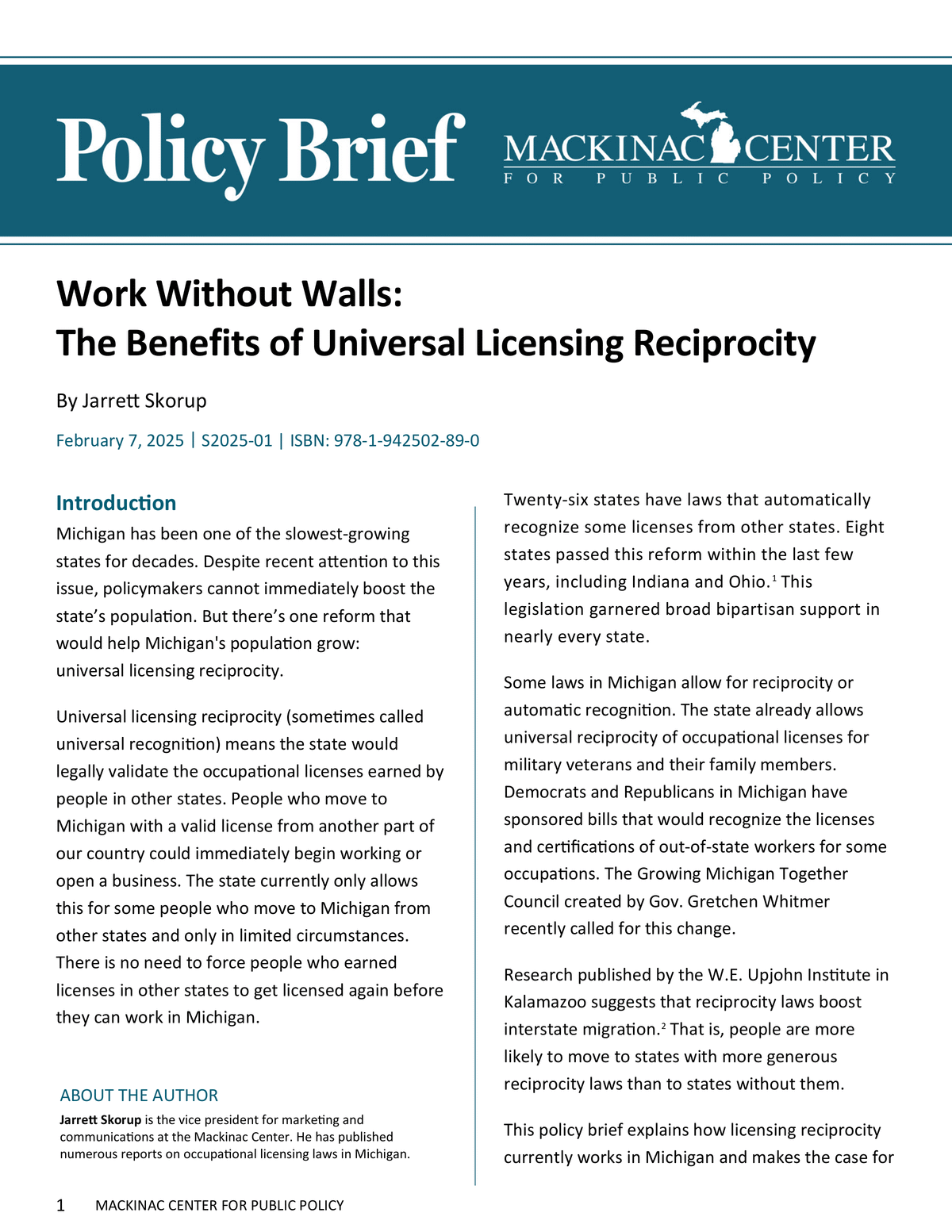
Michigan’s Path to Economic Revival: Embracing Universal Licensing Reciprocity

Michigan has grappled with slow population growth for decades, but introducing universal licensing reciprocity could catalyze change. By legally validating out-of-state occupational licenses, Michigan could attract a diverse array of skilled professionals, fostering economic expansion and addressing workforce shortages.