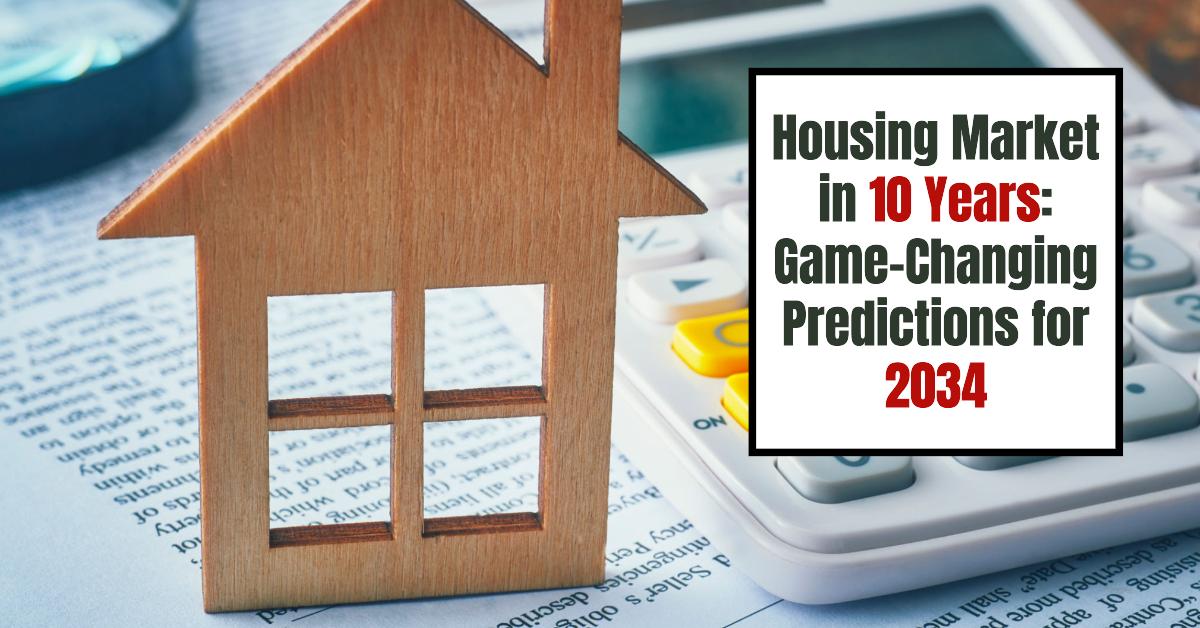
As we look ahead to the next decade, the dynamics of housing supply and demand in the United States are poised for a dramatic shift. Population growth is slowing, leading to fewer new households and a reduced need for new homes. This pivotal change is explored in a recent article from RealEstateNews.com.

A suburban development with new homes and homes under construction

Key Insights

  • Household growth in the U.S. is on a declining trajectory, with projections indicating a further slowdown over the next two decades.
  • Within the next decade, population growth, excluding immigration, could potentially turn negative.
  • The convergence of fewer households and increased homebuilding could resolve the housing shortage, necessitating a shift in the construction industry.

The Harvard University’s Joint Center for Housing Studies report highlights that only 8.6 million new households are expected to form over the next ten years. This figure could further dwindle to 5.1 million between 2035 and 2045, marking the lowest decade of household formation in a century.

Demographic Shifts

According to U.S. Census data, the number of children under five decreased by nearly 9% from 2010 to 2020, while the senior demographic over 62 surged by over 36%. This demographic shift indicates that the aging population and reduced birth rates are expected to slow and eventually reverse native population growth, leaving future growth dependent on immigration.

Impact on Homebuilders

Despite the current housing shortage, demand for new homes is anticipated to remain robust in the short term. The report estimates 11.3 million new homes will be constructed between 2025 and 2035. However, as Gen Z and Gen Alpha, smaller cohorts than the baby boomers and millennials, become the primary homebuyers, new home construction is expected to decelerate.

The Role of Immigration

While native population trends offer a clearer forecast, immigration remains an unpredictable element. Daniel McCue, the report’s author, notes that even with higher immigration levels, household growth is projected to decline due to the decrease in natural population growth.

For a deeper dive into these findings, visit the original article on RealEstateNews.com.

More Articles

Getting licensed or staying ahead in your career can be a journey—but it doesn’t have to be overwhelming. Grab your favorite coffee or tea, take a moment to relax, and browse through our articles. Whether you’re just starting out or renewing your expertise, we’ve got tips, insights, and advice to keep you moving forward. Here’s to your success—one sip and one step at a time!

The Impact of Geopolitics on Real Estate – Insights from José Manuel Durȃo Barroso

Durȃo Barroso articulated a stark view of the current geopolitical climate, describing it as "polarized, fragmented, very volatile"... unpredictable and dangerous.

By |February 20, 2025|Categories: Article, Geopolitics, Real Estate|Tags: , |0 Comments

The Future of the US Housing Market: A Look Ahead to 2034

The US housing market in 10 years is poised for significant transformation, driven by a complex interplay of demographic, technological, economic, and environmental factors. By 2034, we may see a housing landscape that is more diverse, technologically advanced, and responsive to the needs of an evolving population.

Uplist’s RECAPTURE™ Wins Prestigious Awards for Mortgage Innovation

Uplist's flagship product, RECAPTURE™, has garnered significant attention in the mortgage industry by receiving two prestigious accolades: the 2025 Tech100 Mortgage Award from HousingWire and the Innovations Award from Progress in Lending.

By |February 19, 2025|Categories: Article, Business, Technology|Tags: , |0 Comments

Unlocking the Future of Real Estate: USC’s Dollinger Master of Real Estate Development Program

A testament to its enduring excellence, the MRED program at USC equips students with a comprehensive understanding of real estate finance, governance, and development.

By |February 19, 2025|Categories: Article, Education, Real Estate|Tags: , |0 Comments

Breaking Free from Square Footage: A New Era in Commercial Real Estate

Nearly half of coworking operators are breaking even or operating at a loss, highlighting the need for a fresh approach.