15 States on the Brink: America’s Growing Insurance Crisis Is Spreading Fast
The insurance landscape across the United States is shifting at a pace that many homeowners — and even insurers — can barely keep up with. What began years ago in Florida and California has now unraveled across the country, placing millions of homeowners on uncertain ground. According to a recent Insurify analysis, 15 states are creeping toward an insurance emergency fueled by climate‑driven destruction, soaring insurer losses, and relentless premium hikes.
For professionals in real estate, mortgage, insurance, and finance—many of whom rely on Cameron Academy for licensing education—this trend is reshaping housing markets, underwriting guidelines, and investment strategies nationwide.
Key Takeaways at a Glance
Home insurance costs climbed 20% from 2021–2023.
Car insurance rates surged 15% in early 2024.
Texas now averages 11 billion‑dollar climate disasters per year.
Hawaii recorded the highest insurer loss ratio in 2023.
Colorado faces $151 million in hail‑related property losses annually.
The Climate Ripple Effect: Why Premiums Are Surging
Every region of the U.S. is experiencing the consequences of extreme weather. Hurricanes batter the South, wildfires consume the West, hailstorms hammer the Midwest, and rising storm surges threaten the Northeast. As destruction climbs, insurers confront massive payouts — forcing them to increase rates, withdraw coverage, or exit high‑risk zones altogether.
The ripple effect is clear: homeowners facing thousands more per year, and many being pushed into last‑resort state insurance programs already stretched beyond capacity.
15 States Facing Imminent Crisis
According to Insurify’s findings, the following states show the highest risk due to climate exposure, market volatility, insurer losses, and rate filings:
Alabama
Arizona
Arkansas
Colorado
Hawaii
Illinois
Iowa
Michigan
Minnesota
Mississippi
Missouri
North Carolina
Oklahoma
South Carolina
Texas
Several of these states are already witnessing insurer retreat and aggressive premium spikes. In Mississippi, coastal homeowners in cities like Ocean Springs are paying close to $10,000 annually. In Iowa, several insurers have pulled out after enduring four straight years of losses. Meanwhile, North Carolina recently saw tens of thousands of non‑renewals following the devastating blow of Hurricane Helene.
A Perfect Storm for Real Estate Markets
As insurance costs rise, home affordability shrinks. Mortgage approvals increasingly hinge on insurance premiums, which can push borrowers beyond acceptable debt‑to‑income ratios. Investors see tightening returns. Builders face mounting demands for resilient construction. Real estate professionals must prepare for clients who ask deeper, more urgent questions than ever before about long‑term risk.
For newcomers and veteran professionals alike, understanding this shifting terrain has become essential. Cameron Academy continues to help students stay ahead with training designed around real‑world market conditions—especially in climate‑sensitive regions such as Florida.
Can We Fix the Crisis?
There’s no single solution, but climate resiliency remains our strongest defense. Experts and insurers agree that upgrading building materials, enforcing stricter codes, and implementing smarter mitigation measures can dramatically reduce loss severity and help stabilize premiums.
Homeowners Can Strengthen Their Risk Profile by:
Installing impact‑rated windows
Reinforcing roofs with modern, resilient materials
Upgrading to a wind‑rated garage door
Clearing defensible space around wildfire‑risk zones
Understanding flood exposure and securing proper coverage
Still, as climate expert Gabriel Filippelli points out: “You can’t always engineer your way out of climate disasters seamlessly.” Even with mitigation, premiums will likely continue rising nationwide as extreme events intensify.
The Bottom Line
The insurance crisis is no longer a coastal problem — it’s a nationwide challenge with local consequences. Whether you’re a homeowner, investor, or real estate professional, staying informed on these shifts is essential.
For a deeper dive into the data, explore the full report from Insurify. And if you’re advancing your career in real estate or insurance, Cameron Academy is here to equip you with the knowledge and licensing you need to thrive in a changing world.
More Articles
Getting licensed or staying ahead in your career can be a journey—but it doesn’t have to be overwhelming. Grab your favorite coffee or tea, take a moment to relax, and browse through our articles. Whether you’re just starting out or renewing your expertise, we’ve got tips, insights, and advice to keep you moving forward. Here’s to your success—one sip and one step at a time!
In 2026, financial advisors are no longer just experimenting with AI — they’re relying on it. Once confined to back-office duties, AI now supports meeting prep, portfolio analysis, and even early-stage financial planning. Advisors say the tech is strengthening client relationships by freeing them from administrative overload, though entry-level roles like paraplanners may feel the squeeze as automation accelerates.
Cybercriminals are weaponizing AI to launch highly convincing email scams and system breaches across the mortgage industry, overwhelming lenders and servicers whose cybersecurity measures can’t keep up. With major companies already hit and regulation lagging behind, experts warn the sector—now considered critical infrastructure—must rapidly upgrade protections, collaborate on threat intelligence, and improve AI governance before the risks escalate further.
Escrow payments are quietly surging across the country as property taxes and insurance premiums spike—pushing many homeowners toward delinquencies and even foreclosure. New data from Cotality shows the sharpest increases hitting the South and Midwest, with Florida among the hardest‑hit states. Even with fixed mortgage rates, rising escrow requirements are driving monthly payments higher and threatening affordability heading into 2026.
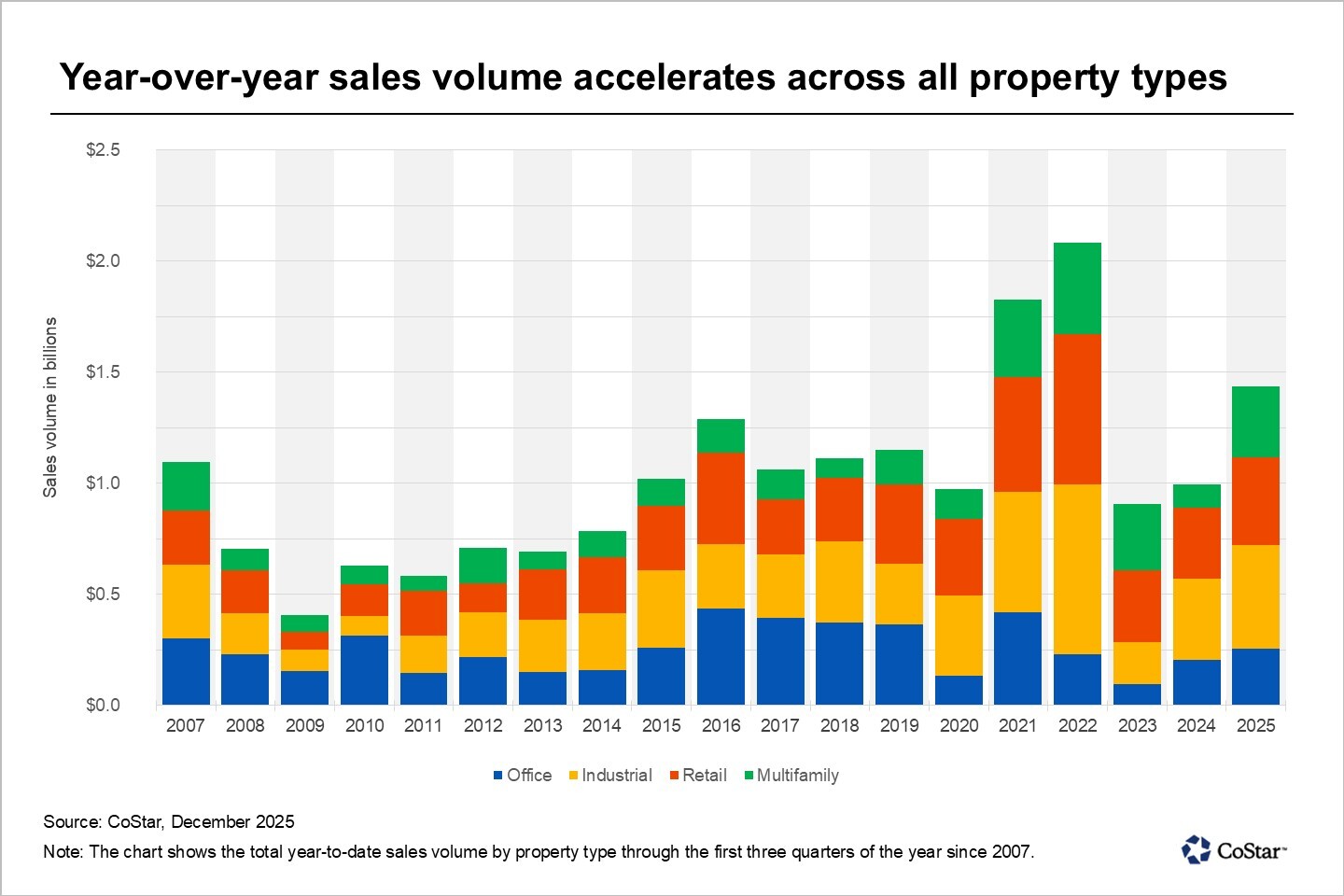
Milwaukee entered 2025 with renewed momentum, posting its strongest commercial real estate sales volume in three years. After a period of uncertainty and high capital costs, investors are returning with a sharper focus on quality assets, realistic pricing, and reliable cash flow. Activity is increasing across industrial, office, multifamily, and retail sectors, signaling a broad-based recovery fueled by stabilizing interest rates and improved market confidence.
As 2026 approaches, the title insurance industry is navigating a complex mix of market recovery, rising fraud threats, and sweeping regulatory changes. Industry leaders say the path forward centers on smarter technology, leaner operations, and stronger support for title agents. With AI-driven workflows, enhanced fraud prevention, and new compliance demands—including FinCEN’s expanded Geographic Targeting Orders—companies like Stewart and First American are reshaping how title work gets done. For real estate and mortgage professionals, the year ahead promises more automation, heightened standards, and major opportunities for those who stay ahead of the curve.
The real estate industry is undergoing a major transformation in 2025 as advancements in AI, proptech, blockchain, and data intelligence redefine how properties are marketed, valued, financed, and experienced. From instant digital valuations and immersive virtual tours to tokenized investments and predictive analytics, technology is reshaping every stage of the real estate lifecycle. Professionals who embrace these innovations—while maintaining the human expertise clients still rely on—will lead the next era of the industry.