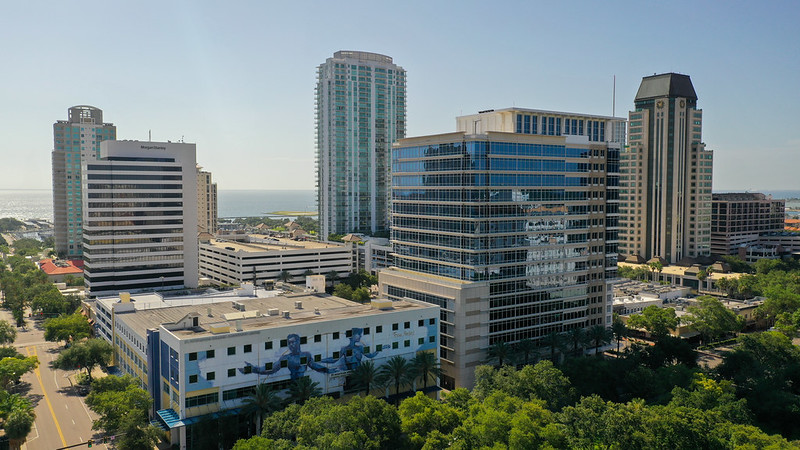
In the ever-evolving world of commercial real estate, the year 2024 is marked by a significant shift in investment trends, driven by the insights of renowned investor Charlie Munger. His warning, delivered in April 2023, highlighted a dramatic transformation in the landscape of commercial property investment, underscoring the challenges faced by troubled office buildings and shopping centers.

Commercial Real Estate Investment: A Sector in Flux

Munger’s observations are supported by data revealing a notable decline in commercial real estate transactions. The total dollar volume plummeted to $647 billion in 2023, a stark contrast to the $1.14 trillion recorded in 2022. This 47% drop is attributed to persistently high interest rates and a sharp decline in office property values.

Investment Shifts and Sector Performance

The commercial real estate sector has seen a transition, with industrial and multifamily properties receiving a larger share of investment. The office sector, however, experienced the largest decline, losing $146 billion in investment volume compared to the previous year. The hotel sector also saw a significant drop of $190 billion.

  • Office values have decreased by 14% over the past year.
  • Multifamily properties have taken the lead in commercial real estate investment, driven by the rise of remote work.
  • Industrial real estate continues to attract investment due to supply chain challenges and geopolitical shifts.

Vacancy Rates and Rent Growth

The commercial real estate market is grappling with high vacancy rates, particularly in office spaces. As of April 2024, the office vacancy rate in the U.S. reached a record 13.8%, with some sources estimating even higher figures. San Francisco, for instance, has an office vacancy rate of 22.65%. In contrast, retail properties boast the lowest vacancy rate at 4.1%.

Future Outlook and Investment Opportunities

Despite the challenges, opportunities remain for investors willing to navigate the complexities of the market. Investing in REITs or real estate funds offers a way to diversify portfolios and capitalize on sector-specific growth.

For those interested in more hands-on approaches, purchasing residential properties for rental income or engaging in house flipping are viable options, albeit with inherent risks and management demands.

Conclusion

As the commercial real estate landscape continues to shift, staying informed about market trends and strategic investment opportunities is crucial. For more detailed insights, the original article from The Motley Fool provides a comprehensive analysis of the current state of commercial real estate investment.

More Articles

Getting licensed or staying ahead in your career can be a journey—but it doesn’t have to be overwhelming. Grab your favorite coffee or tea, take a moment to relax, and browse through our articles. Whether you’re just starting out or renewing your expertise, we’ve got tips, insights, and advice to keep you moving forward. Here’s to your success—one sip and one step at a time!

Nevada Becomes First State to Allow Homeowners Insurance Without Wildfire Coverage

Nevada has enacted a first‑in‑the‑nation law permitting insurers to sell homeowners policies that exclude wildfire coverage, a move supporters say could help stabilize premiums but critics warn may leave homeowners financially devastated. The policy shift positions Nevada as a testing ground for potential nationwide changes, raising major implications for real estate, mortgage, and insurance professionals as lenders, high‑risk communities, and regulators navigate the evolving landscape.

Tampa Bay Office Market Ends 2025 with Its Strongest Performance Since 2016

Tampa Bay’s office sector just delivered its most powerful year in nearly a decade, according to JLL’s Q4 2025 report. With more than 600,000 square feet of positive net absorption, falling vacancies, shrinking inventory, and major tenants like Fisher Investments and GEICO locking in massive leases, the region is emerging as one of the nation’s strongest post‑recovery office markets. The surge in demand for high‑quality space is driving rents up, tightening supply, and setting the stage for continued momentum into 2026.

CFPB Unveils Key Updates to Mortgage Registry Data Rules

The Consumer Financial Protection Bureau has proposed new updates to the Nationwide Mortgage Licensing System and Registry, expanding data collection, tightening verification standards, and refreshing record‑retention rules. These changes aim to strengthen background checks, enhance regulatory oversight, and align the system with federal requirements—impacting both current and aspiring mortgage loan originators nationwide.

Nevada Breaks New Ground With Controversial Wildfire‑Excluded Insurance Policies

Nevada has become the first state to let insurers sell homeowners policies that exclude wildfire coverage — a dramatic shift that could reshape insurance pricing across the West. Supporters say the move may lower premiums and spark innovation, while critics warn it could leave homeowners exposed to devastating losses. As regulators and insurers nationwide watch closely, the experiment could have major implications for real estate, mortgages, and insurance markets.

Florida’s Insurance Crisis Finally Eases as New Bills Target Lower Premiums and Greater Transparency

After years of soaring premiums and insurer failures, Florida lawmakers are rolling out a new slate of reforms aimed at finally delivering relief to homeowners. From cracking down on profit‑sharing affiliates to unveiling hidden rate factors and rewarding claim‑free residents, these proposals could reshape the state’s insurance landscape — and bring real savings to property owners and real estate professionals alike.

C‑PACE Financing Hits New Record as Developers Turn to Alternative Capital

With traditional CRE lending slowing nationwide, C‑PACE financing is surging to all‑time highs — including a record‑setting $465 million loan for a major D.C. redevelopment. Backed by long repayment terms, fixed rates, and tax‑assessment security, C‑PACE is rapidly becoming a preferred tool for funding energy efficiency, resiliency upgrades, and even large‑scale project recapitalizations. Major players like Nuveen Green Capital and Peachtree Group are driving billions in new volume as 40 states adopt the program, signaling a major shift in how commercial real estate projects are financed.