
2025: A Transformative Year for the AEC/O Industry

The AEC/O industry is on the cusp of a seismic transformation, driven by the integration of advanced technologies and innovative practices. As outlined in a recent article by Nemetschek, 2025 is set to be a landmark year, with significant shifts in workflows, sustainability priorities, and collaboration methods.
Aec/o industry transformation

1. Interoperability as a Catalyst for Collaboration

Interoperability, particularly through open standards like OPEN BIM, is poised to play an even greater role in fostering seamless collaboration among architects, engineers, and construction professionals. This approach allows for unrestricted data exchange, enabling creative and high-quality project delivery.

2. User Experience Amidst Technical Complexity

Despite the growing complexity of technology, the emphasis remains on simplicity. By prioritizing intuitive design, the industry aims to empower users to leverage powerful solutions without the burden of navigating intricate interfaces.

3. Digital Twins Unlocking New Potentials

The focus on Digital Twins is set to simplify building digitization, unlocking insights that enhance predictive analytics, sustainability, and efficiency. This technology connects information across the building lifecycle, offering data-driven recommendations.

4. Open-Minded Innovation

Industry consolidation is anticipated as companies strive for greater efficiencies. Embracing innovation with an open mind is crucial for addressing complex challenges and driving technological advancements.

5. AI’s Prominent Role

Artificial Intelligence is expected to be prominently integrated into AEC/O solutions, enhancing efficiency and attracting tech-savvy talent, which is essential for alleviating the industry’s skills shortage.

6. Sustainability Integration

Sustainability will be seamlessly incorporated across all phases of AEC/O projects, supported by technologies like BIM, AI, and Digital Twins, to meet stricter environmental standards.

A Year to Remember

In 2025, the AEC/O industry is encouraged to embrace change by engaging with technologies like AI, Digital Twins, and BIM. By doing so, the sector can enhance efficiency, collaboration, and innovation, setting a new standard for others to follow.

More Articles

Getting licensed or staying ahead in your career can be a journey—but it doesn’t have to be overwhelming. Grab your favorite coffee or tea, take a moment to relax, and browse through our articles. Whether you’re just starting out or renewing your expertise, we’ve got tips, insights, and advice to keep you moving forward. Here’s to your success—one sip and one step at a time!

Artificial Intelligence in Diagnostics: A Revolution in Healthcare

The global market for artificial intelligence in diagnostics is poised for remarkable growth, with projections estimating it to reach USD 7.3 billion by 2032.

By |December 10, 2024|Categories: Article, Artificial Intelligence, Healthcare|Tags: , |0 Comments

Revolutionizing Medical Education with Extended Reality

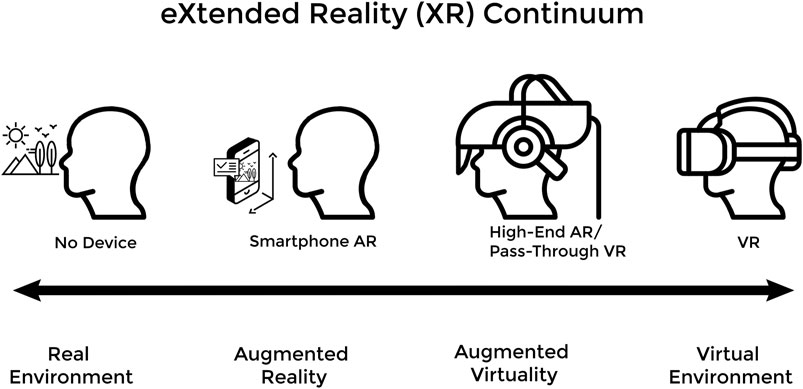
In the ever-evolving landscape of medical education, a new player has emerged, promising to revolutionize the way future doctors are trained. The integration of eXtended Reality (XR) technologies is reshaping the educational landscape by addressing the limitations of traditional methods.

Genetic Testing: A New Dawn in Healthcare

Genetic testing represents more than just a scientific advancement; it signifies a fundamental shift in how we approach health and wellness.

Sustainable Architecture: Blending Innovation with Ecological Responsibility

The journey toward sustainable architecture is ongoing, with each project serving as a beacon of what's achievable when creativity meets ecological awareness.

By |December 9, 2024|Categories: Architecture, Article, Sustainability|Tags: |0 Comments

AI in Clinical and Molecular Diagnostics: A Market on the Rise

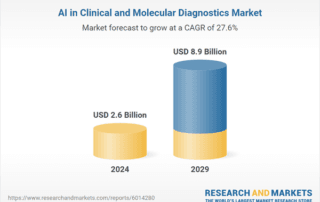
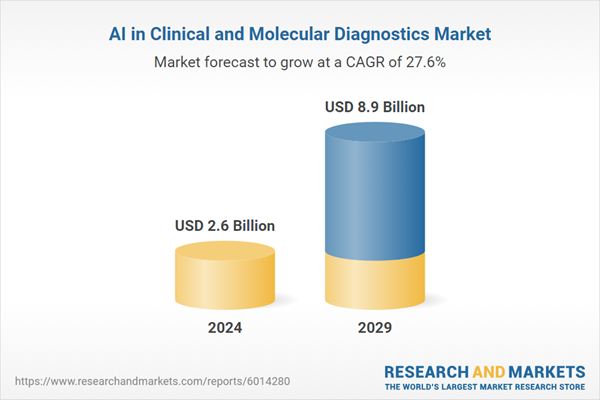
AI in Clinical and Molecular Diagnostics Market is set to experience remarkable growth, projected to surge from USD 2.6 billion in 2024 to USD 8.9 billion by 2029. This growth is driven by the integration of advanced AI technologies such as machine learning and deep learning into traditional diagnostic methodologies like imaging, genomics, and laboratory testing.

AI: A Revolution in Healthcare’s Future

AI is not a distant dream but a present reality, already integrated into everyday life through virtual assistants like Alexa and Siri. AI shows promise in enhancing medical accuracy, such as in predicting mesothelioma survival and improving colonoscopy accuracy, it is not intended to replace healthcare professionals.