
2025: Navigating the Future of Patient Payments in Healthcare

The healthcare industry is undergoing a seismic shift, embracing digital transformation at an unprecedented pace. As we approach 2025, several key trends are set to redefine patient payments, addressing both technological advancements and consumer needs.
In a recent article from MedCity News, the focus is on the evolving landscape of healthcare payments, highlighting the transition towards a more retail-like experience. This shift is driven by a desire to improve operational efficiency and patient care, while also addressing generational differences among patients.
Doctor healthcare money cost

Embracing Digital Payment Methods

The adoption of digital wallets, such as PayPal, Venmo, Google Pay, and Apple Pay, is on the rise. These platforms offer convenience, security, and ease of use, eliminating the need for traditional payment methods. As healthcare providers implement these technologies, they must also focus on managing cards on file to ensure financial security. The use of tokenization is becoming increasingly important, replacing sensitive card information with secure tokens to protect patient data.

Cloud-Based Payment Infrastructure

The shift to cloud-based payment systems is encouraged for scalability and efficiency. By moving to the cloud, healthcare providers can enhance flexibility while maintaining stringent security and compliance measures. This transition supports all major digital payment types and simplifies management and deployment.

The Role of Artificial Intelligence

Generative AI is emerging as a powerful tool in healthcare, offering potential solutions to reduce burnout among healthcare workers by automating routine tasks. However, the misuse of AI by malicious actors highlights the need for robust data security measures. Consistent security training and data minimization practices are essential to protect sensitive information.
Johnathan Welch, Chief Product Officer at Sphere, emphasizes the importance of actively managing financial data using tokenization. This approach not only secures patient information but also reduces the risk of data breaches.
As we look ahead to 2025, the integration of technology and evolving consumer preferences will be pivotal in shaping the future of healthcare payments. By prioritizing security, efficiency, and patient-centric solutions, the industry can navigate these changes successfully.

Conclusion

The landscape of patient payments is rapidly evolving, driven by technological innovation and consumer demands. As healthcare providers adapt to these changes, they must remain vigilant in addressing affordability concerns, ensuring security, and embracing new payment methods. The journey towards a more efficient and secure healthcare payment system is underway, promising exciting developments in the years to come.

More Articles

Getting licensed or staying ahead in your career can be a journey—but it doesn’t have to be overwhelming. Grab your favorite coffee or tea, take a moment to relax, and browse through our articles. Whether you’re just starting out or renewing your expertise, we’ve got tips, insights, and advice to keep you moving forward. Here’s to your success—one sip and one step at a time!

Artificial Intelligence in Diagnostics: A Revolution in Healthcare

The global market for artificial intelligence in diagnostics is poised for remarkable growth, with projections estimating it to reach USD 7.3 billion by 2032.

By |December 10, 2024|Categories: Article, Artificial Intelligence, Healthcare|Tags: , |0 Comments

Revolutionizing Medical Education with Extended Reality

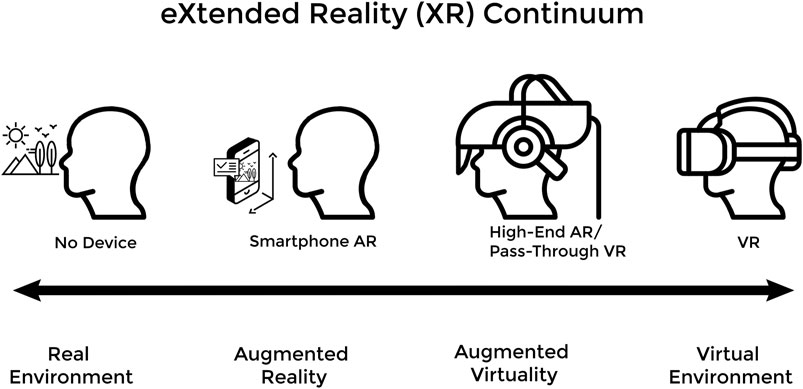
In the ever-evolving landscape of medical education, a new player has emerged, promising to revolutionize the way future doctors are trained. The integration of eXtended Reality (XR) technologies is reshaping the educational landscape by addressing the limitations of traditional methods.

Genetic Testing: A New Dawn in Healthcare

Genetic testing represents more than just a scientific advancement; it signifies a fundamental shift in how we approach health and wellness.

Sustainable Architecture: Blending Innovation with Ecological Responsibility

The journey toward sustainable architecture is ongoing, with each project serving as a beacon of what's achievable when creativity meets ecological awareness.

By |December 9, 2024|Categories: Architecture, Article, Sustainability|Tags: |0 Comments

AI in Clinical and Molecular Diagnostics: A Market on the Rise

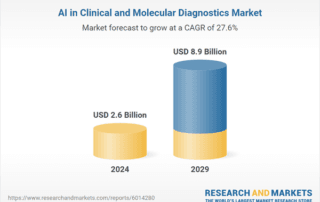
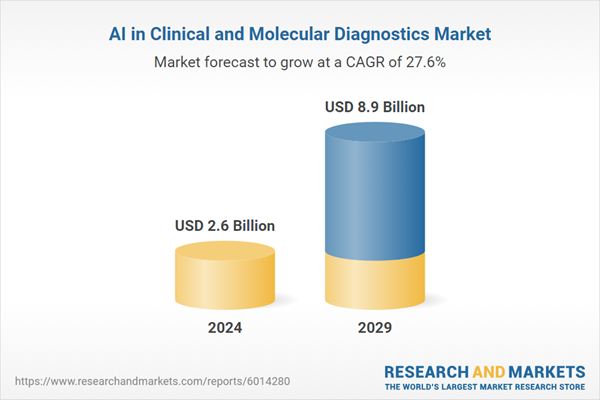
AI in Clinical and Molecular Diagnostics Market is set to experience remarkable growth, projected to surge from USD 2.6 billion in 2024 to USD 8.9 billion by 2029. This growth is driven by the integration of advanced AI technologies such as machine learning and deep learning into traditional diagnostic methodologies like imaging, genomics, and laboratory testing.

AI: A Revolution in Healthcare’s Future

AI is not a distant dream but a present reality, already integrated into everyday life through virtual assistants like Alexa and Siri. AI shows promise in enhancing medical accuracy, such as in predicting mesothelioma survival and improving colonoscopy accuracy, it is not intended to replace healthcare professionals.