2026 Tech100 Nominations Are Closing — And Innovation Across Housing Tech Is Heating Up
The countdown is on. Nominations for the 2026 HousingWire Tech100 Awards close on December 19 — and as the deadline approaches, the housing tech world is buzzing with momentum. From AI-driven property intelligence to digital closing breakthroughs, this year’s innovators are setting a blistering pace.
HousingWire recently checked in with last year’s winners to see how their post‑Tech100 journey has evolved. If you’re a real estate, mortgage, insurance, or finance professional keeping an eye on where the industry is headed — or someone looking to elevate your career through advanced training here at Cameron Academy — this snapshot of innovation offers a front‑row seat to tomorrow’s housing economy.
ATTOM: Modernizing Property Data for an AI‑Ready Housing Market
ATTOM continues to reshape how real estate, mortgage, and insurance companies interact with property data. With new delivery systems — including Snowflake integration, Parquet and GeoParquet formats, and the intuitive ATTOM Nexus platform — the company has leaned aggressively into a future powered by analytics‑ready, AI‑optimized data.
These tools make data more accessible, more flexible, and significantly more scalable, ensuring professionals can build smarter solutions faster. For those in real estate looking to understand data’s growing role in valuations, marketing, and investment decisions, ATTOM’s ecosystem is a roadmap to the industry’s next chapter.
Hapi Homes: Rebuilding Communities and Reimagining Iconic Design
Hapi Homes had a standout year, opening a new Pasadena hub to support Los Angeles wildfire recovery. But the biggest spotlight moment? A partnership with Martha Stewart to reissue four of her iconic home designs as primary residences and ADUs.
With models inspired by Stewart’s Bedford farmhouse, East Hampton cottage, New York City residence, and Maine retreat, this collaboration blends lifestyle design with accessible housing — a combination that captures both consumer imagination and industry attention.
Obie: Scaling Embedded Insurance and Driving Nationwide Expansion
Obie has grown explosively since its Tech100 recognition, landing the No. 9 insurance spot on the Inc. 5000 and expanding its carrier network, state footprint, and platform capabilities.
With new integrations including Salesforce Experience Cloud and a partnership with Liberty Mutual’s Comparion Agency, Obie boosted its agent network by more than 1,100%. Its PolicyProof tool is seeing rapid adoption, cementing Obie’s place at the forefront of embedded insurance for investors and property managers.
Outamation: Leading AI‑Driven Servicing Automation
Outamation remains a force in AI-powered mortgage servicing, supporting more than 20 national partners with near‑perfect SLA performance.
The company launched OutamateMods Retention, a solution helping banks keep performing borrowers before they refinance elsewhere. Alongside enhancements to OutamateAI, OutamateQMS, OutamateDS, and OutamateDocs, Outamation continues to streamline compliance and accelerate workflows.
ServiceLink: Transforming Digital Closings and Real-Time Appraisal Scheduling
ServiceLink expanded its EXOS technology to redefine how borrowers schedule closings and appraisals.
Borrowers can now book in‑branch, hybrid, remote, or face‑to‑face closings directly from their phone — an industry first. ServiceLink also rolled out real-time two‑way text message appraisal scheduling, eliminating link-based systems and giving borrowers precise appointment windows.
With UAD 3.6 approaching, ServiceLink continues to lead in lender and appraiser readiness.
Is Your Organization Leading the Next Wave of Housing Innovation?
If you or a partner organization is pushing boundaries in real estate, mortgage, or property technology, now is the moment to step forward.
And if you’re a professional looking to deepen your expertise, elevate your credentials, or explore new opportunities in real estate, mortgage, insurance, or finance — Cameron Academy is here to help you level up your career.
More Articles
Getting licensed or staying ahead in your career can be a journey—but it doesn’t have to be overwhelming. Grab your favorite coffee or tea, take a moment to relax, and browse through our articles. Whether you’re just starting out or renewing your expertise, we’ve got tips, insights, and advice to keep you moving forward. Here’s to your success—one sip and one step at a time!
Artificial intelligence is rapidly reshaping the mortgage industry, boosting productivity, reducing manual work, and accelerating loan closings. From automated document data extraction to AI‑generated underwriting narratives and predictive analytics, lenders are using new tools that improve accuracy and drastically speed up processing times. With chatbots, next‑gen point‑of‑sale systems, and end‑to‑end automation, preapprovals that once took days now take minutes. For mortgage and real estate professionals, mastering AI is becoming a major competitive advantage—one that defines who will thrive in the future of lending.
Florida’s property insurance rates are finally starting to drop, but many homeowners are still seeing higher monthly bills. The reason isn’t insurer price hikes—it’s soaring replacement costs driven by construction inflation, labor shortages, and rising home values. Nearly 75 percent of recent premium increases came from higher property values alone. Understanding this gap between “rates” and “premiums” helps homeowners—and real estate and insurance professionals—navigate the shifting Florida market and make smarter coverage decisions.
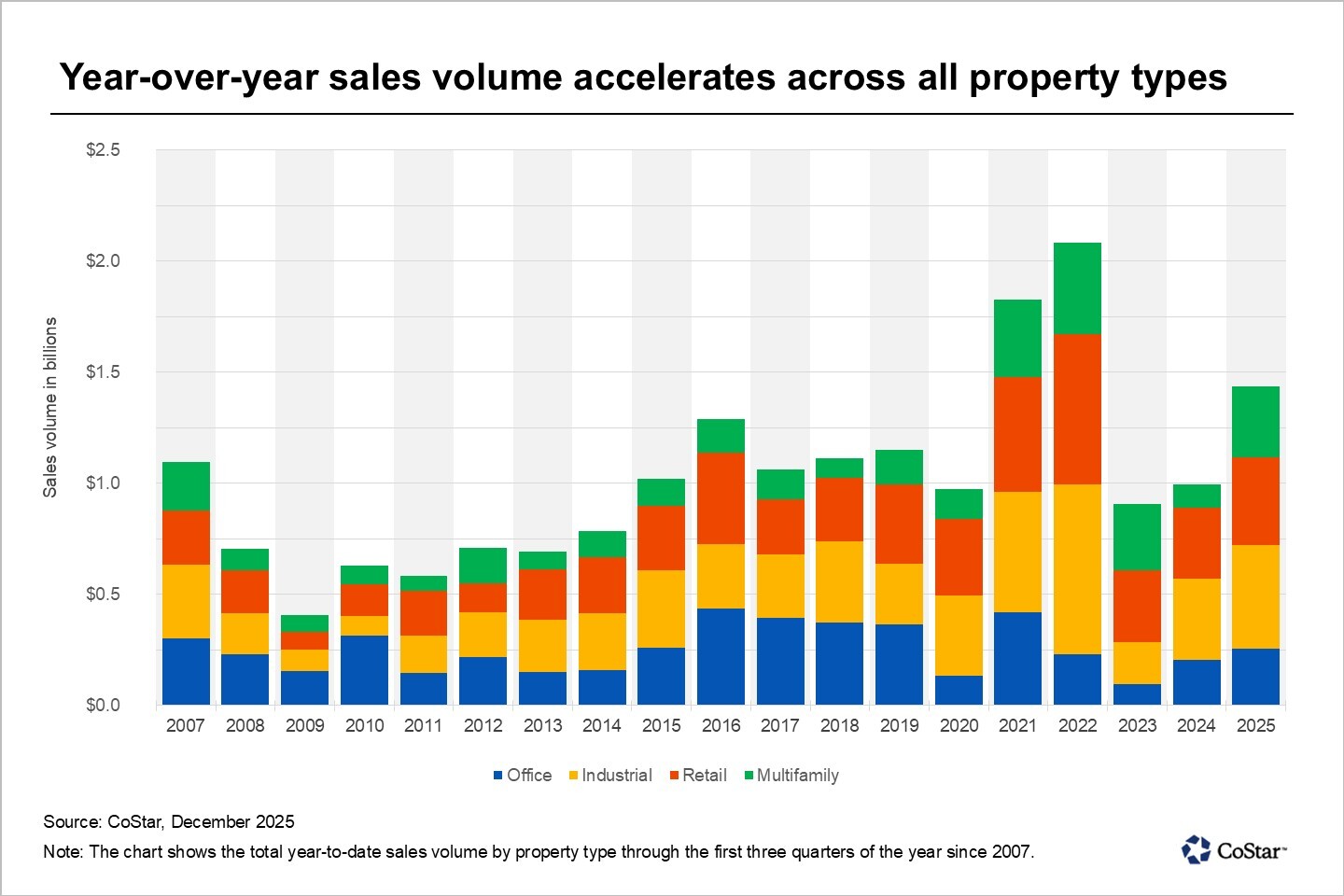
Milwaukee’s commercial real estate market is finally showing real signs of recovery, with 2025 sales volume hitting a three‑year high and investor confidence steadily returning. Driven by selective, fundamentals‑focused buying—favoring strong cash flow, quality assets, and strategic pricing—the city is moving from a period of correction into a healthier, opportunity‑rich phase. For real estate professionals nationwide, Milwaukee’s momentum reflects broader CRE market stabilization and the growing importance of disciplined underwriting and market expertise.
Industry leaders project a major surge in reverse mortgage activity heading into 2026, fueled by rising proprietary products, lender innovation, and strong investor interest. As high interest rates push originators to adopt new strategies, flexible private‑label options, senior‑focused HELOCs, and a wave of big‑capital investment are reshaping the market. With education and policy shifts poised to unlock even more demand, reverse mortgages are entering their most transformative era yet.
Experts forecast that 2026 may bring long‑awaited relief to homebuyers, with both existing and new home inventory expected to rise. NAR predicts a boost in home sales, a slight drop in mortgage rates, and a modest 4% increase in prices—conditions that could motivate more homeowners to list while builders add over a million new homes to the market. For first‑time buyers, higher loan limits and easing qualification standards may make entering the market more achievable than in recent years.
South Florida enters 2026 with renewed optimism as falling mortgage rates, improving buyer confidence, and a strong job market help stabilize a housing landscape that struggled in 2025—especially in the condo sector. While single-family homes remained resilient last year, condos faced price drops, rising fees, and hesitation tied to new safety regulations. With rates projected to fall to around 5.8% by year’s end, buying power is increasing, inventory may loosen, and activity is expected to pick up. Still, affordability challenges persist, Miami’s rental market remains intensely competitive, and the condo sector’s recovery will take time.


 The Mortgage Industry’s AI Transformation: Automation Reshapes Lending From Application to Approval Gallery