In the ever-evolving landscape of sustainability, professionals are increasingly seeking ways to distinguish themselves in a competitive job market. One promising avenue is through professional certifications, which serve as a testament to one’s expertise and commitment to the field. According to a recent article by Trellis Group, the number of available sustainability certifications has surged, offering a diverse range of opportunities for career advancement.
The article, titled “64 Sustainability Certifications to Advance Your Career in 2025,” highlights the growing trend of standardization and specialization within the sustainability sector. As the field matures, the demand for professionals who can navigate complex frameworks and implement sustainable practices across various industries has intensified.
Professional certifications play a crucial role in this context. They not only enhance an individual’s confidence and competitiveness but also communicate a level of competency that is recognized by peers and potential employers. The Trellis Group article lists 64 certifications spanning 10 different sustainability subcategories, from climate change and energy efficiency to sustainable finance and water management.
For those interested in exploring these certifications, the article provides a comprehensive overview, including links to the original 2021 piece and other related resources such as the State of the Sustainability Profession 2024 report. These resources offer valuable insights into the evolving nature of work in sustainability and the importance of continuous learning and upskilling.
The article also emphasizes the significance of certifications in areas like renewable energy, ESG (Environmental, Social, and Governance) investing, and sustainable supply chain management. As organizations worldwide strive to meet their sustainability goals, professionals equipped with the right certifications are better positioned to lead impactful initiatives.
For those eager to delve deeper into specific areas, Trellis Group offers additional resources, including articles on sustainability strategy training and measuring and managing greenhouse gas emissions. These resources are designed to help professionals stay ahead of the curve and make informed decisions about their career paths.
In conclusion, as the demand for sustainability expertise continues to rise, obtaining relevant certifications can be a game-changer for professionals looking to advance their careers. The Trellis Group article serves as a valuable guide for those seeking to navigate the complex world of sustainability certifications and make a meaningful impact in their chosen fields.
Getting licensed or staying ahead in your career can be a journey—but it doesn’t have to be overwhelming. Grab your favorite coffee or tea, take a moment to relax, and browse through our articles. Whether you’re just starting out or renewing your expertise, we’ve got tips, insights, and advice to keep you moving forward. Here’s to your success—one sip and one step at a time!
Cameron Academy's state-approved 63-hour Florida Real Estate Sales Associate Pre-License Course begins April 13, 2026 at the Dr. Phillips campus in Orlando. Attend in person or join live via Zoom. Morning schedule, expert instruction, and only 14 seats remaining. Enroll now before this class fills up.
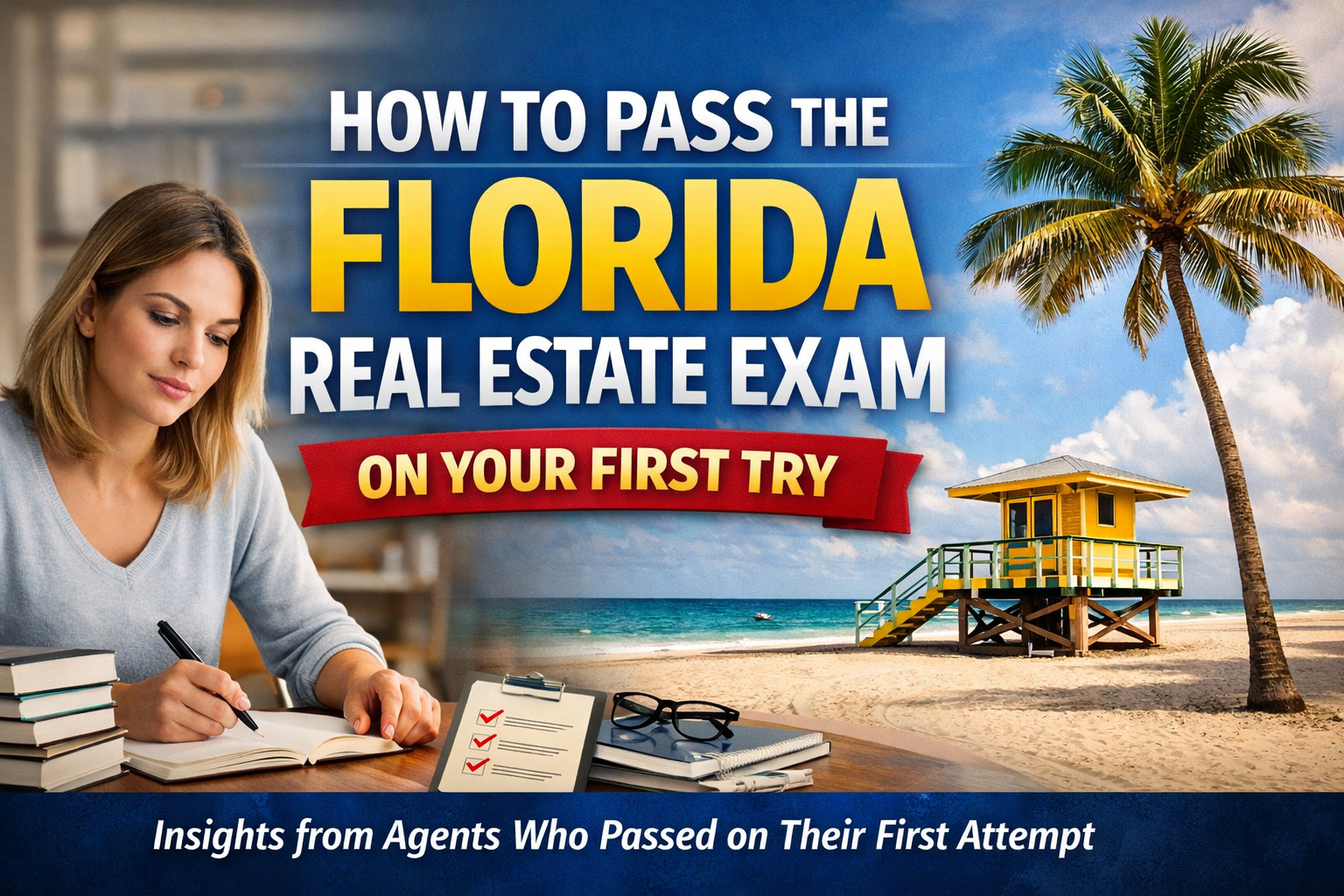
The Florida real estate licensing exam is the single biggest gatekeeper between you and a career in one of the nation's most active real estate markets. And the numbers don't sugarcoat it: roughly half of all first-time test-takers in Florida walk out without a passing score. According to data compiled by Colibri Real Estate, Florida's first-time pass rate sits at approximately 51%, with about 41,900 candidates taking the exam each year.
Part-Time vs. Full-Time: Can You Get Your Real Estate License While Working a 9‑to‑5? The honest, data-backed guide to earning your license around a day #ReadMore
Florida’s 2026 legislative session brought significant victories for real estate professionals, with Realtor advocacy preserving key regulatory structures, strengthening property rights, improving major housing programs, and protecting agents from new liabilities. From blocking the dismantling of the Florida Real Estate Commission to advancing bills that support safer, more transparent transactions, these wins shape a more stable future for Florida agents, brokers, and consumers.
AI‑enhanced listing images are transforming real estate marketing, but they’re also creating a growing trust problem. Tools that once simply brightened rooms can now erase damage, add furniture, or even generate entirely new scenes, fueling a trend known as “housefishing.” As complaints rise and states like California introduce disclosure laws, the industry is being forced to confront a new reality: the more perfect the photos get, the more renters and buyers crave authenticity.
Florida homeowners hit by Hurricane Milton face an important April 9 deadline to file or reopen supplemental insurance claims. With more than 385,000 claims and over 5.6 billion dollars in losses already reported, experts warn that waiting until construction is completed could leave families without the additional funds they’re owed. An 18‑month window applies to supplemental claims, and missing it could cause insurance companies to deny further reimbursement.