The California housing market continues to be a subject of intense scrutiny and interest, as it remains one of the most dynamic and challenging real estate landscapes in the United States. With a mix of rising prices, regional disparities, and economic influences, understanding the current state and future outlook is crucial for both buyers and sellers.
A Closer Look: January 2025 Market Overview
In January 2025, the California Association of Realtors® (C.A.R.) reported a complex picture of the state’s housing market. Home sales dropped by 10% from December, with a seasonally adjusted annualized rate of 254,110 homes sold, marking a 1.9% decrease from January 2024. Meanwhile, the median home price rose to $838,850, a 6.3% increase year-over-year but a 2.6% decline from the previous month. Elevated mortgage rates and the impact of wildfires have significantly influenced these trends.
Mortgage Rates and Their Market Impact
The average 30-year fixed mortgage rate stood at 6.96% in January 2025, up from 6.64% a year earlier. This increase in borrowing costs has led to reduced buyer demand and longer decision-making times. Potential buyers are closely monitoring interest rate trends, hoping for a decline that could make home purchases more affordable.
Regional Differences: A Diverse Market
California’s housing market is characterized by significant regional diversity. For example, the Central Coast experienced both sales and price increases, while the Far North saw a decline in sales. These variations are driven by factors such as local economies, population growth, and housing supply.
Inventory and Home Buying Challenges
January 2025 saw the Unsold Inventory Index at 4.1 months, indicating more options for buyers compared to December 2024. Homes took an average of 35 days to sell, suggesting a slightly cooling market, though it remains competitive.
Looking Forward: What Lies Ahead?
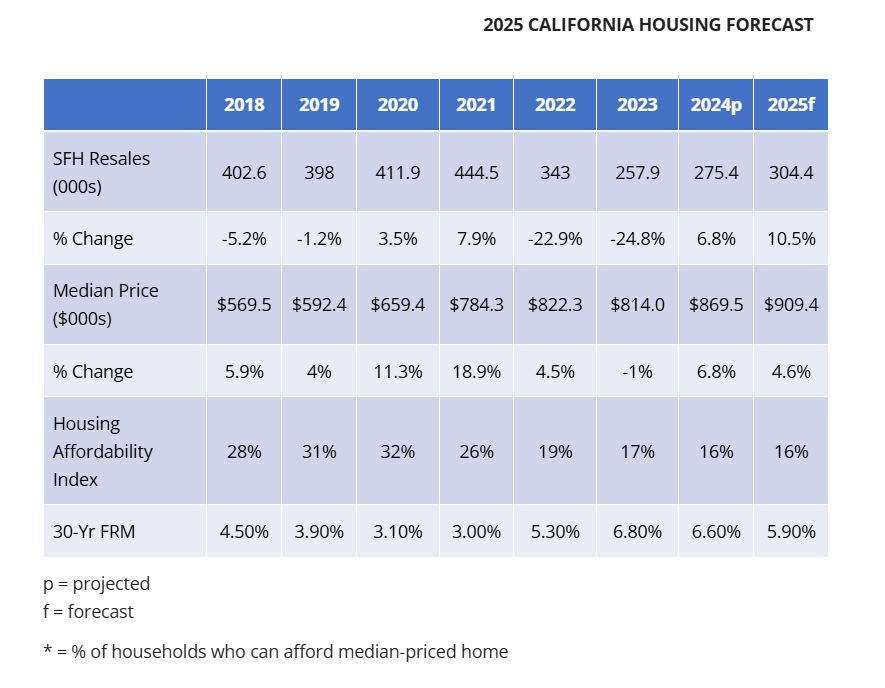
As we move further into 2025, there is cautious optimism. The spring buying season typically brings increased activity, which could lead to more competition and higher prices. The anticipated decline in mortgage rates from 6.6% in 2024 to 5.9% in 2025 may encourage hesitant buyers to enter the market. The C.A.R. forecast expects a 10.5% increase in single-family home sales, highlighting potential growth.
Final Thoughts
While challenges such as affordability and natural disaster impacts persist, California’s housing market remains significant due to its economic influence and diverse opportunities. Staying informed and working with local real estate professionals can help buyers and sellers make strategic decisions in this ever-evolving market.
For more detailed analysis and information, individuals are encouraged to explore resources like those provided by Norada Real Estate Investments.
For further insights, readers are also invited to check related articles on broader market predictions and historical trends, accessible through the original source.
Getting licensed or staying ahead in your career can be a journey—but it doesn’t have to be overwhelming. Grab your favorite coffee or tea, take a moment to relax, and browse through our articles. Whether you’re just starting out or renewing your expertise, we’ve got tips, insights, and advice to keep you moving forward. Here’s to your success—one sip and one step at a time!
Cameron Academy's state-approved 63-hour Florida Real Estate Sales Associate Pre-License Course begins April 13, 2026 at the Dr. Phillips campus in Orlando. Attend in person or join live via Zoom. Morning schedule, expert instruction, and only 14 seats remaining. Enroll now before this class fills up.
The Florida real estate licensing exam is the single biggest gatekeeper between you and a career in one of the nation's most active real estate markets. And the numbers don't sugarcoat it: roughly half of all first-time test-takers in Florida walk out without a passing score. According to data compiled by Colibri Real Estate, Florida's first-time pass rate sits at approximately 51%, with about 41,900 candidates taking the exam each year.
Part-Time vs. Full-Time: Can You Get Your Real Estate License While Working a 9‑to‑5? The honest, data-backed guide to earning your license around a day #ReadMore
Florida’s 2026 legislative session brought significant victories for real estate professionals, with Realtor advocacy preserving key regulatory structures, strengthening property rights, improving major housing programs, and protecting agents from new liabilities. From blocking the dismantling of the Florida Real Estate Commission to advancing bills that support safer, more transparent transactions, these wins shape a more stable future for Florida agents, brokers, and consumers.
AI‑enhanced listing images are transforming real estate marketing, but they’re also creating a growing trust problem. Tools that once simply brightened rooms can now erase damage, add furniture, or even generate entirely new scenes, fueling a trend known as “housefishing.” As complaints rise and states like California introduce disclosure laws, the industry is being forced to confront a new reality: the more perfect the photos get, the more renters and buyers crave authenticity.
Florida homeowners hit by Hurricane Milton face an important April 9 deadline to file or reopen supplemental insurance claims. With more than 385,000 claims and over 5.6 billion dollars in losses already reported, experts warn that waiting until construction is completed could leave families without the additional funds they’re owed. An 18‑month window applies to supplemental claims, and missing it could cause insurance companies to deny further reimbursement.