Agents Want Tech That Saves Brainpower: What the 2026 Zillow Survey Reveals About the Future of Real Estate
Every real estate professional knows that time is money. But according to the new Zillow 2026 Agent Trends Survey, what agents value even more than time or cost savings is something far more personal: mental energy. In a world where agents juggle clients, deadlines, market shifts, transaction management and more, the biggest win is technology that reduces cognitive load.
The survey reveals that ease of use now outranks cost as the top deciding factor when agents choose new tech tools. Yet despite this clear desire for simplicity, most agents still operate across two to four platforms every week. Fragmented systems remain the norm, which drains mental energy that could be redirected toward serving clients and generating business.
AI Has Become a Daily Habit for Almost Half of Agents
One of the most striking shifts in 2026 is the speed at which AI adoption has moved from novelty to necessity. Nearly half of agents now use tools like ChatGPT, Gemini, Claude and Copilot daily. Agents working on teams are even more likely to integrate AI into their workflow, using it for writing follow-up emails, summarizing insights, responding to leads and prepping marketing materials.
However, a substantial segment of the industry still lags behind. About one-quarter of agents rarely or never use AI tools. And while agent adoption is accelerating, clients are not keeping pace; most agents report that their clients use AI infrequently or not at all.
Cameron Swiggett, Zillow’s vice president of Product, captures this moment well: AI is not here to edge agents out; it is here to give them an edge. By offloading repetitive tasks, agents can conserve headspace for the work that matters: relationships, strategy and guiding clients through major financial moves.
Zillow Pro: A Unified, AI-Powered Platform for Agents
To meet the industry’s growing need for simplicity, Zillow is preparing to launch Zillow Pro, an all-in-one platform designed to unify key tools agents rely on. The platform brings together buyer insights, seller activity signals, an intuitive CRM powered by Follow Up Boss and premium branding tools. All of this is backed by Zillow’s robust search data and AI capabilities.
The goal is simple: reduce friction, eliminate platform-hopping and give agents a centralized command center for business growth. Agents can join the Zillow Pro interest list directly on Zillow’s site.
What Else the 2026 Survey Reveals About Todays Real Estate Landscape
Agents are filling a financial literacy gap. Nearly half say buyers overestimate what they can afford, and many clients arrive with limited financing knowledge. Tools like Zillow Home Loans verified pre-approval and the Buyability tool help educate consumers early.
Pre-approvals are more common but inconsistent. About half of agents say new leads arrive pre-approved at least sometimes, while the other half say it is frequent.
Relationships remain the strongest business generator. Nearly every agent relies on their sphere of influence for new leads, especially seasoned agents with maturing networks.
Comparables still drive pricing strategy. Three-quarters of agents use comp data heavily, and 67 percent rely on days-on-market statistics.
What This Means for Aspiring and Active Real Estate Professionals
The report highlights a truth that both new and seasoned agents must embrace: the future of real estate rewards simplicity, adaptability and tech fluency. Licensing schools like Cameron Academy focus on preparing students for both the state exam and the fast-evolving industry that awaits them.
Students who train in modern, workflow-aware environments enter the field ready to use tools like AI assistants, CRMs and automated communication systems from day one. This gives them an edge in a market where clients expect fast responses and clear, confident guidance.
Even experienced agents benefit from ongoing education. Professionals who master AI, reduce mental load and adopt unified systems will be the ones who thrive in 2026 and beyond.
To explore the full original report, check out RISMedia or visit Zillow directly for Zillow Pro updates and more research insights.
More Articles
Getting licensed or staying ahead in your career can be a journey—but it doesn’t have to be overwhelming. Grab your favorite coffee or tea, take a moment to relax, and browse through our articles. Whether you’re just starting out or renewing your expertise, we’ve got tips, insights, and advice to keep you moving forward. Here’s to your success—one sip and one step at a time!
Florida families are feeling the squeeze as everyday costs, insurance premiums, and homeownership barriers continue to climb. House District 102 candidate Jayden D’Onofrio is calling for a broader, more unified affordability strategy—one that tackles the state’s insurance crisis, supports first‑time homebuyers, and restores real competition in the market. His message centers on transparency, practical solutions, and keeping Florida livable for the professionals, workers, and families who power its economy.
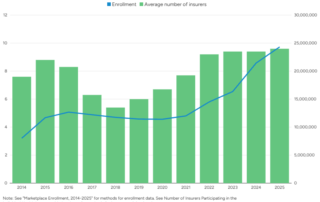
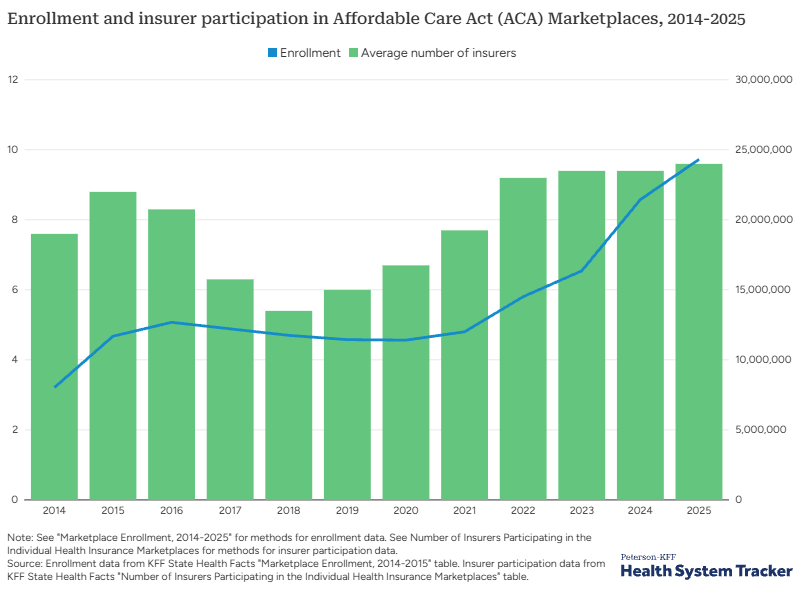
A decade of dramatic change is reshaping America’s health insurance markets. Employer group plans are becoming increasingly dominated by a few powerful insurers, while the ACA individual marketplace is experiencing record‑breaking competition and enrollment. Self‑funded plans are surging, small‑group premiums are driving employers to new coverage models, and major policy shifts in 2025 could redefine affordability for millions. This data‑driven Peterson‑KFF analysis breaks down the trends every insurance, finance, and business professional needs to understand as the industry enters a transformative new era.
Sarasota County is inching closer to approving Winchester Ranch, a massive 8,999‑home community planned for more than 3,100 acres in North Port. With a 7‑1 vote from the Planning Commission and a final decision expected in early 2026, the project could become one of Southwest Florida’s largest developments in decades—bringing new housing, commercial space, and industry while raising fresh questions about growth, the environment, and the region’s rapidly evolving real estate market.
Lument Finance Trust has closed a major $663.8 million commercial real estate CLO, marking one of the standout CRE finance deals of 2025. The transaction, LMNT 2025-FL3, features a strong reinvestment period, non‑recourse and non‑mark‑to‑market financing, and a diversified pool of 32 loans tied to 49 properties nationwide. With J.P. Morgan leading the structuring and more than $585 million placed in investment‑grade securities, the deal highlights renewed stability in transitional CRE debt—making it a development real estate and finance professionals will want to watch closely.
Walmart has partnered with Alquist 3D to roll out the nation’s first large‑scale wave of 3D‑printed commercial buildings, signaling a major shift in how future retail and industrial spaces will be constructed. After completing an 8,000‑square‑foot 3D‑printed expansion in Tennessee—the largest of its kind—the company is moving forward with over a dozen new projects nationwide, accelerating a tech‑driven transformation in commercial real estate.
Citizens Property Insurance Corp. is recommending statewide rate reductions for 2026—the first proposed decrease in more than a decade. Most Citizens policyholders could see an average 11.5% drop, reflecting recent insurance‑market reforms that have stabilized Florida’s turbulent property sector. With hundreds of thousands of policies moving back to private insurers and state‑backed Citizens shrinking to record‑low enrollment, real estate and insurance professionals should prepare for how lower premiums may influence affordability, buyer confidence, and market activity heading into 2026.