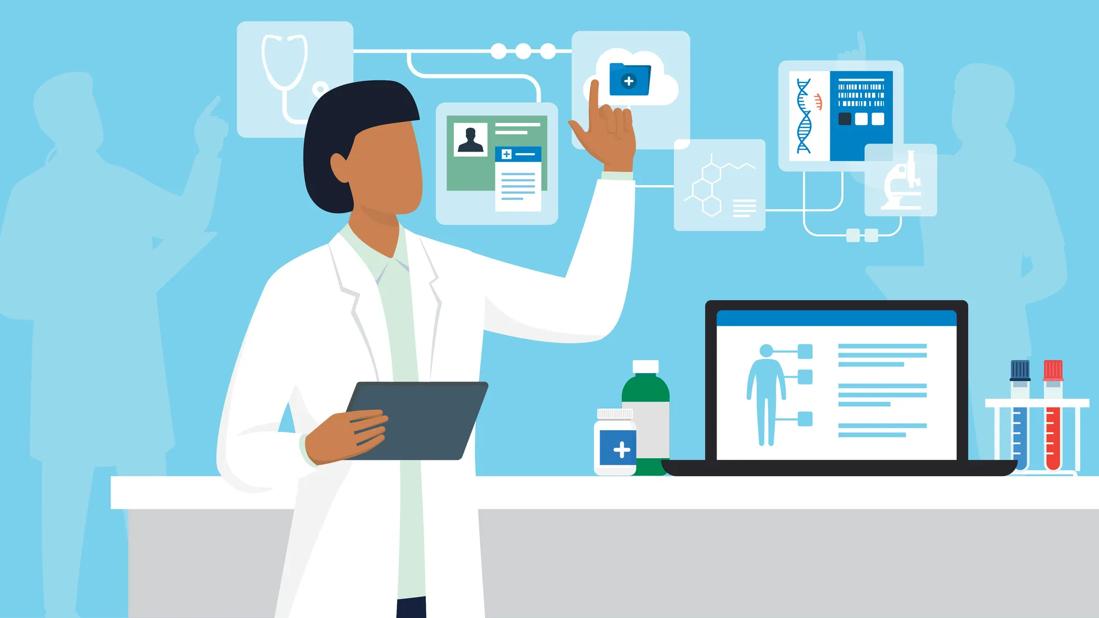
As the digital age continues to unfold, the healthcare industry stands on the precipice of a transformation as profound as it is promising. The catalyst? Artificial Intelligence (AI). Known for its ability to replicate human cognitive functions, AI is poised to revolutionize how we approach health and wellness, from routine screenings to complex diagnostics and treatment strategies.
The Promise of AI in Healthcare
AI is not a distant dream but a present reality, already integrated into everyday life through virtual assistants like Alexa and Siri. However, its potential extends far beyond convenience, reaching into the intricate world of healthcare. According to the National Academy of Medicine, AI can significantly enhance patient outcomes, reduce healthcare costs, and improve population health.
In radiology, for instance, AI accelerates cancer screening results, offering swift and accurate diagnoses. A notable application is in the analysis of polycystic kidney disease (PKD), where AI rapidly evaluates total kidney volume, a critical factor in predicting disease progression.
Cardiology and Risk Assessment
AI’s capabilities extend into cardiology, where it has demonstrated a remarkable ability to identify risks for conditions like left ventricular dysfunction before symptoms appear. This proactive approach allows for early intervention, potentially averting serious health crises. AI tools also detect coronary artery calcium, signaling the risk of heart attacks or strokes years in advance, thus offering a window of opportunity for preventive care.
Beyond Diagnostics: AI in Public Health
AI’s influence is not confined to individual patient care. It plays a vital role in public health management, particularly in disease prevention and outbreak prediction. During the COVID-19 pandemic, AI could have analyzed internet search trends and social media data to anticipate outbreak hotspots, aiding public health officials in making informed decisions to curb the spread.
AI as a Complement to Human Expertise
While AI shows promise in enhancing medical accuracy, such as in predicting mesothelioma survival and improving colonoscopy accuracy, it is not intended to replace healthcare professionals. Instead, AI serves as an invaluable assistant, managing routine tasks and sifting through vast volumes of medical literature, thus freeing doctors to focus on patient care.
However, the integration of AI in healthcare is not without challenges. Concerns about bias in AI algorithms, if trained on non-representative data, and the dissemination of misinformation through AI chatbots underscore the need for effective regulation.
The Road Ahead
The future of AI in healthcare is bright, with exciting possibilities on the horizon. From remote health monitoring and early diagnosis of imperceptible conditions to selecting suitable clinical trials, AI stands to redefine the landscape of medical care. The Mayo Clinic is at the forefront of this innovation, striving to harness AI’s potential to create new methods for diagnosing, treating, predicting, preventing, and curing diseases.
As AI continues to evolve, its role in healthcare will undoubtedly expand, offering new tools and insights that promise to enhance both individual and public health outcomes.
More Articles
Getting licensed or staying ahead in your career can be a journey—but it doesn’t have to be overwhelming. Grab your favorite coffee or tea, take a moment to relax, and browse through our articles. Whether you’re just starting out or renewing your expertise, we’ve got tips, insights, and advice to keep you moving forward. Here’s to your success—one sip and one step at a time!
In a world where technology is rapidly reshaping every facet of our lives, the healthcare sector is no exception. The recent review published in Cureus delves into the transformative role of telemedicine and telehealth, particularly in public healthcare. This narrative review highlights the integration of telehealth and telemedicine, their historical milestones, and how the COVID-19 pandemic accelerated their adoption.
The construction industry is poised for dramatic shifts. Those who embrace these changes will lead the way in shaping a smarter, more sustainable built environment.
As the clock ticks toward a December 31 deadline, a major House subcommittee is considering 15 bills aimed at expanding access to telehealth services. This legislative push is crucial as pandemic-era flexibilities face expiration, potentially affecting countless patients who have come to rely on virtual care.
The AI in telemedicine market is set to experience a remarkable surge, growing from USD 19.4 billion in 2024 to an anticipated USD 156.7 billion by 2033. This represents a compound annual growth rate (CAGR) of 26.1%, driven by advancements in remote diagnostics, personalized treatments, and the integration of artificial intelligence across telemedicine platforms globally.
The Global X Infrastructure Development Ex-U.S. ETF, known as IPAV, emerges as a promising investment vehicle for those looking to capitalize on the burgeoning international infrastructure sector. Listed on August 28, 2024, on the CBOE BZX, it captures the growth potential of companies outside the United States benefiting from infrastructure advancements.