AI Assistance in Radiology: A Nuanced Tool for Diagnostic Precision
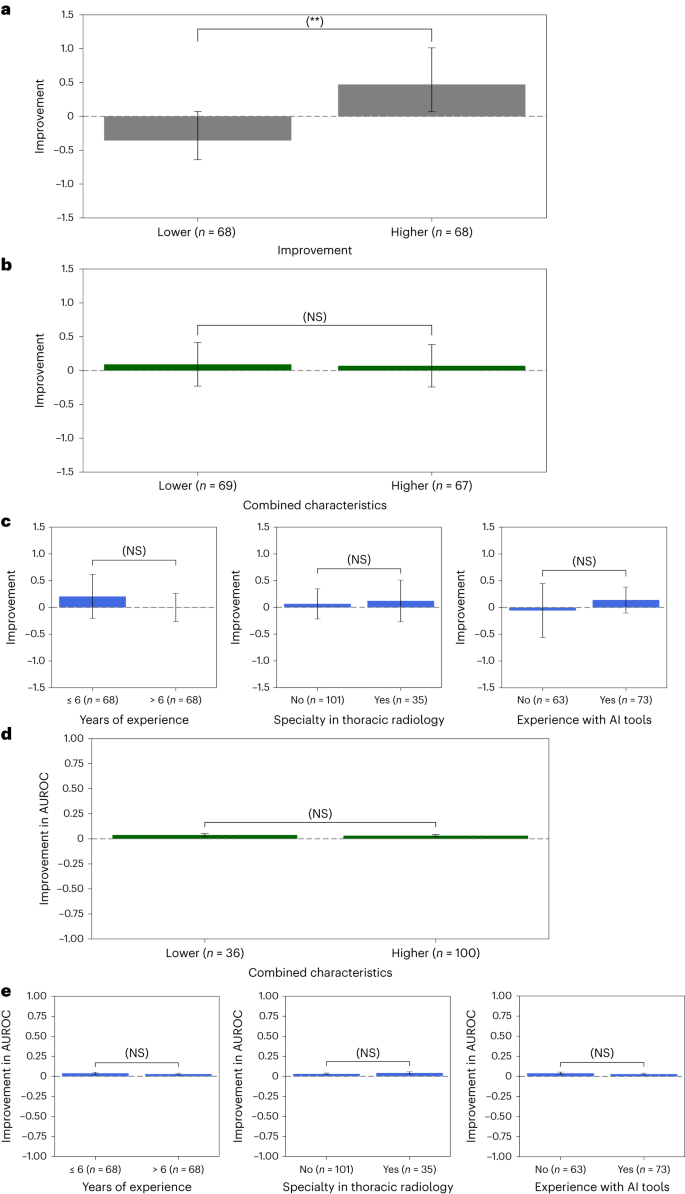
In a groundbreaking study published by Nature on March 19, 2024, researchers have unveiled the complex dynamics of artificial intelligence (AI) assistance in radiology, emphasizing the need for personalized strategies to harness its full potential. The study, titled “Heterogeneity and Predictors of the Effects of AI Assistance on Radiologists,” delves into how AI impacts diagnostic accuracy across a diverse group of clinicians.
The research, conducted on 140 radiologists performing 15 diagnostic tasks, highlights significant variability in AI’s effectiveness. This variation underscores the necessity for tailored approaches in clinical settings to optimize AI’s benefits. The study’s findings are pivotal, as they suggest that a one-size-fits-all approach to AI assistance in healthcare may not be effective.
One of the critical insights from the study is the heterogeneous nature of AI’s impact, which varies significantly based on individual clinician characteristics and the quality of AI predictions. This variability suggests that while some radiologists may experience enhanced diagnostic accuracy with AI assistance, others might not benefit as much, or could even be hindered by it.
The study is part of a growing body of research exploring AI’s role in healthcare. For instance, earlier works like CheXNet and Deep Learning for Chest Radiograph Diagnosis have paved the way for understanding AI’s capabilities in medical imaging. This latest research builds on these foundations, offering a more nuanced view of AI’s role in clinical practice.
Key Takeaways:
AI assistance in radiology shows significant variability in effectiveness across different radiologists.
Individualized strategies are crucial for optimizing AI’s benefits in clinical settings.
Quality of AI predictions plays a significant role in determining its impact on diagnostic accuracy.
The study’s findings are a call to action for healthcare providers and AI developers to collaborate closely. By understanding the factors that influence AI’s effectiveness, they can develop more refined tools that cater to the unique needs of each clinician. This approach not only enhances diagnostic precision but also fosters greater trust and acceptance of AI in healthcare.
For more detailed insights, you can access the full study on Nature’s website.
More Articles
Getting licensed or staying ahead in your career can be a journey—but it doesn’t have to be overwhelming. Grab your favorite coffee or tea, take a moment to relax, and browse through our articles. Whether you’re just starting out or renewing your expertise, we’ve got tips, insights, and advice to keep you moving forward. Here’s to your success—one sip and one step at a time!
Across the vast landscapes of rural America, a silent crisis brews—one that affects the mental well-being of millions. The shortage of mental health care providers, coupled with geographic isolation, has created a significant gap in mental health services. However, a glimmer of hope emerges through telehealth technology, promising to bridge this divide.
Artificial Intelligence (AI) is on the brink of revolutionizing the healthcare industry, promising to enhance patient care by making it more predictive, preventive, and personalized. Spearheading this transformation is Saeed Hassanpour, PhD, director of the Dartmouth Center for Precision Health and Artificial Intelligence (CPHAI). According to Hassanpour, AI's integration into healthcare will increase efficiency, accessibility, and diagnostic accuracy, fundamentally reshaping the landscape.
The housing market has been a rollercoaster of skyrocketing prices in recent years, leaving many potential homebuyers feeling overwhelmed. This surge in prices stems from the pandemic-driven migration to suburban areas and historically low interest rates.
AI is reshaping patient experience by making healthcare more accessible, efficient, and personalized. Through AI-assisted scheduling, virtual health assistants, and remote monitoring, patients receive care that is tailored to their specific needs, significantly reducing wait times and enhancing overall satisfaction.
The healthcare industry stands on the precipice of a transformative era, driven by the integration of artificial intelligence (AI) into its core operations.
The integration of visual technologies into healthcare heralds a new era of personalized medicine. These innovations offer unprecedented opportunities for investment and improvement in global health outcomes.