AI Is Forcing Real Estate to Finally Fix Its Data Problem
Artificial intelligence is transforming nearly every major industry, but in real estate, it’s exposing a long‑ignored issue: the data powering the business is fragmented, inconsistent, and scattered across disconnected systems. While industries like finance and e‑commerce invested early in standardized and interoperable data ecosystems, real estate has functioned using a chaotic mix of formats and definitions that vary wildly from company to company—and even from property to property.
AI doesn’t just need data. It needs structured, clearly defined, consistently labeled data. And this is where the industry is finally being pushed to evolve.
The Hidden Problem AI Has Dragged Into the Spotlight
Real estate generates enormous volumes of information: leases, work orders, rent rolls, valuations, operating statements, market research, and government records. The obstacle isn’t scarcity—it’s inconsistency. One landlord’s lease abstract may look nothing like another’s. County recorders publish documents using formats that don’t match neighboring jurisdictions. Brokers rely on unique internal databases. Tech platforms create proprietary systems that can’t communicate with others.
The result? AI models choke on incompatible inputs. Before any company can unlock AI’s potential, they must clean, map, and normalize data—an expensive, tedious, and ongoing process.
A Push Toward Shared Standards
Richard Reyes, CEO and Executive Director of OSCRE—a global consortium shaping real estate data standards—notes that AI is forcing the industry to confront problems it has ignored for decades. “You need an ontology to make it easier for people to get information and integrate it with AI. You need a shared learning model and shared data,” he explains.
An ontology defines not just field names, but relationships: buildings connect to leases, which connect to tenants, which connect to financial obligations. Without standardized relationships, AI can’t process these connections at scale.
Historically, companies viewed proprietary data as a competitive edge. That mindset is rapidly fading. Data silos no longer create advantages—they weaken the ability to train powerful AI systems.
Why Real Estate Firms Are Now Collaborating
AI‑driven underwriting needs standardized financials. Predictive maintenance requires consistent work‑order labels. Portfolio models need comparable data across markets. When one company uses “base rent” and another uses “net rent,” integrations become headaches.
Today, firms spend heavily on custom integrations linking accounting software, property management tools, leasing systems, CRMs, and reporting platforms. Every update breaks something.
Shared industry data standards could eliminate this cycle entirely.
The “Smart Data Highway” Vision
OSCRE is developing an evolving Industry Data Model—essentially a “smart data highway.” It shifts real estate from static definitions to intelligent, contextual interoperability.
Imagine software that instantly understands terms like CAM charges, capital expenses, lease expirations, or rent—no matter which company or platform produced them. Instead of messy middleware or manual reconciliation, AI could operate seamlessly.
The benefits ripple across the industry:
Lower integration costs
Faster adoption of new technology
Cleaner and more comparable datasets
More accurate AI‑driven predictions
Stronger benchmarking across portfolios
AI Isn’t Just Changing Companies—It’s Changing the Industry
AI’s most profound impact may not be underwriting automation or smart‑building optimization, but the industry’s newfound willingness to collaborate. Shared standards unlock innovation far beyond what isolated datasets can achieve.
Vendors can build universal solutions. Brokers get cleaner market data. Owners gain richer asset insights. Most importantly, AI systems finally receive the consistent inputs required to deliver reliable results.
What This Means for Today’s Professionals
Professionals across commercial, residential, investment, and property management sectors will increasingly need to understand data systems and AI‑powered workflows to stay competitive.
This is why educational institutions like Cameron Academy are so essential. As real estate evolves toward smarter, cleaner, interconnected data, those trained in modern standards and technology will have a tremendous advantage.
To explore forward‑thinking courses that prepare you for the next decade of real estate, technology, and professional licensing, visit Cameron Academy.
Getting licensed or staying ahead in your career can be a journey—but it doesn’t have to be overwhelming. Grab your favorite coffee or tea, take a moment to relax, and browse through our articles. Whether you’re just starting out or renewing your expertise, we’ve got tips, insights, and advice to keep you moving forward. Here’s to your success—one sip and one step at a time!
Step into 2025, where the real estate market emerges as a resilient beacon amidst economic unpredictability. Investors are increasingly drawn to secondary cities like Austin and Manchester, attracted by their growth potential, affordability, and enhanced quality of life.
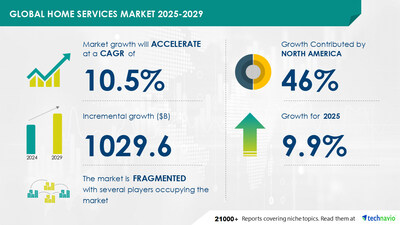
The global home services market is poised for significant growth, with projections indicating an increase of USD 1.03 trillion from 2025 to 2029. This forecasted expansion is attributed to increasing urbanization and the transformative impact of AI on market trends, according to a recent report by Technavio.
In a revealing study by USC, the roots of the current housing crisis in the United States are traced back to policy missteps and demographic changes that have been unfolding since the early 2000s. The study highlights how these factors have left millennials and people of color disproportionately affected.
Fundrise stands out for offering investors a chance to diversify their portfolios with real estate exposure through proprietary funds. With a minimum investment as low as $10, it opens doors to beginners and seasoned investors alike.
Business Insider has reviewed a range of platforms available in 2025, focusing on key factors like fees, accessibility for accredited vs. non-accredited investors, and the types of real estate investments offered.