AI Is Forcing Real Estate to Finally Fix Its Data Problem
Artificial intelligence is reshaping industries at a staggering rate, but in real estate, its biggest impact isn’t automation or prediction—it’s confrontation. Specifically, a confrontation with the industry’s long‑standing struggle: fragmented, inconsistent, siloed data that refuses to play nicely together.
While finance and e‑commerce have spent years streamlining their digital foundations, real estate has lived in a patchwork world of disconnected systems, varied recordkeeping styles, and legacy software that predates the smartphone. As AI demands clean, structured, interoperable information, the industry is discovering that the real bottleneck isn’t the technology—it’s the data underneath it.
The Roots of Real Estate’s Data Fragmentation
Every company seems to speak its own data language. A lease abstract in one portfolio might look nothing like one from another. Property attributes are labeled differently, public records are formatted inconsistently from county to county, and software systems rarely talk to each other without expensive custom integrations.
Richard Reyes, CEO and Executive Director of OSCRE—an international consortium developing data standards for real estate—sums up the issue simply: “You need an ontology to make it easier for people to get information and integrate it with AI. You need to have a shared learning model as well as shared data.”
Source Feature: Explore the full original report on Propmodo to see how AI is disrupting commercial real estate’s deepest data challenges.
Visit: propmodo.com
Why AI Is Forcing Change
AI doesn’t just need data—it needs context. It needs to understand how buildings relate to leases, how tenants relate to financial obligations, and how operational metrics connect to asset performance. Without shared definitions, AI systems struggle to make sense of even the most robust datasets.
Many firms attempted to build internal data models, but as soon as information moves across portfolios, markets, or software platforms, those models fall apart. AI exposes these incompatibilities instantly, pushing companies toward something the industry once resisted: open collaboration.
Data Sharing: From Competitive Edge to Collective Power
For decades, data was treated as proprietary currency. Owners guarded lease information. Brokers protected transaction histories. Tech vendors sealed their systems shut. But AI has shifted the mindset—clean, interoperable data benefits everyone.
“In the past, keeping data private has been seen as an advantage, now the mindset has changed to help support the learning models,” Reyes explains. As learning models improve, so does value for the entire ecosystem.
OSCRE’s Push Toward a Smarter Data Highway
To bridge fragmentation, OSCRE is spearheading an Industry Data Model designed to serve as a shared digital foundation. Reyes describes the initiative as a move toward a “smart data highway”, enabling systems not just to map data, but to understand it.
Imagine integrations where “rent” in one system automatically aligns with the correct rent type, escalation structure, and financial terminology in another—without a bespoke middleware project. This interoperability lowers integration costs, reduces redundancy, and strengthens AI performance.
The Cost & Competitive Impact
Firms currently spend enormous sums on custom data bridges between accounting systems, leasing databases, reporting platforms, and property management software. Every update, every patch, every added field—more money burned.
A shared model radically simplifies this. It frees tech vendors to innovate faster, allows owners to benchmark assets with confidence, and enables brokers to feed cleaner data into forecasting tools. Most importantly, it allows AI to learn from larger, more consistent datasets—producing sharper insights at scale.
What This Means for Today’s Professionals
AI may not just reshape companies—it may reshape how the entire industry collaborates. Standardizing data isn’t glamorous, but it’s the foundation that determines who thrives in an AI‑powered market.
For professionals—especially those earning or maintaining real estate licenses—the message is clear: understanding data workflows, digital standards, and AI‑driven tools is no longer optional. Educational hubs like Cameron Academy now integrate modern tech and data literacy into their training, helping today’s workforce stay ahead of the next wave.
A Future Built on Shared Understanding
If momentum continues, real estate could be on the cusp of its most collaborative era yet. The industry is realizing that the true power of AI emerges not from isolated innovation but from shared infrastructure—a common data language that lets machines and people finally communicate fluently.
In the end, AI’s greatest gift to real estate may be clarity. And for once, clarity is something the entire industry can build together.
More Articles
Getting licensed or staying ahead in your career can be a journey—but it doesn’t have to be overwhelming. Grab your favorite coffee or tea, take a moment to relax, and browse through our articles. Whether you’re just starting out or renewing your expertise, we’ve got tips, insights, and advice to keep you moving forward. Here’s to your success—one sip and one step at a time!
A growing share of American homeowners now carry mortgage rates above 5%—a dramatic shift that’s reshaping refinancing, inventory, and buyer behavior nationwide. With more than 30% of borrowers locked into rates over 5% and 20% above 6%, the market is split between owners holding on to low pandemic‑era loans and new buyers taking on higher‑rate mortgages. Federal efforts to push rates down could unlock millions of refinancing opportunities, while buyers see only modest monthly savings. For real estate professionals, understanding these rate dynamics is crucial as they increasingly drive inventory levels, affordability, and market activity.
New Moody’s data shows commercial real estate deal volume slipped 20% in December, marking a second monthly decline. Yet the full year tells a different story: 2025 ended with a 17% gain, signaling a quiet but resilient recovery. The biggest surprise came from the office sector, which posted a 21% jump in activity as return‑to‑office trends and AI‑driven job growth boosted demand. Multifamily, retail, and alternative assets like data centers also saw strong momentum, giving real estate professionals a market full of fresh opportunities heading into 2026.
Florida drivers and industry professionals are heading into 2026 with good news: auto insurance rates are dropping across the state as the market shows strong signs of stabilization. USAA leads the latest wave with a 7% average rate decrease expected in May 2026, saving members more than $125 million annually. They join several major insurers — including State Farm, Progressive, AAA, Allstate, and Florida Farm Bureau — all approving significant reductions. Officials credit recent legislative reforms, especially tort reform, for the improved loss ratios and renewed insurer confidence. With both auto and home insurance markets strengthening, Florida’s real estate, mortgage, and insurance professionals can expect more consumer confidence, smoother transactions, and expanding career opportunities.
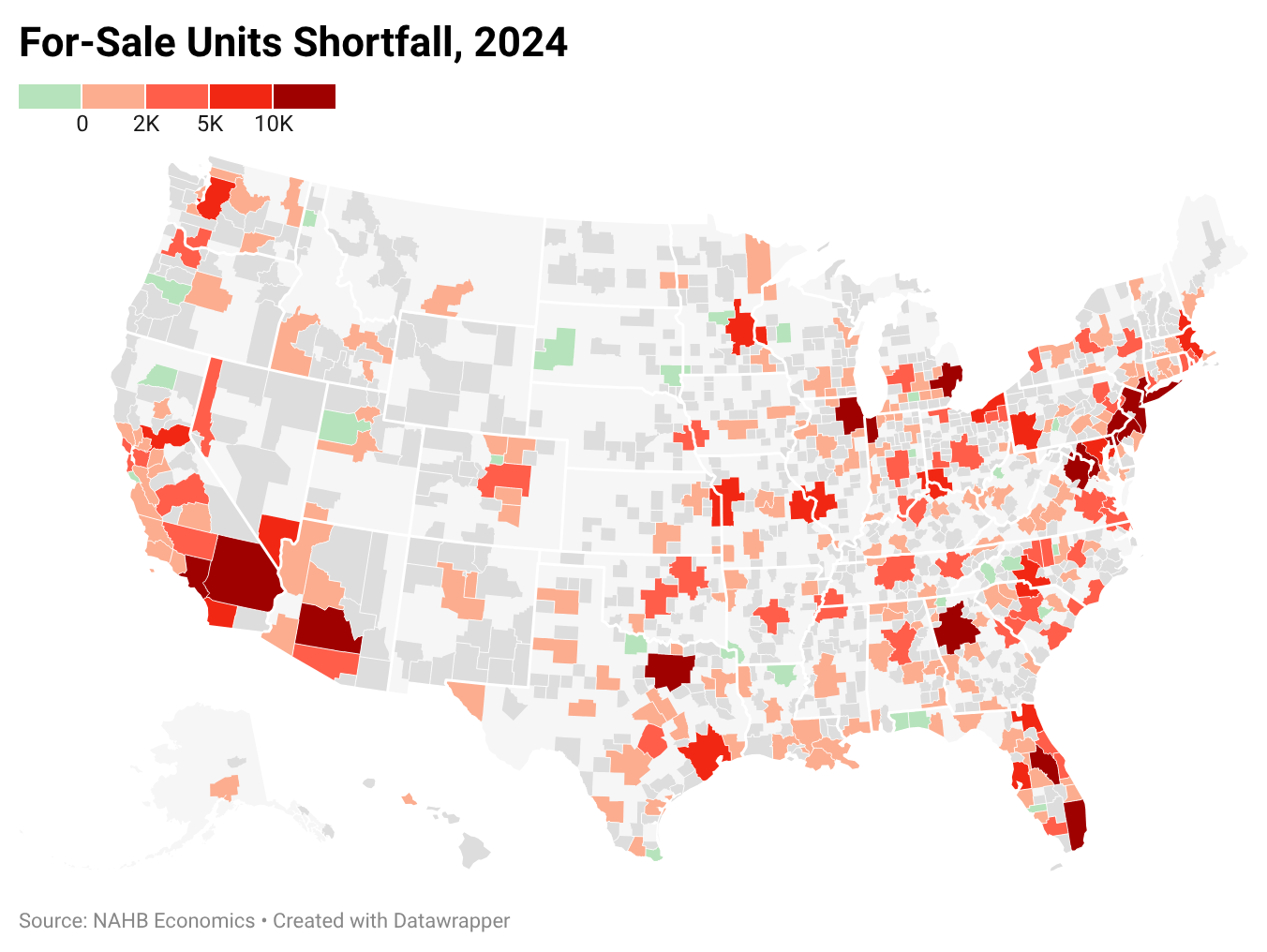
New data from Eye On Housing and the NAHB shows the U.S. remains short more than 1.2 million housing units, keeping pressure on both rents and home prices. Record‑low vacancy rates, slow single‑family construction, and restrictive zoning continue to fuel intense competition in 2024. Major metros like Chicago, New York, and Atlanta face some of the deepest deficits, and the true nationwide shortfall may be even higher when accounting for overcrowding and aging homes. For real estate professionals, the ongoing shortage means sustained demand, tighter inventory, and major opportunities for those who understand the evolving market.
Top real estate coach Jason Pantana says the divide between agents today isn’t about who has “tried” AI — it’s about who is immersed in it. In a new HousingWire interview, he explains why AI isn’t a gimmick but a full business system that amplifies output, improves authenticity, and reshapes how clients search for agents. From prompt mastery to AI‑driven visibility on Google, Pantana reveals how agents who commit even 15 minutes a day to learning AI are already outperforming those who hesitate.
Dallas–Fort Worth’s commercial real estate market closed 2025 with a split personality. Industrial dominated with massive new deliveries and soaring leasing demand, retail held steady with some of the market’s strongest fundamentals in years, and office continued to falter under remote‑work pressures. High vacancies, weak absorption, and rising demand for top‑tier space show the sector’s ongoing reset. Meanwhile, industrial and retail strength position the Metroplex for another powerhouse year heading into 2026.