AI in Healthcare: A Revolution in Progress or Just Hype?

Artificial Intelligence (AI) is poised to transform the landscape of healthcare, promising revolutionary advancements in drug discovery, personalized medicine, and even the operation of hospitals where super-smart robots might one day perform tasks as intricate as brain surgery. However, as we delve into the potential of AI in healthcare, it’s crucial to separate the genuine breakthroughs from the marketing bluster.

Current Landscape: Successes and Setbacks

Today, AI’s role in healthcare is marked by both notable achievements and instances of over-exaggerated claims. One of the most significant successes has been in the realm of drug and vaccine discovery. AI accelerated the development of mRNA vaccines during the COVID-19 pandemic and is now being leveraged to create new protections against many other diseases. Generative AI, akin to the technology behind ChatGPT, is also contributing to the creation of new immunotherapy drugs.

AI has proven adept at analyzing medical scans and records, often outperforming radiologists in spotting signs of diseases such as cancer and Alzheimer’s disease. According to the American College Of Surgeons, AI’s scan interpretations are often more robust and accurate than those of human radiologists.

However, the journey hasn’t been without its pitfalls. The partnership between IBM and MD Anderson Cancer Center was discontinued due to the Watson Health system’s inaccurate decision-making. Similarly, a study on online symptom-checker tools revealed their variable and low accuracy, posing potential risks to patient safety.

Expert Opinions: A Balanced View

Amidst the hype, experts offer a more nuanced perspective on AI in healthcare. Dr. Eric Topol, a geneticist and cardiologist, acknowledges AI’s value in applications like self-administered kits for urinary tract infections and lung problem analysis. He envisions a future where mobile phones provide inexpensive ultrasound scans and detect early diabetes signs from retinal images. Importantly, Dr. Topol emphasizes AI’s potential to restore the human element in medicine by freeing doctors to spend more time with patients.

Dr. Fei-Fei Li of Stanford University echoes this sentiment, noting that AI can alleviate the burden of routine tasks, allowing medical professionals to focus more on patient care. Yet, caution is warranted, as highlighted by an MIT Technology Review article that warns of AI tools potentially being trained on biased data, which could impact diagnostic accuracy.

The Road Ahead: Realizing Potential Amidst Challenges

While AI’s potential in healthcare is undeniable, realizing its full benefits will require overcoming challenges such as data privacy concerns, implementation costs, and the need for training healthcare professionals. The most promising applications will likely augment rather than replace human expertise, enhancing the capabilities of medical practitioners.

For technology companies developing AI tools, maintaining a focus on augmenting human skills will be essential in driving meaningful advancements that benefit all.


More Articles

Getting licensed or staying ahead in your career can be a journey—but it doesn’t have to be overwhelming. Grab your favorite coffee or tea, take a moment to relax, and browse through our articles. Whether you’re just starting out or renewing your expertise, we’ve got tips, insights, and advice to keep you moving forward. Here’s to your success—one sip and one step at a time!

Phoenix Housing Market Surges Ahead of the Nation in 2025

The Phoenix housing market continues to outperform the rest of the country, posting stronger sales, rising equity, and an influx of qualified buyers. With closed sales, pending sales, new listings, and median prices all trending upward, the Valley is outpacing national growth by a wide margin. City‑level data shows impressive strength across Scottsdale, Goodyear, Gilbert, Phoenix, and more—making 2025 a powerful year for agents, investors, and professionals watching the Arizona market.

20 High-Demand Jobs to Watch as 2026 Approaches — Major Events Are Fueling New Opportunities

With the 2026 FIFA World Cup and America’s 250th birthday celebrations on the horizon, the U.S. job market is gearing up for a surge across multiple industries. Seasonal, flexible, and part‑time roles are expected to rise—especially for workers 50+ who have struggled in a cooling labor market. From accounting and HR leadership to event staffing and delivery driving, major cities are preparing for increased hiring tied to tourism, infrastructure, and yearlong national celebrations. Many of these fast‑growing roles connect directly to licensing and certification pathways, giving professionals new chances to pivot or upskill through programs offered by Cameron Academy.

New Florida Laws Taking Effect January 1, 2026: Key Updates for Professionals

Florida is rolling out a new wave of laws on January 1, 2026 that will impact professionals in real estate, insurance, healthcare, education, and other regulated industries. From new insurance rules and healthcare billing requirements to condo association deadlines and statewide databases, these updates reshape compliance expectations across the state. Whether you work in property, finance, or public‑facing services, understanding these changes is essential for staying aligned with Florida’s evolving regulations.

Commercial Real Estate Pros Are Almost All Bullish on 2026

Nearly every commercial real estate professional is expecting a stronger year ahead, with 97% predicting increased or stable activity in 2026, according to Avison Young’s latest outlook. Confidence has surged dramatically since mid‑2025 as strong sales, anticipated rate cuts, and improving fundamentals across key sectors signal that CRE recovery and growth may finally be taking hold.

Dallas‑Fort Worth’s 2025 Boom: The Metroplex Redefining U.S. Growth

Dallas‑Fort Worth is finishing 2025 as the nation’s top real estate and business powerhouse, fueled by corporate relocations, a dominant industrial sector, infrastructure megaprojects, and a rapidly evolving workforce landscape. From data center expansion to the launch of the DART Silver Line, the region continues to outpace national trends—while also confronting a growing demand for skilled professionals and licensed talent across construction, real estate, and technical fields.

FEMA and NJDEP Unveil New Morris County Flood Maps, Triggering Key Changes for Property Owners and Professionals

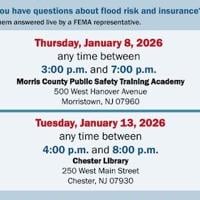
FEMA and the NJDEP have released revised preliminary flood maps for Morris County, reshaping how homeowners, real estate agents, insurers, and mortgage professionals assess flood risk. The updated FIRMs may shift properties into or out of higher‑risk zones, affecting insurance requirements, closing processes, and long‑term property values. With public review and appeals ahead, industry professionals are urged to study the changes now and prepare clients for potential impacts.