In the bustling world of healthcare innovation, artificial intelligence (AI) is rapidly becoming a pivotal force, promising to transform the way we experience medical care. This October, Northeastern University’s Institute for Experiential AI will host a groundbreaking workshop and conference aimed at exploring AI’s potential in healthcare, particularly in the realm of precision health.

AI in Healthcare: A Seamless Revolution

“If AI is working the way that we envision it, you actually won’t notice a lot of direct impact,” says Sam Scarpino, the AI+Life Sciences director at Northeastern University. The vision is for AI to operate quietly in the background, much like a well-oiled engine, enhancing the efficiency of medical processes and enabling earlier detection of diseases, such as cancer.

Gene Tunik, the AI+Health director, echoes this sentiment, emphasizing that AI should function seamlessly, optimizing drug development, cancer diagnosis, and medical data management. Despite these advancements, AI is not yet universally adopted in healthcare settings due to challenges in accuracy, cost, and data quality.

Upcoming Events: Workshops and Conferences

To address these challenges and opportunities, Northeastern University will host two significant events. On October 9, the Future of AI in Health & Life Sciences Workshop will gather experts to discuss integrating AI into healthcare training. The following day, October 10, the State of AI in Precision Health Conference will focus on precision health, a highly individualized approach to medicine.

Precision Health: The Future of Medicine

Precision health requires physicians to analyze vast amounts of data quickly to meet specific health objectives. As Usama Fayyad, the institute’s executive director, explains, AI’s ability to process data efficiently makes it an invaluable tool in this area. The conference will feature discussions on AI’s role in drug discovery, aging in place, and patient care.

A Computational Transformation

Raimond Winslow, director of life sciences and medicine research, highlights that medicine is increasingly becoming a computational discipline. This transformation, akin to the shift in biology over the past two decades, means that AI will play a crucial role in informing healthcare decisions.

As Northeastern University prepares to lead these vital discussions, the healthcare industry stands on the brink of a transformation that will redefine patient care in the AI era.

More Articles

Getting licensed or staying ahead in your career can be a journey—but it doesn’t have to be overwhelming. Grab your favorite coffee or tea, take a moment to relax, and browse through our articles. Whether you’re just starting out or renewing your expertise, we’ve got tips, insights, and advice to keep you moving forward. Here’s to your success—one sip and one step at a time!

Unlocking Real Estate Wealth in 2025: Strategies for Success

Step into 2025, where the real estate market emerges as a resilient beacon amidst economic unpredictability. Investors are increasingly drawn to secondary cities like Austin and Manchester, attracted by their growth potential, affordability, and enhanced quality of life.

By |February 18, 2025|Categories: Article, Investment Strategies, Real Estate|Tags: , |0 Comments

AI and Urbanization Drive Home Services Market Growth

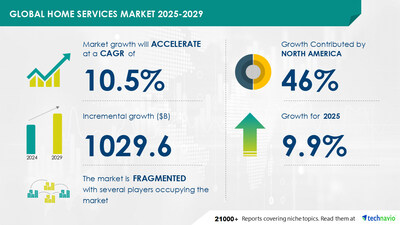
The global home services market is poised for significant growth, with projections indicating an increase of USD 1.03 trillion from 2025 to 2029. This forecasted expansion is attributed to increasing urbanization and the transformative impact of AI on market trends, according to a recent report by Technavio.

Decoding the U.S. Housing Crisis: A Study of Historic Policy Missteps and Demographic Shift

In a revealing study by USC, the roots of the current housing crisis in the United States are traced back to policy missteps and demographic changes that have been unfolding since the early 2000s. The study highlights how these factors have left millennials and people of color disproportionately affected.

Best Real Estate Crowdfunding Platforms for February 2025: Investopedia’s Top Picks

Fundrise stands out for offering investors a chance to diversify their portfolios with real estate exposure through proprietary funds. With a minimum investment as low as $10, it opens doors to beginners and seasoned investors alike.

Top Real Estate Investment Apps of 2025: A Guide for First-Time and Experienced Investors

Business Insider has reviewed a range of platforms available in 2025, focusing on key factors like fees, accessibility for accredited vs. non-accredited investors, and the types of real estate investments offered.