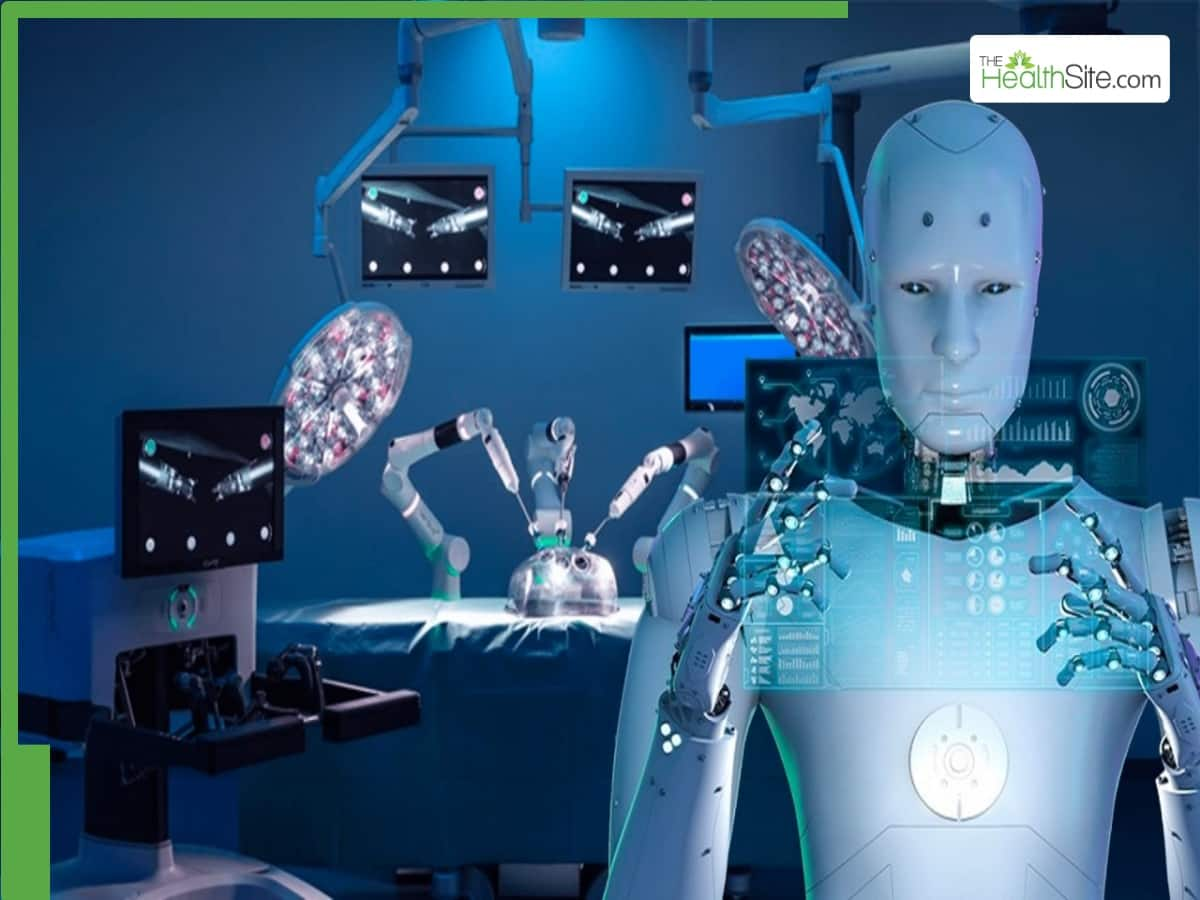
In the rapidly evolving landscape of healthcare, artificial intelligence (AI) stands at the forefront of technological innovation, promising to revolutionize medicine. From brain surgery to personalized treatments, the potential applications of AI are vast and varied. Yet, as the Forbes article suggests, the line between groundbreaking innovation and overhyped promise is razor-thin.
Current Advancements AI has already demonstrated its prowess in several areas. Notably, it expedited the development of mRNA vaccines for COVID-19 and is now being harnessed to create new protections against a variety of diseases. Generative AI, akin to ChatGPT, is also paving the way for new immunotherapy drugs.
In diagnostics, AI’s ability to analyze medical scans and records is proving invaluable. The American College of Surgeons notes that AI often surpasses radiologists in interpreting scans, identifying subtle signs of diseases like cancer and Alzheimer’s disease.
Challenges and Caution
Despite these successes, AI in healthcare is not without its challenges. A study on pulmonary embolism highlighted AI’s potential to reduce hospital stays, yet not all AI applications have been as effective. The discontinuation of IBM’s Watson Health partnership with MD Anderson Cancer Center due to accuracy issues serves as a cautionary tale.
Moreover, symptom-checker tools, which sometimes rely on AI, have been criticized for their low accuracy, posing potential safety risks. Additionally, the promise of administrative efficiencies through AI remains largely unrealized, with little evidence of significant cost savings or improvements in patient care.
Expert Opinions
Experts offer a range of perspectives on AI’s future in healthcare. Dr. Eric Topol, author of Deep Medicine, acknowledges AI’s utility in certain applications but emphasizes the irreplaceable value of human interaction in patient care. He envisions a future where AI augments rather than replaces human skills, enabling doctors to spend more time with patients.
Dr. Fei-Fei Li from Stanford University echoes this sentiment, highlighting AI’s role in alleviating administrative burdens, thereby restoring the “human element” to medicine. However, an article in MIT Technology Review warns against over-reliance on AI, particularly when trained on biased data, which could lead to inequities in care.
The Path Forward
While AI holds the promise of transforming healthcare, it is not a panacea. The early successes in drug discovery and diagnostics are promising, yet challenges such as data privacy, cost, and training must be addressed. The consensus among professionals is that AI should enhance human expertise, not replace it.
For technology companies, the key to driving meaningful change lies in developing AI applications that complement human skills, thereby delivering tangible benefits to healthcare systems and patients alike.
More Articles
Getting licensed or staying ahead in your career can be a journey—but it doesn’t have to be overwhelming. Grab your favorite coffee or tea, take a moment to relax, and browse through our articles. Whether you’re just starting out or renewing your expertise, we’ve got tips, insights, and advice to keep you moving forward. Here’s to your success—one sip and one step at a time!
By 2022, the average cost had skyrocketed to $1.19 million. That’s, like, a 28% increase in just three years! But as with all wild parties, there was an inevitable hangover.
"And let’s not forget this might be the start of a multi-platform domino effect. If TikTok is toast, Instagram Reels, YouTube Shorts, or bizarre TikTok lookalikes (looking at you, Lemon8) are poised to swoop in and capitalize."
Sutter Health is pioneering a transformative approach in critical care by introducing the FloPatch, a novel wearable device aimed at enhancing clinical decision-making. This initiative focuses on improving sepsis management within intensive care units (ICUs), leveraging real-time data to support critical treatment decisions.
TikTok, the immensely popular social media app, is now banned in the United States following a Supreme Court ruling that mandated the app to sever ties with its China-based parent company, ByteDance, or face a ban.
AI is poised to revolutionize the diagnostic process, enabling more accurate and faster diagnoses than ever before. Traditional methods, which rely heavily on manual interpretations of medical images, often suffer from delays and errors. In contrast, AI-driven diagnostic tools can swiftly analyze vast amounts of medical data, including X-rays, MRIs, and CT scans, with remarkable precision. This technology is already being leveraged for the early detection of diseases such as cancer and diabetic retinopathy, making diagnostics more efficient and accessible than ever.