Artificial intelligence has officially crossed the threshold from tech buzzword to indispensable business tool. In the mortgage world—where speed, accuracy and borrower trust rule every decision—AI is no longer a futuristic concept. It’s a present‑day performance multiplier that’s transforming how lenders work, communicate and compete.
Scotsman Guide recently explored this shift in their article “From Buzzword to Business Driver: AI in Mortgages,” a sharp and insightful breakdown of why forward‑thinking lenders are adopting AI at record speed. You can check out the original feature at ScotsmanGuide.com.
AI Has Quietly Slipped Into Everything
It’s already in inboxes, underwriting systems and marketing platforms. AI now powers tools that identify high‑intent leads, optimize email timing and predict borrower behavior. For real estate agents and loan officers, this means cleaner pipelines, smarter forecasting and far better conversations with clients.
But there’s a catch: these benefits only appear when AI is used correctly. Poorly trained tools or generic content generators can create compliance issues or messaging that feels robotic—something today’s borrowers immediately notice.
The New Competitive Line in the Sand
We’ve reached the tipping point. AI isn’t “nice to have” anymore—it’s the dividing line between lenders who scale efficiently and lenders who drown in manual tasks. The professionals integrating AI now are already pulling ahead in speed, clarity and borrower experience.
Why Smart Lenders Pair AI With Their CRM
One of the biggest takeaways from Scotsman Guide’s article is that AI performs best when linked to an industry‑trained CRM. AI alone cannot replace entire departments, but when paired with compliant, well‑tested messaging frameworks, it becomes a powerful co‑pilot.
This dynamic combo produces marketing that feels personal, controlled and compliant. Automation stops being robotic—and becomes reliable.
The Real Efficiency Boost: Keystroke Savings
Borrowers still want a trusted human guiding their mortgage decisions. They don’t want emojis from a loan officer who has never used one in their life. Top producers don’t want AI replacing their voice—they want it to remove repetitive tasks.
“Find all past customers who closed within the last 18 months with interest rates above 6.6% who could benefit from an FHA loan offer. Show me three email formats I can choose from that all include a message about avoiding PMI to lower their monthly payments.”
Within seconds, the CRM surfaces contacts and generates pre‑approved messaging. Automation then continues the work effortlessly.
What Lenders Should Be Doing Right Now
To stay competitive, Scotsman Guide emphasizes four core actions:
1. Educate your team. Help staff understand how to use AI responsibly—especially what NOT to feed into public AI tools.
2. Audit your content. Every AI‑generated message must be checked for compliance and tone. Consistency builds trust.
3. Integrate your systems. Your CRM, LOS and marketing tools must communicate. AI is only as effective as the ecosystem it supports.
4. Prioritize long‑term vision. AI isn’t a trend—it’s a tool that strengthens your people and enhances the borrower journey.
The Big Picture: AI Enhances People, Not Replaces Them
AI won’t replace loan officers. It will replace loan officers who refuse to use it.
Relationships will always anchor mortgage lending. AI simply helps professionals show up faster, smarter and with more consistency. And for anyone building a mortgage or real estate career, learning these tools isn’t optional—it’s the new standard.
For those growing in mortgage or real estate, education providers like Cameron Academy continue supporting professionals with courses that stay ahead of compliance, technology and best practices. Staying educated is staying competitive.
Getting licensed or staying ahead in your career can be a journey—but it doesn’t have to be overwhelming. Grab your favorite coffee or tea, take a moment to relax, and browse through our articles. Whether you’re just starting out or renewing your expertise, we’ve got tips, insights, and advice to keep you moving forward. Here’s to your success—one sip and one step at a time!
A growing share of American homeowners now carry mortgage rates above 5%—a dramatic shift that’s reshaping refinancing, inventory, and buyer behavior nationwide. With more than 30% of borrowers locked into rates over 5% and 20% above 6%, the market is split between owners holding on to low pandemic‑era loans and new buyers taking on higher‑rate mortgages. Federal efforts to push rates down could unlock millions of refinancing opportunities, while buyers see only modest monthly savings. For real estate professionals, understanding these rate dynamics is crucial as they increasingly drive inventory levels, affordability, and market activity.
New Moody’s data shows commercial real estate deal volume slipped 20% in December, marking a second monthly decline. Yet the full year tells a different story: 2025 ended with a 17% gain, signaling a quiet but resilient recovery. The biggest surprise came from the office sector, which posted a 21% jump in activity as return‑to‑office trends and AI‑driven job growth boosted demand. Multifamily, retail, and alternative assets like data centers also saw strong momentum, giving real estate professionals a market full of fresh opportunities heading into 2026.
Florida drivers and industry professionals are heading into 2026 with good news: auto insurance rates are dropping across the state as the market shows strong signs of stabilization. USAA leads the latest wave with a 7% average rate decrease expected in May 2026, saving members more than $125 million annually. They join several major insurers — including State Farm, Progressive, AAA, Allstate, and Florida Farm Bureau — all approving significant reductions. Officials credit recent legislative reforms, especially tort reform, for the improved loss ratios and renewed insurer confidence. With both auto and home insurance markets strengthening, Florida’s real estate, mortgage, and insurance professionals can expect more consumer confidence, smoother transactions, and expanding career opportunities.
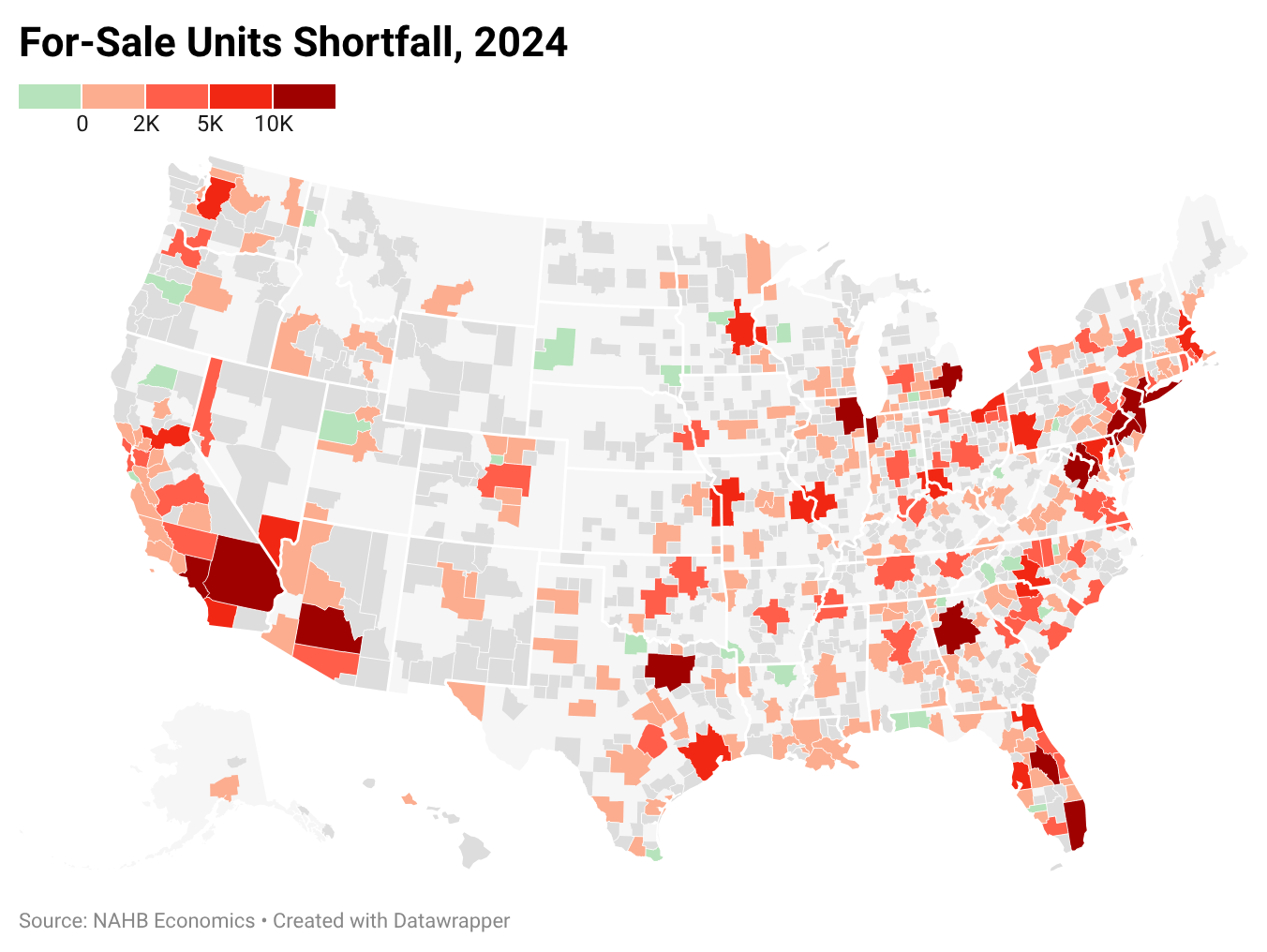
New data from Eye On Housing and the NAHB shows the U.S. remains short more than 1.2 million housing units, keeping pressure on both rents and home prices. Record‑low vacancy rates, slow single‑family construction, and restrictive zoning continue to fuel intense competition in 2024. Major metros like Chicago, New York, and Atlanta face some of the deepest deficits, and the true nationwide shortfall may be even higher when accounting for overcrowding and aging homes. For real estate professionals, the ongoing shortage means sustained demand, tighter inventory, and major opportunities for those who understand the evolving market.
Top real estate coach Jason Pantana says the divide between agents today isn’t about who has “tried” AI — it’s about who is immersed in it. In a new HousingWire interview, he explains why AI isn’t a gimmick but a full business system that amplifies output, improves authenticity, and reshapes how clients search for agents. From prompt mastery to AI‑driven visibility on Google, Pantana reveals how agents who commit even 15 minutes a day to learning AI are already outperforming those who hesitate.
Dallas–Fort Worth’s commercial real estate market closed 2025 with a split personality. Industrial dominated with massive new deliveries and soaring leasing demand, retail held steady with some of the market’s strongest fundamentals in years, and office continued to falter under remote‑work pressures. High vacancies, weak absorption, and rising demand for top‑tier space show the sector’s ongoing reset. Meanwhile, industrial and retail strength position the Metroplex for another powerhouse year heading into 2026.