Artificial intelligence has officially crossed the threshold from tech buzzword to indispensable business tool. In the mortgage world—where speed, accuracy and borrower trust rule every decision—AI is no longer a futuristic concept. It’s a present‑day performance multiplier that’s transforming how lenders work, communicate and compete.
Scotsman Guide recently explored this shift in their article “From Buzzword to Business Driver: AI in Mortgages,” a sharp and insightful breakdown of why forward‑thinking lenders are adopting AI at record speed. You can check out the original feature at ScotsmanGuide.com.
AI Has Quietly Slipped Into Everything
It’s already in inboxes, underwriting systems and marketing platforms. AI now powers tools that identify high‑intent leads, optimize email timing and predict borrower behavior. For real estate agents and loan officers, this means cleaner pipelines, smarter forecasting and far better conversations with clients.
But there’s a catch: these benefits only appear when AI is used correctly. Poorly trained tools or generic content generators can create compliance issues or messaging that feels robotic—something today’s borrowers immediately notice.
The New Competitive Line in the Sand
We’ve reached the tipping point. AI isn’t “nice to have” anymore—it’s the dividing line between lenders who scale efficiently and lenders who drown in manual tasks. The professionals integrating AI now are already pulling ahead in speed, clarity and borrower experience.
Why Smart Lenders Pair AI With Their CRM
One of the biggest takeaways from Scotsman Guide’s article is that AI performs best when linked to an industry‑trained CRM. AI alone cannot replace entire departments, but when paired with compliant, well‑tested messaging frameworks, it becomes a powerful co‑pilot.
This dynamic combo produces marketing that feels personal, controlled and compliant. Automation stops being robotic—and becomes reliable.
The Real Efficiency Boost: Keystroke Savings
Borrowers still want a trusted human guiding their mortgage decisions. They don’t want emojis from a loan officer who has never used one in their life. Top producers don’t want AI replacing their voice—they want it to remove repetitive tasks.
“Find all past customers who closed within the last 18 months with interest rates above 6.6% who could benefit from an FHA loan offer. Show me three email formats I can choose from that all include a message about avoiding PMI to lower their monthly payments.”
Within seconds, the CRM surfaces contacts and generates pre‑approved messaging. Automation then continues the work effortlessly.
What Lenders Should Be Doing Right Now
To stay competitive, Scotsman Guide emphasizes four core actions:
1. Educate your team. Help staff understand how to use AI responsibly—especially what NOT to feed into public AI tools.
2. Audit your content. Every AI‑generated message must be checked for compliance and tone. Consistency builds trust.
3. Integrate your systems. Your CRM, LOS and marketing tools must communicate. AI is only as effective as the ecosystem it supports.
4. Prioritize long‑term vision. AI isn’t a trend—it’s a tool that strengthens your people and enhances the borrower journey.
The Big Picture: AI Enhances People, Not Replaces Them
AI won’t replace loan officers. It will replace loan officers who refuse to use it.
Relationships will always anchor mortgage lending. AI simply helps professionals show up faster, smarter and with more consistency. And for anyone building a mortgage or real estate career, learning these tools isn’t optional—it’s the new standard.
For those growing in mortgage or real estate, education providers like Cameron Academy continue supporting professionals with courses that stay ahead of compliance, technology and best practices. Staying educated is staying competitive.
Getting licensed or staying ahead in your career can be a journey—but it doesn’t have to be overwhelming. Grab your favorite coffee or tea, take a moment to relax, and browse through our articles. Whether you’re just starting out or renewing your expertise, we’ve got tips, insights, and advice to keep you moving forward. Here’s to your success—one sip and one step at a time!
In 2026, financial advisors are no longer just experimenting with AI — they’re relying on it. Once confined to back-office duties, AI now supports meeting prep, portfolio analysis, and even early-stage financial planning. Advisors say the tech is strengthening client relationships by freeing them from administrative overload, though entry-level roles like paraplanners may feel the squeeze as automation accelerates.
Cybercriminals are weaponizing AI to launch highly convincing email scams and system breaches across the mortgage industry, overwhelming lenders and servicers whose cybersecurity measures can’t keep up. With major companies already hit and regulation lagging behind, experts warn the sector—now considered critical infrastructure—must rapidly upgrade protections, collaborate on threat intelligence, and improve AI governance before the risks escalate further.
Escrow payments are quietly surging across the country as property taxes and insurance premiums spike—pushing many homeowners toward delinquencies and even foreclosure. New data from Cotality shows the sharpest increases hitting the South and Midwest, with Florida among the hardest‑hit states. Even with fixed mortgage rates, rising escrow requirements are driving monthly payments higher and threatening affordability heading into 2026.
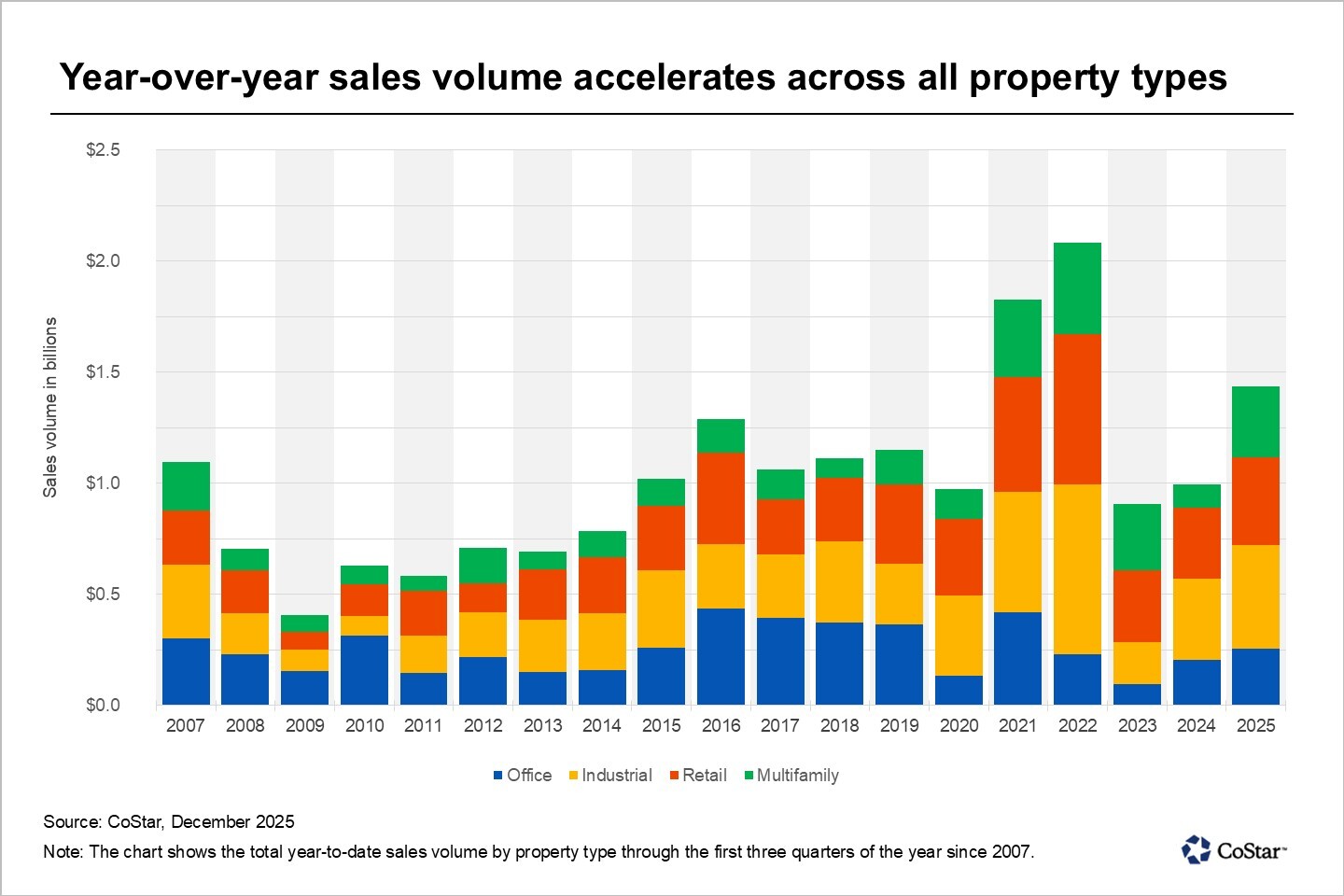
Milwaukee entered 2025 with renewed momentum, posting its strongest commercial real estate sales volume in three years. After a period of uncertainty and high capital costs, investors are returning with a sharper focus on quality assets, realistic pricing, and reliable cash flow. Activity is increasing across industrial, office, multifamily, and retail sectors, signaling a broad-based recovery fueled by stabilizing interest rates and improved market confidence.
As 2026 approaches, the title insurance industry is navigating a complex mix of market recovery, rising fraud threats, and sweeping regulatory changes. Industry leaders say the path forward centers on smarter technology, leaner operations, and stronger support for title agents. With AI-driven workflows, enhanced fraud prevention, and new compliance demands—including FinCEN’s expanded Geographic Targeting Orders—companies like Stewart and First American are reshaping how title work gets done. For real estate and mortgage professionals, the year ahead promises more automation, heightened standards, and major opportunities for those who stay ahead of the curve.
The real estate industry is undergoing a major transformation in 2025 as advancements in AI, proptech, blockchain, and data intelligence redefine how properties are marketed, valued, financed, and experienced. From instant digital valuations and immersive virtual tours to tokenized investments and predictive analytics, technology is reshaping every stage of the real estate lifecycle. Professionals who embrace these innovations—while maintaining the human expertise clients still rely on—will lead the next era of the industry.