“`html

AI in Radiology: Balancing Innovation with Concerns

A recent analysis has shed light on the public’s perception of artificial intelligence (AI) in radiology. While the majority of patients are supportive of AI’s integration into this field, concerns about data privacy and job displacement remain prevalent. The study, led by Mansour Almanaa, PhD, from King Saud University in Saudi Arabia, provides a nuanced view of the current discourse surrounding AI in healthcare.

Understanding Public Sentiment

Almanaa’s research involved a comprehensive analysis of over 1,000 social media posts on platforms like Reddit and X (formerly Twitter) spanning from 2019 to 2024. The findings, published in the journal Cureus on September 23, revealed that approximately 55% of comments were positive, highlighting AI’s potential to enhance diagnostic accuracy and efficiency. However, 35% of the comments were neutral, and 10% expressed negative sentiments, primarily focused on job loss, ethics, and privacy concerns.

Expert Insights

Mansour Almanaa emphasized the necessity of addressing these concerns to ensure AI’s responsible application in medical imaging. He advocates for the development of clear regulatory frameworks and ethical guidelines to safeguard patient safety and data security. Furthermore, Almanaa underscores the importance of continuous education for healthcare professionals to adapt to AI’s evolving role in medicine.

Methodology and Challenges

The study meticulously filtered through nearly 4,000 posts using 20 different search phrases such as “radiology,” “computed tomography,” “AI,” and “medical imaging.” The sentiment analysis was conducted using Python’s VADER tool, focusing on ethical and privacy issues associated with AI. The study identified challenges including the transparency of AI processes and accountability for AI-generated errors.

The Dual Nature of AI’s Impact

Despite the concerns, there is recognition of AI’s potential to complement the work of radiologists rather than replace them. AI’s ability to automate routine tasks and improve workflow efficiency could allow radiologists to focus on more complex cases, potentially reducing their overall workload.

Conclusion

Almanaa’s study highlights a general acceptance of AI’s benefits in medical imaging but stresses the need to address ethical, privacy, and job displacement concerns. Future research should focus on creating robust ethical standards and regulatory practices, while also supporting continuous education for healthcare professionals to effectively integrate AI into medical practice.

For further details, the original article can be accessed here. “`

More Articles

Getting licensed or staying ahead in your career can be a journey—but it doesn’t have to be overwhelming. Grab your favorite coffee or tea, take a moment to relax, and browse through our articles. Whether you’re just starting out or renewing your expertise, we’ve got tips, insights, and advice to keep you moving forward. Here’s to your success—one sip and one step at a time!

Artificial Intelligence in Diagnostics: A Revolution in Healthcare

The global market for artificial intelligence in diagnostics is poised for remarkable growth, with projections estimating it to reach USD 7.3 billion by 2032.

By |December 10, 2024|Categories: Article, Artificial Intelligence, Healthcare|Tags: , |0 Comments

Revolutionizing Medical Education with Extended Reality

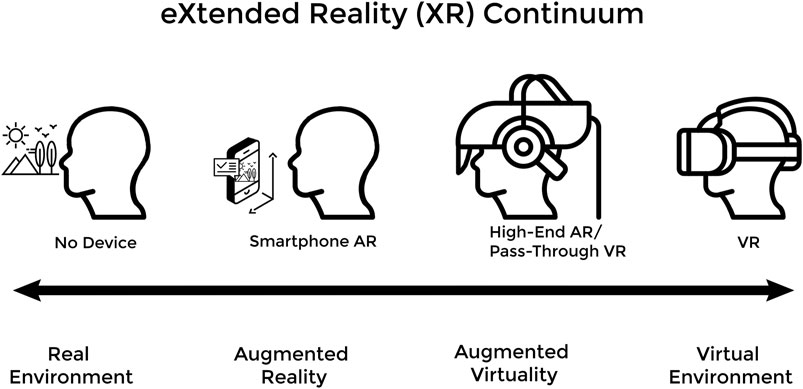
In the ever-evolving landscape of medical education, a new player has emerged, promising to revolutionize the way future doctors are trained. The integration of eXtended Reality (XR) technologies is reshaping the educational landscape by addressing the limitations of traditional methods.

Genetic Testing: A New Dawn in Healthcare

Genetic testing represents more than just a scientific advancement; it signifies a fundamental shift in how we approach health and wellness.

Sustainable Architecture: Blending Innovation with Ecological Responsibility

The journey toward sustainable architecture is ongoing, with each project serving as a beacon of what's achievable when creativity meets ecological awareness.

By |December 9, 2024|Categories: Architecture, Article, Sustainability|Tags: |0 Comments

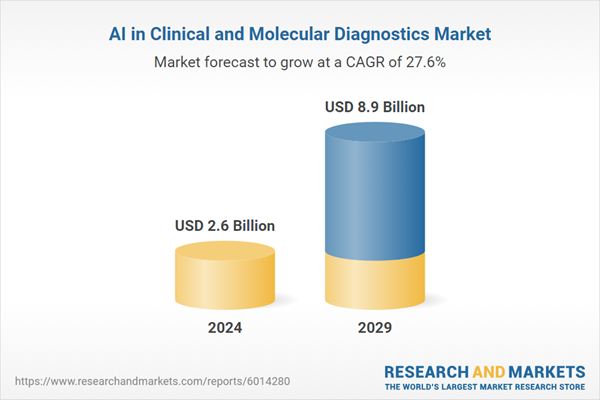
AI in Clinical and Molecular Diagnostics: A Market on the Rise

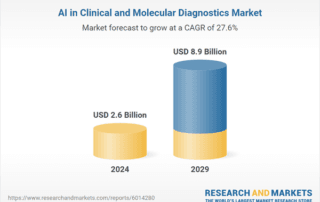
AI in Clinical and Molecular Diagnostics Market is set to experience remarkable growth, projected to surge from USD 2.6 billion in 2024 to USD 8.9 billion by 2029. This growth is driven by the integration of advanced AI technologies such as machine learning and deep learning into traditional diagnostic methodologies like imaging, genomics, and laboratory testing.

AI: A Revolution in Healthcare’s Future

AI is not a distant dream but a present reality, already integrated into everyday life through virtual assistants like Alexa and Siri. AI shows promise in enhancing medical accuracy, such as in predicting mesothelioma survival and improving colonoscopy accuracy, it is not intended to replace healthcare professionals.