AI Is Exploiting the Mortgage Industry’s Weak Cyber Defenses — And the Threat Is Growing Faster Than Protection
The U.S. mortgage industry is under siege. As artificial intelligence evolves at breakneck speed, cybercriminals are using it to launch increasingly sophisticated attacks against lenders, servicers, and financial institutions that hold mountains of consumer data. And experts warn the industry’s defenses are nowhere near strong enough to keep up.
The past two years have seen a wave of high‑profile breaches: servicing giant Mr. Cooper, consumer‑direct lender loanDepot, title insurance heavyweight Fidelity National Financial, wholesale lenders Fairway Independent Mortgage Corp. and Nations Direct Mortgage, and title titan First American Financial. Even major vendors serving top banks such as JPMorgan Chase, Citi, and Morgan Stanley have been struck.
But those are only the attacks we hear about—many others go unreported.
AI Has Shifted the Threat Landscape Overnight
According to cybersecurity expert Michael Nouguier of Richey May, AI has “absolutely” changed the nature of attacks in the mortgage sector. The two primary entry points, he explains, are email and poor systems management.
And with AI, email scams have become dangerously convincing.
“We used to train people to look for misspellings, broken English and grammatical errors,” Nouguier says. “Now everybody just writes their emails in ChatGPT, so it’s perfectly orchestrated.”
The result? Even seasoned professionals are being duped. Nouguier recounts a client whose compromised email led to a $19,000 payment to a cybercriminal instead of a vendor—an error that could have easily hit six figures.
The bigger problem: while attacks using AI are soaring, the mortgage industry’s adoption of AI‑based protection tools is crawling behind.
Regulation Lags Behind AI—And Politics Are Complicating It
As mortgage companies experiment with AI to streamline workflows, improve decision‑making, and cut costs, lawmakers are scrambling to determine how the technology should be governed. State legislatures want strong guardrails. The federal government—especially under President Trump—has pushed back, arguing that overregulation could stifle innovation.
Recently, Trump even proposed blocking states from enforcing their own AI laws, instead favoring a unified federal approach.
But states aren’t backing down. Colorado, Tennessee, and Florida have already rolled out AI‑related laws aimed at protecting consumers from privacy violations, discrimination, and unauthorized likeness replication. More are on the way.
Industry leaders say the current patchwork of state-by-state rules makes compliance harder and more expensive. A centralized federal standard, they argue, could streamline innovation and protect consumers more consistently.
Mortgage Servicers Struggle With Scale of AI Risks
Mortgage servicers handle billions in loan data—data that must be precise. One error can multiply across tens of thousands of borrowers.
“When we get something wrong, we don’t get it wrong once,” says Toby Wells of Cornerstone Servicing. “We get it wrong tens of thousands of times.”
Because of that, many servicers are intentionally cautious about deploying AI broadly. Instead, they focus on smaller integrations with low risk while the regulatory dust settles.
The Mortgage Industry Is Critical Infrastructure—And AI Threats Are Outpacing Governance
Cybersecurity executives like Kyle Draisey of Sagent say the mortgage industry should be considered part of America’s critical infrastructure. After all, companies like Sagent and Black Knight support trillions of dollars in servicing portfolios—systems as important as the electrical grid or air traffic control.
A recent Dun & Bradstreet survey found that nearly 80% of financial and insurance professionals see AI‑driven cyber risk as their top threat. Yet more than a third admit their companies are not prepared to handle it.
Draisey believes that collaboration is the missing piece. Other critical sectors use Information Sharing and Analysis Centers (ISACs) to coordinate threat intelligence. The financial industry already has one—with a mortgage subcommittee—but no equivalent exists specifically for AI.
He argues it’s time to create one.
“Cybersecurity is a team sport,” Draisey says. “Let’s pull back the curtain. We should share how we’re implementing responsible and secure AI so everyone benefits.”
What Professionals Need to Know—and How to Stay Ahead
The message is clear: AI is not just another tool. It’s a new attack surface, and mortgage companies—large and small—must rapidly upgrade their cyber readiness. That means investing in training, strengthening systems, revisiting vendor relationships, and staying compliant with evolving regulation.
For professionals across real estate, lending, insurance, and financial services, this evolving landscape underscores a crucial point: education is no longer optional. Understanding cybersecurity, AI governance, and digital risk is becoming a core competency in every licensed profession.
At Cameron Academy, we’ve seen firsthand how professionals who stay ahead of technology trends are the ones who grow fastest in their careers. Whether you’re in mortgage, real estate, insurance, or another licensed field, continuous learning is your best defense—and your biggest advantage.
Getting licensed or staying ahead in your career can be a journey—but it doesn’t have to be overwhelming. Grab your favorite coffee or tea, take a moment to relax, and browse through our articles. Whether you’re just starting out or renewing your expertise, we’ve got tips, insights, and advice to keep you moving forward. Here’s to your success—one sip and one step at a time!
Despite billions poured into proptech and a decade of flashy digital upgrades, the real estate experience remains largely unchanged. Apps made processes smoother, but not more transparent — because the industry’s core structures, data control and power dynamics stayed the same. True disruption will come from platforms that shift information and control to consumers, not just digitize outdated systems.
Early 2026 is delivering a clear message: commercial real estate is entering a recalibration phase. Construction is softening, pending home sales just saw a sharp drop, consumer sentiment is inching upward but remains fragile, and capital markets are tightening as major CRE sectors face rising distress. From data centers powering ahead to CMBS foreclosures climbing and office-to-residential conversions gaining momentum, professionals across real estate, mortgage, insurance, and finance need to stay sharp as the industry shifts.
Discover the real estate roles earning the biggest paychecks in 2026. From investment consultants to commercial leasing managers, this breakdown highlights the salaries, responsibilities, and career paths offering the strongest financial potential in today’s evolving market—perfect for newcomers and seasoned professionals mapping their next big move.
Montana is taking major steps to remove outdated licensing barriers and strengthen its workforce. Governor Greg Gianforte has created a new Licensing Reform Task Force aimed at modernizing regulations, speeding up approvals, and helping more professionals enter high‑demand fields like construction and healthcare. With licensing numbers doubling over the past decade and rural communities facing critical shortages, the state is pushing for faster, more efficient pathways to work. The task force begins meeting in February and will deliver its full reform report by September 2026 — a move that could influence licensing modernization efforts nationwide.
Artificial intelligence has officially moved from novelty to necessity in the real estate world. According to new industry data, 97% of brokerage leaders say their agents now rely on AI tools for everything from listing descriptions to full-scale marketing campaigns. As adoption skyrockets, so do concerns over training, accuracy, and compliance — especially among smaller firms. The message is clear: for today’s real estate professionals, AI literacy isn’t optional anymore.
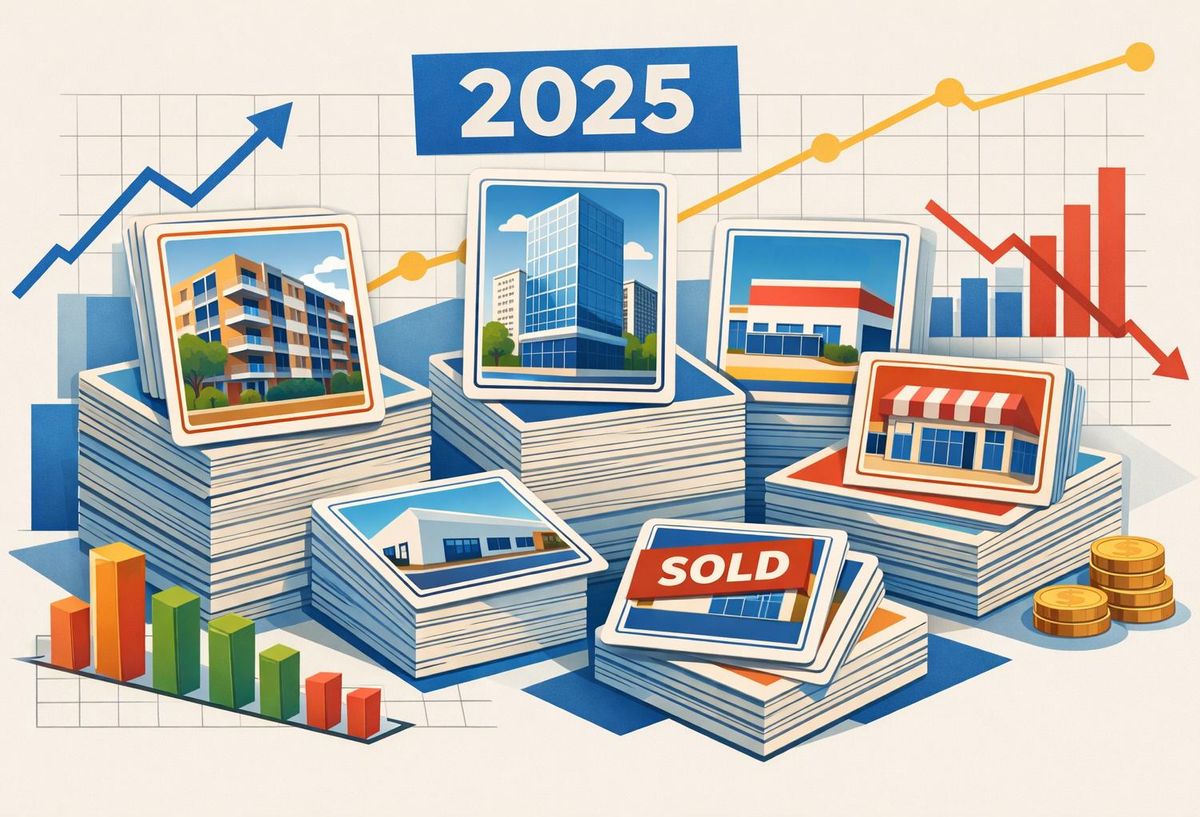
Commercial real estate roared back to life in 2025, with more than $255B pouring into multifamily, industrial, office and retail assets. Major investors moved fast on falling interest rates, improving bond yields and rising confidence across sectors. Multifamily dominated with over $115B in deals, industrial surged under private equity leadership, office saw renewed activity from owner-users and retail proved surprisingly resilient. For today’s real estate and finance professionals, the message is clear: opportunity favors those who stay informed and ready to act.