AI Is Reshaping Real Estate Data Rules, and MLSs Are Racing to Keep Up
Artificial intelligence is no longer a futuristic tool sitting at the edges of the real estate industry. It is already inside transactions, marketing workflows, MLS systems, and even the day to day communication between agents and consumers. But with this rapid adoption comes a critical question: Who gets to make the rules that govern AI and real estate data?
A recent deep dive by Real Estate News explores how MLSs, regulators, and brokerages are trying to keep pace with technology while protecting consumers and limiting legal risk. You can read their full report at Real Estate News:
AI and real estate data: Who is making the rules?.
After navigating years of commission lawsuits and antitrust pressures, many MLS leaders want one thing when it comes to AI: a license, not a lawsuit. They are pushing for modernized data agreements, clearer usage rules, and stronger compliance to keep agents protected as AI becomes more deeply woven into transactions.
The Rise of AI Disclosures
California recently passed a first-in-the-nation law requiring agents to disclose when listing photos have been altered with AI. That includes side by side comparisons of original versus modified images. The goal is simple: transparency that protects consumers from misrepresentation.
Major brokerages are also responding. Companies like eXp have already added AI specific language to their listing agreements and rolled out agent training on virtual staging and image enhancement. These steps show a growing industry awareness that AI tools, while incredibly useful, can blur the line between marketing and material inaccuracies.
AI Does Not Create Risk… It Scales It
Matt Fowler, CEO of Doorify MLS in North Carolina, points out that MLSs have long prohibited editing photos in ways that alter material facts about a property. But now, AI makes those edits faster, cheaper, and easier to do at scale.
In one recent example, an agent digitally removed a gas meter simply because it was unattractive. In another case, four exterior steps were edited down to three during virtual landscaping changes. Both examples show how AI makes it easier to unintentionally cross legal and ethical lines.
Fowler sums it up cleanly: We want a license, not a lawsuit.
MLS Policies Were Not Built for AI
Many MLS rules still reflect an era of basic broker websites, IDX feeds, and simple photo uploads. They were never designed for listing data being fed directly into large language models, CRM systems, predictive analytics tools, or automated marketing engines.
Doorify’s updated digital data agreement flips the old approach. Instead of specifying what brokers are allowed to do, it clearly defines what is prohibited, especially around consumer privacy and sensitive information. Everything else is permitted as long as it stays within those guardrails.
Who Should Regulate AI in Real Estate?
A growing debate is emerging over who should actually enforce AI standards. Fowler argues that state real estate commissions, not national trade groups alone, should take the lead. State commissions already regulate thousands of licensees and have direct consumer protection authority.
This shift reflects a broader truth: MLS systems are becoming more like secure data infrastructures than simple property listing directories. They often contain buyer information, showing schedules, and even financial data in some cases.
The Coming Privacy Flashpoint
Consumer advocates are sounding alarms about sensitive documents being uploaded into commercial AI tools without agents or clients fully understanding how the information is stored or reused.
Inspection reports, underwriting files, and contracts were never meant to be pasted into a chatbot. As AI becomes more integrated into the transaction, liability questions grow sharper. Who is responsible if something goes wrong? The agent? The MLS? The AI company?
For many industry leaders, the goal is to establish those rules now, before the courts do it for them.
Why This Conversation Matters for Future Licensees
For anyone entering or advancing in the real estate industry, understanding how AI intersects with compliance, marketing, and data privacy is now essential knowledge. Licensing education is no longer just about contracts and fair housing. It is increasingly about responsible technology use.
This is why institutions like Cameron Academy are weaving AI awareness, data ethics, and compliance-focused curriculum into their training. Whether you are preparing for your first real estate license or expanding into mortgage, insurance, or finance, staying ahead of these shifts gives you a competitive edge and protects your clients.
The real estate industry has always been shaped by new tools and new expectations. AI is simply the next major wave. The professionals who thrive will be those who understand both its power and its limits.
More Articles
Getting licensed or staying ahead in your career can be a journey—but it doesn’t have to be overwhelming. Grab your favorite coffee or tea, take a moment to relax, and browse through our articles. Whether you’re just starting out or renewing your expertise, we’ve got tips, insights, and advice to keep you moving forward. Here’s to your success—one sip and one step at a time!
With increasing governmental and private investments, the demand for precision medicine is expected to rise steadily. The commitment to addressing chronic conditions, coupled with strategic industry collaborations and advanced diagnostic tools, will sustain market growth.
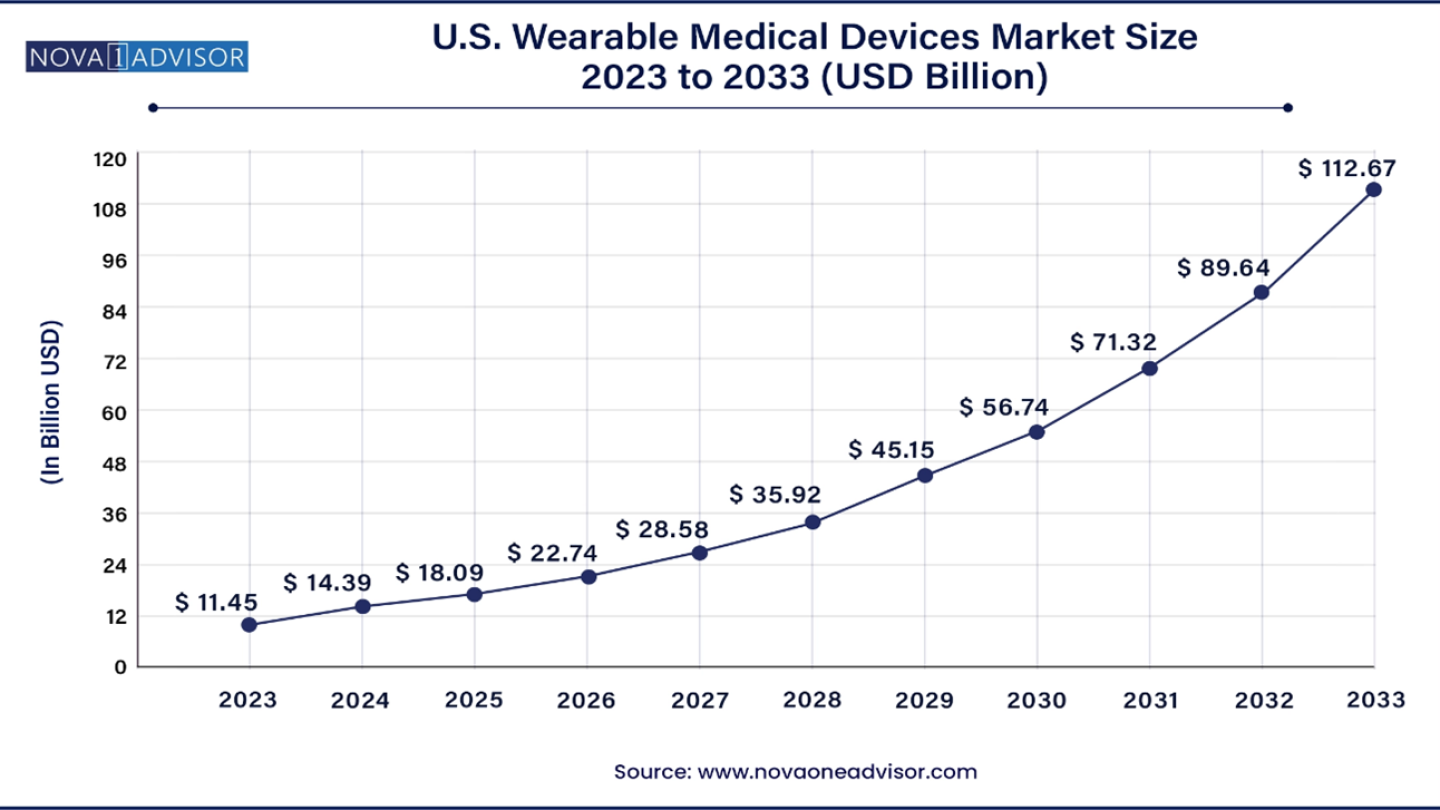
The U.S. wearable medical devices market, currently valued at an estimated $11.45 billion in 2023, is set to experience an astronomical rise to approximately $112.67 billion by 2033.
The real estate market is on the brink of transformation, captivating the attention of buyers, sellers, investors, and industry professionals. As we look toward the end of 2024, experts predict a shift in the landscape, particularly with home prices expected to decline due to increased inventory levels.
According to the World Health Organization (WHO), nearly two billion people in rural and remote areas worldwide lack access to essential healthcare solutions. This staggering statistic highlights a critical issue: the digital divide that limits telehealth services, primarily due to inadequate broadband access.
As AI becomes a staple in medical practice, it carries the risk of reinforcing existing biases entrenched in historical data. These biases can lead to skewed outcomes, particularly affecting marginalized communities such as the LGBTQIA+ and certain ethnic groups.
A groundbreaking study published in Volume 15 of Oncotarget on October 11, 2024, titled 'Relationship between the expressions of DLL3, ASC1, TTF-1 and Ki-67: First steps of precision medicine at SCLC' showcases pivotal advancements in the fight against small cell lung cancer (SCLC).