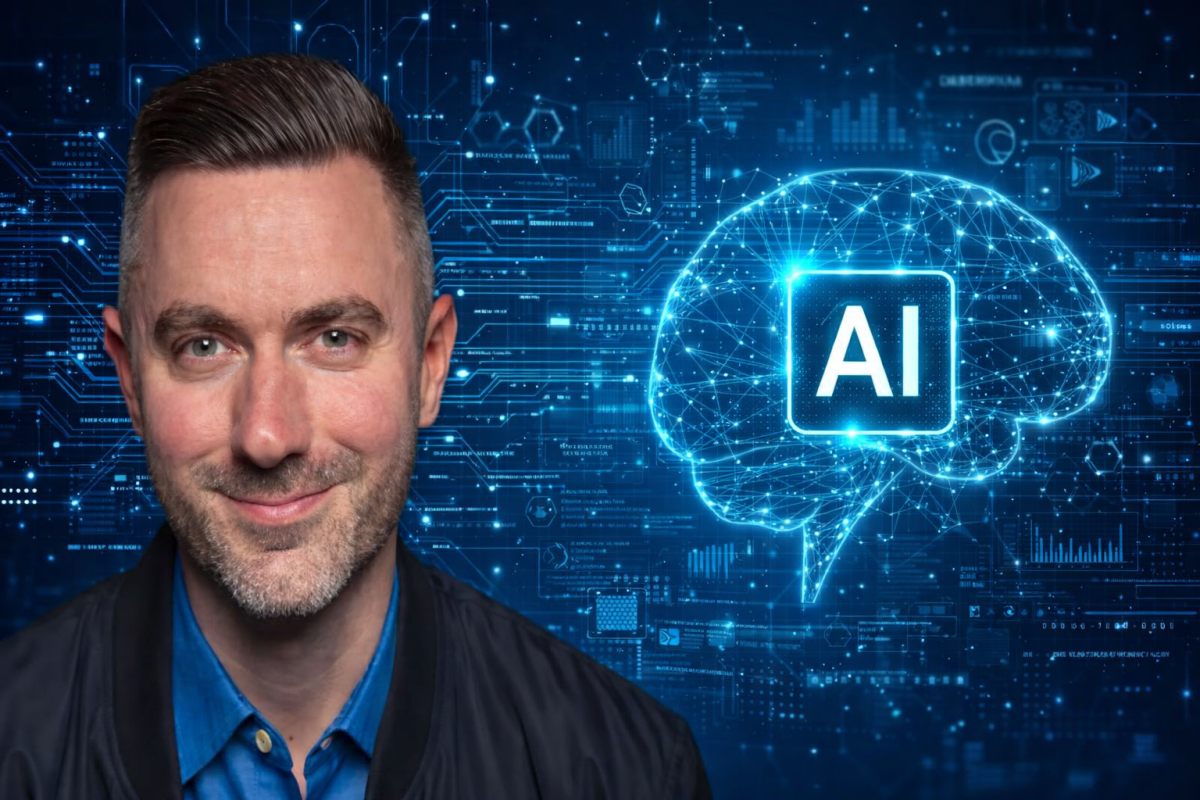
AI Isn’t the Shiny Object — It’s the System Transforming Real Estate Success
When ChatGPT first burst onto the scene, agents responded just like they did when social media arrived: curiosity, excitement, and a touch of panic.
Tom Ferry coach Jason Pantana, co-founder and CEO of the
AI Marketing Academy, watched it happen in real time — the agents proudly announcing, “I tried ChatGPT today!” and the others quietly worried they were already falling behind.
In an exclusive interview with
HousingWire, Pantana revealed a critical truth: the gap widening between agents isn’t about whether they’ve used AI — it’s about whether they’re immersed.
“Some agents know ChatGPT exists,” Pantana says. “Others are paying attention to
Google’s Gemini 3 or the next big shift.”
For agents who invest even 15–20 minutes a day exploring what’s new, what’s coming, and what’s possible, AI becomes an extension of their business — not a novelty.
And like Pantana, forward-thinking professionals across the industry are realizing the shift isn’t about tools — it’s about mindset.
The Shift: From Shiny Objects to Real Outcomes
Pantana warns that many agents chase AI tools the same way they chase viral posts — jumping from one shiny feature to the next without developing a system.
Instead, he challenges professionals to begin with one question: What outcome do you want?
“What’s the goal for your business? What tools support that goal? AI isn’t a fix — it’s one piece of a system designed for outcomes,” he says.
Fear-based adoption leads to shortcuts and reactive decisions. AI should reduce friction, not erase authenticity.
From cutting video retakes from 19 down to two, to generating branded HTML emails in minutes, AI is meant to expand your production — not dilute your personality.
Authenticity Is a Prompt Away
Agents often complain that AI “sounds robotic.” Pantana respectfully disagrees.
If AI sounds like AI, he says, the prompt was weak.
“Life punishes vague requests and rewards specific asks,” he explains.
Give AI context. Give it style. Give it intent.
Weak prompts deliver weak results — strong prompts create strong content.
The Real Lead Gen Shift: Search is Becoming Ask
The biggest opportunity today isn’t viral videos or catchy taglines — it’s AI search.
As Pantana puts it, “Search is becoming ask.”
And when consumers can simply ask AI to find the best agent in their area, the rules change instantly.
This new landscape rewards agents with strong online reputations — especially Google reviews — and content that answers the “bottom-of-funnel” questions buyers and sellers ask when they’re ready to make a move.
Answering these hyper-specific questions increases the chances of earning a click by 10x to 23x, according to marketing strategist Neil Patel.
AI Doesn’t Replace You — It Amplifies You
Top-producing agents often fear AI will level the playing field too much. But Pantana insists the opposite is true.
“AI is a force multiplier,” he explains. “It helps you do more, faster, better — as long as it’s trained and harnessed properly.”
The real risk isn’t AI replacing agents.
It’s AI-powered agents outperforming those who refuse to adapt.
What This Means for Today’s Professionals
Pantana’s advice is simple: use an AI tool daily, surround yourself with a growth-focused community, and choose one uncomfortable skill to improve.
This mirrors the learning philosophy at Cameron Academy, where thousands of Florida real estate professionals — from brand-new agents to seasoned power producers — build the competitive skills they need to thrive in a rapidly changing market.
Because in today’s landscape, AI isn’t the shiny object.
It’s the system.
And the agents who embrace it — consistently, strategically, and creatively — are the ones who will lead the next era of real estate.
Getting licensed or staying ahead in your career can be a journey—but it doesn’t have to be overwhelming. Grab your favorite coffee or tea, take a moment to relax, and browse through our articles. Whether you’re just starting out or renewing your expertise, we’ve got tips, insights, and advice to keep you moving forward. Here’s to your success—one sip and one step at a time!
Commercial real estate is entering a decade of major transformation driven by interest rate pressures, evolving work culture, rapid proptech innovation, and growing demand for AI-focused infrastructure. While the global CRE market is projected to reach $133.5 trillion by 2028, rising rates, shifting office demand, and increasing sustainability requirements are reshaping how professionals invest, manage, and develop properties. By 2030, the biggest opportunities will center on mixed‑use conversions, data center growth, premium office spaces, and ESG‑driven upgrades.
The National Association of Realtors’ landmark antitrust settlement is transforming how real estate agents negotiate compensation, work with buyers, and handle transparency in transactions. With MLS‑posted buyer‑broker commissions eliminated and written buyer agreements now required, both consumers and professionals are navigating a new, more transparent landscape. While commission levels have only dipped slightly, the real shift is in how openly compensation is discussed and negotiated—creating new challenges and opportunities for agents who adapt quickly.
Artificial intelligence is no longer a novelty in real estate — 2025 marks its breakthrough year as a dependable pillar of the proptech industry. With investors pouring capital into AI‑powered forecasting, security, automation, and property management tools, the sector is shifting from experimentation to full‑scale adoption. Brokerages, developers, and institutional players now rely on AI to streamline due diligence, enhance market modeling, reduce risk, and optimize building operations. As adoption accelerates, professionals who understand and leverage these technologies are gaining a decisive competitive edge in fast‑moving markets like Florida.
A new episode of Current Account breaks down why the insurance industry is heading into 2026 with more uncertainty — and more opportunity — than ever. From shifting global regulations and rising catastrophe risks to FSOC’s evolving role in the U.S., industry leaders Jérôme Haegeli and Philippe Brahin explain how insurers are being pushed to rethink strategy in real time. With global premium growth expected to slow and regulatory pressures rising, professionals in insurance and financial services are turning to education and new skills to stay ahead in a rapidly changing market.
New Jersey is quietly becoming one of the hottest commercial real estate markets in the nation, with Jersey City and North Jersey breaking into the top 10 in PwC’s 2026 Emerging Trends report. Fueled by redevelopment momentum, data‑center demand, mixed‑use transformations and a surge in health‑care projects, the state is drawing major investors while still battling rising construction costs and municipal fatigue. For real estate professionals, the Garden State’s evolution signals fresh opportunity—and a market worth watching closely heading into 2026.
The National Council of Insurance Legislators is pushing back against President Trump’s new executive order on artificial intelligence, arguing that it threatens decades of state‑based insurance oversight. NCOIL leaders say federal attempts to centralize AI authority could disrupt markets, weaken consumer protections, and limit states’ ability to innovate—setting the stage for a significant legal and political battle with major implications for insurance professionals who rely on AI‑driven tools and regulatory clarity.