AI Outperforms Human Experts in Ovarian Cancer Detection
In a groundbreaking study led by researchers at the Karolinska Institutet in Sweden, artificial intelligence (AI) has demonstrated a remarkable ability to detect ovarian cancer, surpassing the accuracy of human doctors. This revelation, published in Nature Medicine, marks a significant advancement in the use of AI as a diagnostic tool.
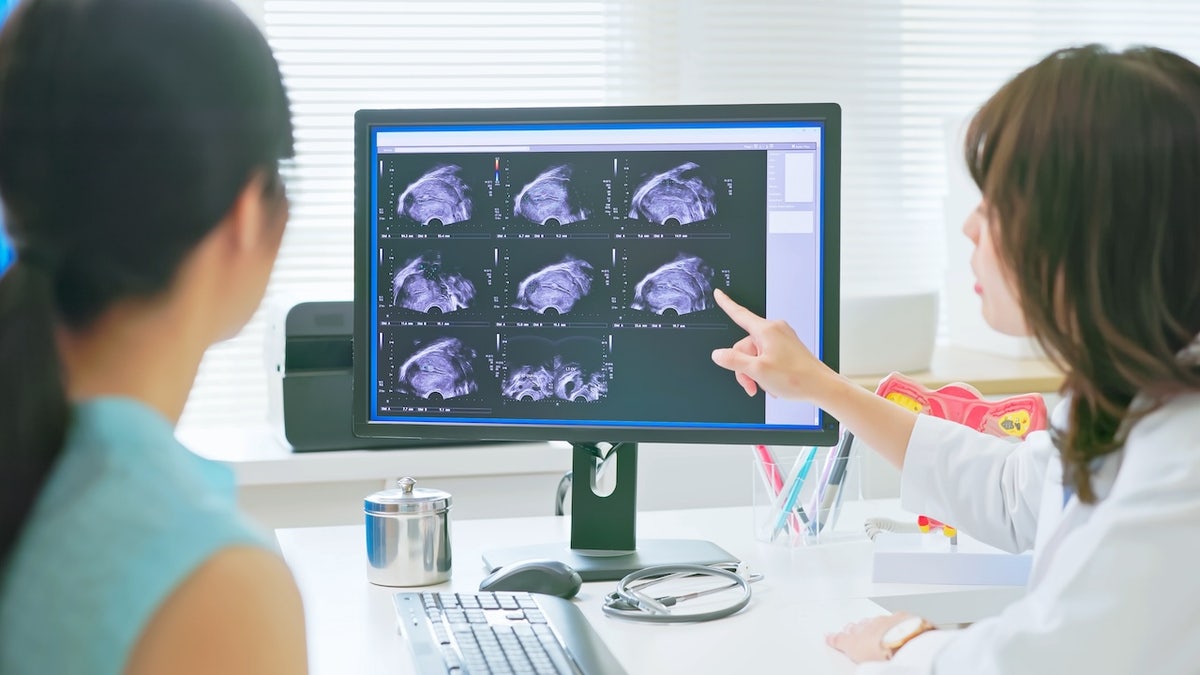
The study involved training AI models on an extensive dataset of over 17,000 ultrasound images from 3,652 patients across 20 hospitals in eight countries. The AI achieved an accuracy rate of 86% in distinguishing between benign and malignant ovarian lesions. In comparison, human experts scored an accuracy of 82%, while less experienced examiners achieved 77%.
Study author Elisabeth Epstein, a professor at the Department of Clinical Science and Education at Karolinska Institutet, expressed her surprise at the AI’s performance, stating, “I was surprised that the AI models outperformed all 33 of the expert examiners.” This sentiment was echoed by other researchers who see AI as a promising tool to enhance diagnostic accuracy and efficiency.
Dr. Brian Slomovitz, director of gynecologic oncology at Mount Sinai Medical Center in Florida, described the early detection of ovarian cancer as the “holy grail” in reducing mortality rates. He noted that AI-driven support could improve the interpretation of ultrasound findings, reducing both false positives and negatives.
The potential of AI in medical diagnostics extends beyond just radiology. Factors such as menopausal status and blood test results could also be integrated into AI models, enhancing their diagnostic capability. However, experts like Dr. Harvey Castro caution that AI’s effectiveness hinges on access to diverse, high-quality data. He emphasized the need for further research to ensure AI’s adaptability to real-world clinical settings.
Epstein highlighted that while AI can significantly aid in diagnostics, it is not a replacement for human physicians. “It is still the physician who remains responsible for the patient’s diagnosis and treatment,” she stated.
The Karolinska Institutet team, in collaboration with the KTH Royal Institute of Technology, plans to initiate clinical studies at Stockholm South Hospital. This research was funded by several organizations, including the Swedish Research Council and the Swedish Cancer Society.
As AI continues to evolve, it holds the promise of transforming medical diagnostics, potentially leading to earlier cancer detection and improved patient outcomes. For more details, you can read the full article on WFIN.
More Articles
Getting licensed or staying ahead in your career can be a journey—but it doesn’t have to be overwhelming. Grab your favorite coffee or tea, take a moment to relax, and browse through our articles. Whether you’re just starting out or renewing your expertise, we’ve got tips, insights, and advice to keep you moving forward. Here’s to your success—one sip and one step at a time!
In the rapidly advancing world of healthcare, technologies such as AI and wearable devices are reshaping the way we diagnose, treat, and monitor mental health conditions. These innovations are not just a glimpse into the future; they are actively transforming the present landscape of medical practice.
In a groundbreaking effort to redefine healthcare, the National Institute of Diabetes and Digestive and Kidney Diseases (NIDDK) is spearheading a workshop focused on the integration of Artificial Intelligence (AI) and Machine Learning (ML) in precision medicine, specifically targeting diabetes and other chronic diseases. This initiative aims to leverage recent advancements in AI, including generative AI and Large Language Models (LLMs), to innovate biomarker development, drug discovery, and diagnostics.
This collaboration is set to revolutionize property valuations for 56% of the nation's mortgage-linked market, blending cutting-edge AI technology with real-time property data and insights.
"According to the World Health Organization (WHO), around two billion individuals residing in rural and remote areas worldwide lack sufficient healthcare access. A major contributor to this issue is inadequate broadband access, which severely limits the effectiveness of telehealth services."
AI's potential in healthcare is vast, with its most promising applications in computer vision. As Dr. Yu explains, this technology, widely used in facial recognition and autonomous driving, can significantly enhance cancer diagnosis.
The journey to establish a return on investment (ROI) from AI projects can be as complex as it is rewarding. As organizations continue to invest in generative AI, the challenge lies in translating hype into tangible business value.