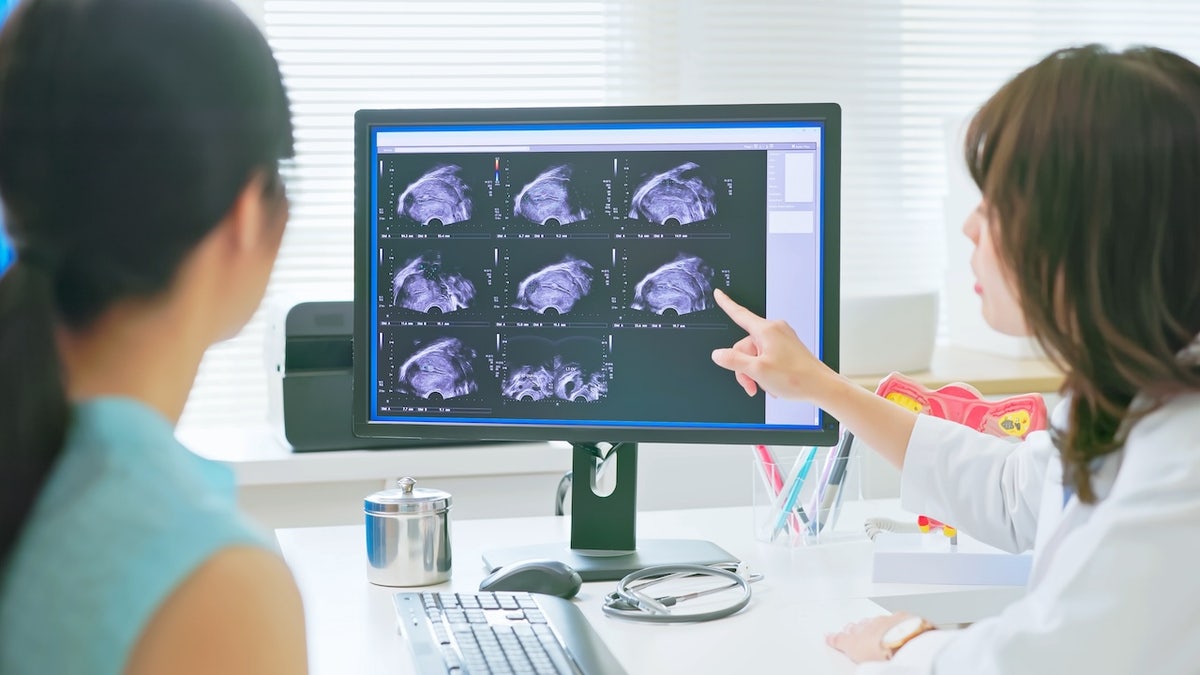
AI Outperforms Human Experts in Ovarian Cancer Detection
In a groundbreaking study led by researchers at the Karolinska Institutet in Sweden, artificial intelligence (AI) has demonstrated a remarkable ability to detect ovarian cancer, surpassing the accuracy of human doctors. This revelation, published in Nature Medicine, marks a significant advancement in the use of AI as a diagnostic tool.
The study involved training AI models on an extensive dataset of over 17,000 ultrasound images from 3,652 patients across 20 hospitals in eight countries. The AI achieved an accuracy rate of 86% in distinguishing between benign and malignant ovarian lesions. In comparison, human experts scored an accuracy of 82%, while less experienced examiners achieved 77%.
Study author Elisabeth Epstein, a professor at the Department of Clinical Science and Education at Karolinska Institutet, expressed her surprise at the AI’s performance, stating, “I was surprised that the AI models outperformed all 33 of the expert examiners.” This sentiment was echoed by other researchers who see AI as a promising tool to enhance diagnostic accuracy and efficiency.
Dr. Brian Slomovitz, director of gynecologic oncology at Mount Sinai Medical Center in Florida, described the early detection of ovarian cancer as the “holy grail” in reducing mortality rates. He noted that AI-driven support could improve the interpretation of ultrasound findings, reducing both false positives and negatives.
The potential of AI in medical diagnostics extends beyond just radiology. Factors such as menopausal status and blood test results could also be integrated into AI models, enhancing their diagnostic capability. However, experts like Dr. Harvey Castro caution that AI’s effectiveness hinges on access to diverse, high-quality data. He emphasized the need for further research to ensure AI’s adaptability to real-world clinical settings.
Epstein highlighted that while AI can significantly aid in diagnostics, it is not a replacement for human physicians. “It is still the physician who remains responsible for the patient’s diagnosis and treatment,” she stated.
The Karolinska Institutet team, in collaboration with the KTH Royal Institute of Technology, plans to initiate clinical studies at Stockholm South Hospital. This research was funded by several organizations, including the Swedish Research Council and the Swedish Cancer Society.
As AI continues to evolve, it holds the promise of transforming medical diagnostics, potentially leading to earlier cancer detection and improved patient outcomes. For more details, you can read the full article on WFIN.
More Articles
Getting licensed or staying ahead in your career can be a journey—but it doesn’t have to be overwhelming. Grab your favorite coffee or tea, take a moment to relax, and browse through our articles. Whether you’re just starting out or renewing your expertise, we’ve got tips, insights, and advice to keep you moving forward. Here’s to your success—one sip and one step at a time!
Palm Beach protests erupted as intensified immigration enforcement reached the heart of Trump’s hometown, while millions in Florida brace for rising health care costs as key subsidies near expiration. At the same time, state regulators boldly declare the long‑running property insurance crisis “over,” leaving homeowners and industry professionals questioning whether true stability has finally returned.
As 2025 comes to a close, the real estate industry is shifting from uncertainty to strategic expansion. According to DWS’s Year-End 2025 Outlook, property values are stabilizing after years of repricing, capital is concentrating on high-quality assets, and Sunbelt markets—especially Florida—continue to outperform. With technology enhancing rather than replacing professional expertise, 2026 is shaping up to reward professionals who stay informed, skilled, and strategically positioned for the next cycle.
Texas capital is pouring into San Francisco’s long‑struggling commercial real estate market, with Lone Star investors buying up discounted Union Square buildings and signaling what many experts believe is the city’s market bottom. As office activity and confidence begin to return, buyers from across the country are joining the rush, turning SF’s post‑pandemic slump into one of the nation’s hottest bargain opportunities.
With 2026 HousingWire Tech100 nominations closing on December 19, the housing tech sector is accelerating at full speed. AI‑powered data platforms, digital closing breakthroughs, embedded insurance growth, and next‑generation servicing automation are reshaping real estate, mortgage, insurance, and finance. From ATTOM’s AI‑ready property intelligence to Hapi Homes’ Martha Stewart design revival, Obie’s nationwide expansion, Outamation’s servicing automation, and ServiceLink’s next‑level borrower scheduling, this year’s standout innovators are defining the future of the housing economy.
Space Investment Partners has acquired the 123,402‑square‑foot Topanga Gateway retail center in Woodland Hills for $64 million, marking another significant move in the firm’s expanding grocery‑anchored investment strategy. Located at a high‑visibility intersection and 97% occupied at the time of sale, the property strengthens the company’s push toward $500 million to $1 billion in retail acquisitions for 2026, underscoring continued investor confidence in necessity‑based retail assets.
After the Federal Reserve’s final 2025 rate cut on December 10, mortgage markets are recalibrating, giving buyers and homeowners a glimmer of relief. Rates remain lower than earlier in the year, with 30-year fixed loans at 6.12% and refinances dipping as well. This shift may spark renewed activity for buyers, refinancers, and real estate professionals heading into 2026.