AI Proptech Unicorns: The $1B+ Startups Reshaping Commercial Real Estate
Venture capital has officially rediscovered its love for real estate technology — but this time, the money is flowing overwhelmingly toward startups with one shared ingredient: artificial intelligence. According to fresh insights from PitchBook and CRETI, AI-centered proptech companies are growing at nearly double the pace of traditional tech firms, attracting billions in new capital and redefining how the commercial real estate world operates.
In 2025, proptech investment skyrocketed to $16.7B — a staggering 67.9% leap from the previous year. Even more impressive, January 2026 alone delivered $1.7B in deployed capital, marking a massive 176% surge compared to January 2025. A deeper look reveals a sharper truth: AI-native companies are now capturing the majority of industry funding.
CRETI Managing Director Ashkán Zandieh summarized it perfectly: “The market no longer rewards technology that ‘helps.’ The next generation of unicorns in proptech will be AI-native companies that directly influence underwriting accuracy, rent collection, lease compliance, and construction cost control.”
For professionals in real estate, investment, construction, or development, these AI trends highlight a seismic shift in the skill sets and expectations the industry now demands. It’s a powerful reminder of the growing importance of ongoing education and career development.
(If you’re pursuing or expanding a real estate career, training providers like Cameron Academy remain essential for staying ahead of 2026’s rapid industry evolution.)
The Four Newest AI Proptech Unicorns
Over the past year, four AI-driven companies soared past the $1B valuation milestone. These aren’t just workflow boosters — they’re platforms built to eliminate redundant labor, heighten accuracy, and accelerate operations across CRE, construction, and private capital markets.
EliseAI — $2.2B Valuation
Founded in 2017, EliseAI began as a solution to communication breakdowns between property managers and tenants. Today, it autonomously manages correspondence, scheduling, rental tours, lease audits, and maintenance tasks for more than 600 major multifamily owners — including Greystar, AvalonBay, Brookfield, and Equity Residential.
Its blockbuster $250M Series E in 2025 doubled its valuation, enabling rapid staff expansion and accelerated AI-platform development. EliseAI now stands as a powerful example of how administrative operations in real estate are being automated at scale.
Bedrock Robotics — $1.75B Valuation
Launched in 2024 by former Waymo and Segment leaders, Bedrock Robotics is reshaping construction through advanced sensors, robotics, and autonomous worksite navigation. Its flagship system, Bedrock Operator, collects laser, satellite, and motion data to generate real‑time 3D mapping for autonomous machinery.
With construction still battling workforce shortages, Bedrock isn’t replacing human workers — it’s empowering them. Fuelled by a $270M Series B in 2026, the company plans to deploy fully autonomous site fleets coordinated through a unified command center.
Juniper Square — $1.1B Valuation
Since 2014, Juniper Square has operated as a powerful OS for private investment firms. Its 2025 launch of an AI‑powered CRM transformed investor relations, using predictive modeling, natural language processing, and automated data extraction to streamline communications.
Following a $130M Series D, Juniper Square is heavily expanding its AI ecosystem through JunieAI — supporting accounting, portfolio management, fund administration, and investor operations.
Vantaca — $1.25B Valuation
Vantaca started as a digital management system for HOAs and community associations, covering dues, accounting, reporting, and communication. After acquiring HOAi in 2024, the platform introduced powerful NLP tools that automatically interpret homeowner correspondence and trigger tasks or appointments with minimal human oversight.
The company reached unicorn status after a $300M minority growth investment in 2025, fueling even deeper integration of AI into community management software.
A New Era for Real Estate Professionals
The meteoric rise of AI-native proptech signals a future dominated by automation, analytics, and smart decision-making. Anyone entering or advancing within real estate, construction, or investment will need sharp digital literacy, adaptive skill sets, and a commitment to continuous learning.
For those looking to sharpen their competitive edge — especially within Florida’s real estate sector — education providers like Cameron Academy ensure professionals stay confidently ahead in an industry transforming at record speed.
More Articles
Getting licensed or staying ahead in your career can be a journey—but it doesn’t have to be overwhelming. Grab your favorite coffee or tea, take a moment to relax, and browse through our articles. Whether you’re just starting out or renewing your expertise, we’ve got tips, insights, and advice to keep you moving forward. Here’s to your success—one sip and one step at a time!
A growing share of American homeowners now carry mortgage rates above 5%—a dramatic shift that’s reshaping refinancing, inventory, and buyer behavior nationwide. With more than 30% of borrowers locked into rates over 5% and 20% above 6%, the market is split between owners holding on to low pandemic‑era loans and new buyers taking on higher‑rate mortgages. Federal efforts to push rates down could unlock millions of refinancing opportunities, while buyers see only modest monthly savings. For real estate professionals, understanding these rate dynamics is crucial as they increasingly drive inventory levels, affordability, and market activity.
New Moody’s data shows commercial real estate deal volume slipped 20% in December, marking a second monthly decline. Yet the full year tells a different story: 2025 ended with a 17% gain, signaling a quiet but resilient recovery. The biggest surprise came from the office sector, which posted a 21% jump in activity as return‑to‑office trends and AI‑driven job growth boosted demand. Multifamily, retail, and alternative assets like data centers also saw strong momentum, giving real estate professionals a market full of fresh opportunities heading into 2026.
Florida drivers and industry professionals are heading into 2026 with good news: auto insurance rates are dropping across the state as the market shows strong signs of stabilization. USAA leads the latest wave with a 7% average rate decrease expected in May 2026, saving members more than $125 million annually. They join several major insurers — including State Farm, Progressive, AAA, Allstate, and Florida Farm Bureau — all approving significant reductions. Officials credit recent legislative reforms, especially tort reform, for the improved loss ratios and renewed insurer confidence. With both auto and home insurance markets strengthening, Florida’s real estate, mortgage, and insurance professionals can expect more consumer confidence, smoother transactions, and expanding career opportunities.
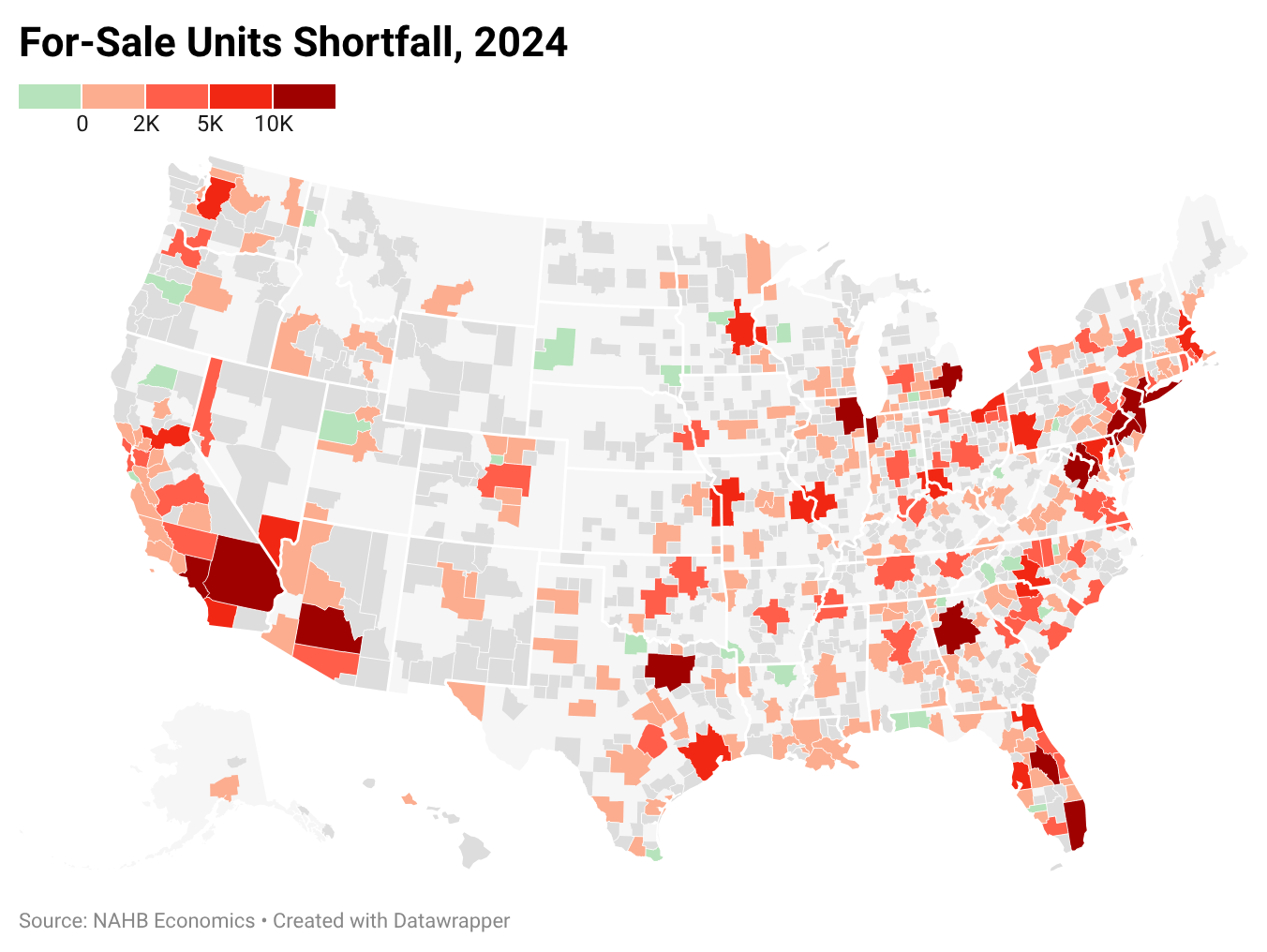
New data from Eye On Housing and the NAHB shows the U.S. remains short more than 1.2 million housing units, keeping pressure on both rents and home prices. Record‑low vacancy rates, slow single‑family construction, and restrictive zoning continue to fuel intense competition in 2024. Major metros like Chicago, New York, and Atlanta face some of the deepest deficits, and the true nationwide shortfall may be even higher when accounting for overcrowding and aging homes. For real estate professionals, the ongoing shortage means sustained demand, tighter inventory, and major opportunities for those who understand the evolving market.
Top real estate coach Jason Pantana says the divide between agents today isn’t about who has “tried” AI — it’s about who is immersed in it. In a new HousingWire interview, he explains why AI isn’t a gimmick but a full business system that amplifies output, improves authenticity, and reshapes how clients search for agents. From prompt mastery to AI‑driven visibility on Google, Pantana reveals how agents who commit even 15 minutes a day to learning AI are already outperforming those who hesitate.
Dallas–Fort Worth’s commercial real estate market closed 2025 with a split personality. Industrial dominated with massive new deliveries and soaring leasing demand, retail held steady with some of the market’s strongest fundamentals in years, and office continued to falter under remote‑work pressures. High vacancies, weak absorption, and rising demand for top‑tier space show the sector’s ongoing reset. Meanwhile, industrial and retail strength position the Metroplex for another powerhouse year heading into 2026.