AI Proptech Unicorns: The $1B+ Startups Reshaping Commercial Real Estate
Venture capital has officially rediscovered its love for real estate technology — but this time, the money is flowing overwhelmingly toward startups with one shared ingredient: artificial intelligence. According to fresh insights from PitchBook and CRETI, AI-centered proptech companies are growing at nearly double the pace of traditional tech firms, attracting billions in new capital and redefining how the commercial real estate world operates.
In 2025, proptech investment skyrocketed to $16.7B — a staggering 67.9% leap from the previous year. Even more impressive, January 2026 alone delivered $1.7B in deployed capital, marking a massive 176% surge compared to January 2025. A deeper look reveals a sharper truth: AI-native companies are now capturing the majority of industry funding.
CRETI Managing Director Ashkán Zandieh summarized it perfectly: “The market no longer rewards technology that ‘helps.’ The next generation of unicorns in proptech will be AI-native companies that directly influence underwriting accuracy, rent collection, lease compliance, and construction cost control.”
For professionals in real estate, investment, construction, or development, these AI trends highlight a seismic shift in the skill sets and expectations the industry now demands. It’s a powerful reminder of the growing importance of ongoing education and career development.
(If you’re pursuing or expanding a real estate career, training providers like Cameron Academy remain essential for staying ahead of 2026’s rapid industry evolution.)
The Four Newest AI Proptech Unicorns
Over the past year, four AI-driven companies soared past the $1B valuation milestone. These aren’t just workflow boosters — they’re platforms built to eliminate redundant labor, heighten accuracy, and accelerate operations across CRE, construction, and private capital markets.
EliseAI — $2.2B Valuation
Founded in 2017, EliseAI began as a solution to communication breakdowns between property managers and tenants. Today, it autonomously manages correspondence, scheduling, rental tours, lease audits, and maintenance tasks for more than 600 major multifamily owners — including Greystar, AvalonBay, Brookfield, and Equity Residential.
Its blockbuster $250M Series E in 2025 doubled its valuation, enabling rapid staff expansion and accelerated AI-platform development. EliseAI now stands as a powerful example of how administrative operations in real estate are being automated at scale.
Bedrock Robotics — $1.75B Valuation
Launched in 2024 by former Waymo and Segment leaders, Bedrock Robotics is reshaping construction through advanced sensors, robotics, and autonomous worksite navigation. Its flagship system, Bedrock Operator, collects laser, satellite, and motion data to generate real‑time 3D mapping for autonomous machinery.
With construction still battling workforce shortages, Bedrock isn’t replacing human workers — it’s empowering them. Fuelled by a $270M Series B in 2026, the company plans to deploy fully autonomous site fleets coordinated through a unified command center.
Juniper Square — $1.1B Valuation
Since 2014, Juniper Square has operated as a powerful OS for private investment firms. Its 2025 launch of an AI‑powered CRM transformed investor relations, using predictive modeling, natural language processing, and automated data extraction to streamline communications.
Following a $130M Series D, Juniper Square is heavily expanding its AI ecosystem through JunieAI — supporting accounting, portfolio management, fund administration, and investor operations.
Vantaca — $1.25B Valuation
Vantaca started as a digital management system for HOAs and community associations, covering dues, accounting, reporting, and communication. After acquiring HOAi in 2024, the platform introduced powerful NLP tools that automatically interpret homeowner correspondence and trigger tasks or appointments with minimal human oversight.
The company reached unicorn status after a $300M minority growth investment in 2025, fueling even deeper integration of AI into community management software.
A New Era for Real Estate Professionals
The meteoric rise of AI-native proptech signals a future dominated by automation, analytics, and smart decision-making. Anyone entering or advancing within real estate, construction, or investment will need sharp digital literacy, adaptive skill sets, and a commitment to continuous learning.
For those looking to sharpen their competitive edge — especially within Florida’s real estate sector — education providers like Cameron Academy ensure professionals stay confidently ahead in an industry transforming at record speed.
More Articles
Getting licensed or staying ahead in your career can be a journey—but it doesn’t have to be overwhelming. Grab your favorite coffee or tea, take a moment to relax, and browse through our articles. Whether you’re just starting out or renewing your expertise, we’ve got tips, insights, and advice to keep you moving forward. Here’s to your success—one sip and one step at a time!
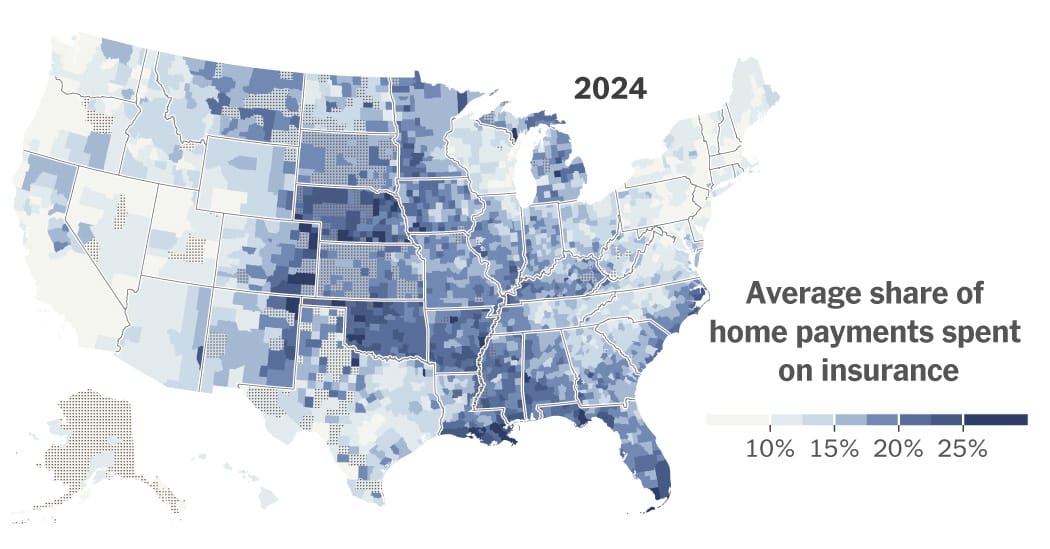
A surge in home insurance premiums is reshaping housing markets across the country, hitting disaster‑prone regions the hardest. From Louisiana to Colorado and California, deals are collapsing, buyers are backing out, and home values are dropping as insurance becomes a central affordability hurdle. New data shows climate‑driven risk repricing and soaring reinsurance costs are stripping tens of thousands of dollars from property values, forcing some homeowners to sell at a loss—or go uninsured altogether.
After years of sluggish activity, the National Association of REALTORS predicts 2026 could mark the long‑awaited rebound for the housing market. With a projected 14% jump in home sales, steadier rates near 6%, and rising buyer activity, NAR economists say momentum is already building. Early signs—like a 31% surge in mortgage applications, continued job growth, and stabilizing prices—suggest a stronger, more confident market ahead, creating fresh opportunities for both seasoned professionals and aspiring agents preparing to enter the field.
A surge of global capital is reshaping real estate heading into 2026, with investors shifting toward hands‑on strategies, cross‑border diversification, and high‑growth asset classes like data centers. Colliers’ 2026 Global Investor Outlook highlights rising confidence, improving liquidity, and a major pivot toward direct investing and value‑add opportunities. From office market rebounds to Asia Pacific’s rapid fundraising growth, the report outlines trends every real estate professional should understand as the industry enters a more dynamic, opportunity‑rich cycle.
Culver City just became the first place in California to legalize six‑story apartment buildings with only one staircase — a simple change that could reshape mid‑rise housing statewide. By freeing up as much as 7% more usable floor space, architects say single‑stair designs allow bigger units, more windows, and the kind of elegant layouts common in New York and Europe. If the city’s six‑year experiment succeeds, it may spark a broader rethinking of U.S. building codes and open the door to more flexible, affordable multifamily development across California.
Stratford homeowners are receiving their 2025 Notices of Assessment Change, marking the town’s first property revaluation since 2019. Officials emphasize that rising assessments do not equal higher tax bills, as a new mill rate won’t be set until spring 2026. Residents can challenge or review their updated valuations through informal hearings hosted by Vision Government Solutions, with appointments available for one week after receiving a notice.
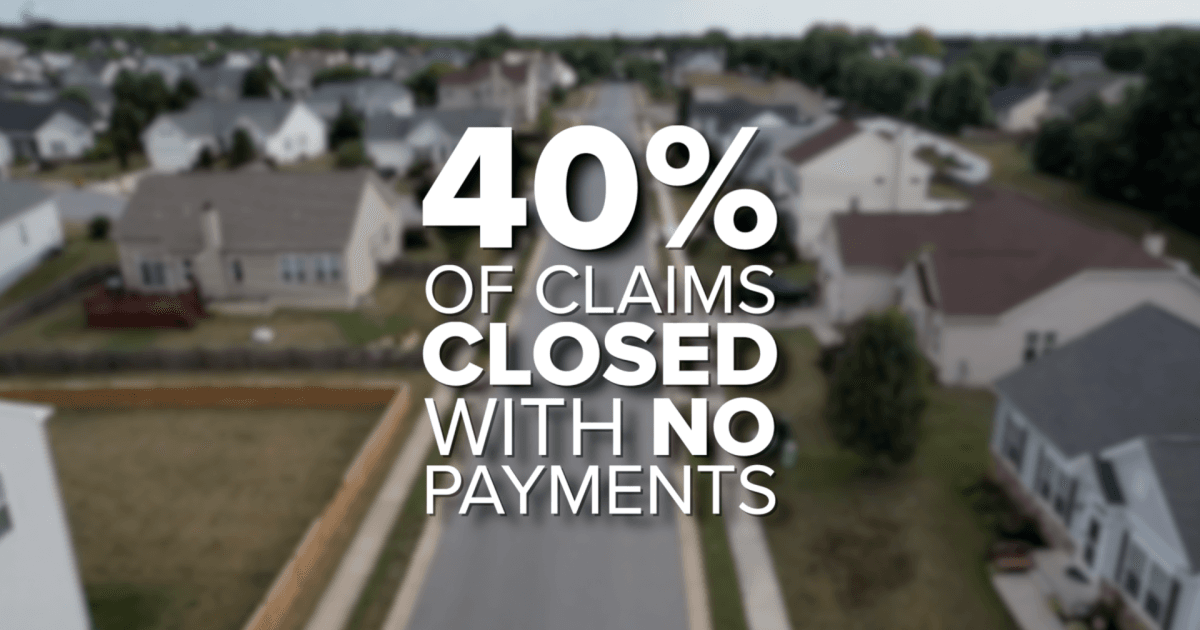
New reporting reveals Florida homeowners now face an average insurance premium of $5,838 per year — nearly triple the national average. With skyrocketing rates, denied claims, and mounting non-renewals, residents are being pushed to tough financial decisions while lawmakers scramble to implement reforms. From retirees skipping coverage to families battling insurers for fair payouts, Florida’s insurance crisis is reshaping both the housing market and the daily lives of homeowners statewide.