
AI Shaping the Future of Healthcare: What 2025 Holds

As we stand on the precipice of 2025, the landscape of artificial intelligence (AI) in healthcare is poised for transformative change. The past year has been a whirlwind of innovation, setting the stage for what many experts predict will be a breakthrough year for AI. This evolution is not just a whisper of potential but a resounding call to action for the healthcare industry.
Mount Sinai and Washington University Lead the Charge In 2024, the Mount Sinai Health System made headlines with the inauguration of the Hamilton and Amabel James Center for Artificial Intelligence and Human Health. This center, nestled in the heart of Manhattan, is a testament to AI’s burgeoning role in genomics and imaging. Similarly, the Washington University School of Medicine and BJC Health System in St. Louis launched their Center for Health AI, focusing on enhancing healthcare efficiency through AI-driven workflow improvements.
Predictive Analytics Market on the Rise The healthcare predictive analytics market is expected to skyrocket, with projections suggesting it will reach a staggering $126.15 billion by 2032. This growth is primarily driven by the increasing demand for AI-powered patient outcomes, as noted in a report by SNS Insider.
Radiology and AI: A Symbiotic Relationship At the RSNA Conference, experts discussed the transformative potential of generative AI and large language models (LLMs) in radiology. Dr. Tessa S. Cook from the University of Pennsylvania highlighted how AI could streamline radiologists’ workflows, from categorizing incidental findings to automating study processing. This sentiment was echoed by Dr. Dania Daye of Harvard Medical School, who emphasized AI’s ability to enhance the entire diagnostic imaging process.
AI’s Role in Clinical Settings AI is set to revolutionize clinical settings by enhancing decision-making processes and streamlining documentation. This is particularly crucial in areas like sepsis prediction and diagnostic imaging. Studies published in leading medical journals, such as a recent article in JAMA Network Open, have already begun to explore these applications.
Looking Ahead to 2025 As we look to 2025, the horizon is bright with possibilities. AI innovations are expected to expedite clinical workflows, enrich electronic health record systems, and significantly uplift patient care and diagnostic accuracy. The healthcare industry stands at the cusp of a new era, where AI continues to be a catalyst for transformation. Ai in healthcare
Conclusion The advancements of 2024 have laid a robust foundation for AI in healthcare. As we peer into 2025, the promise of AI is not just a possibility but an impending reality. The coming year is set to be a defining moment, with AI poised to make healthcare more efficient, accurate, and accessible for all.

More Articles

Getting licensed or staying ahead in your career can be a journey—but it doesn’t have to be overwhelming. Grab your favorite coffee or tea, take a moment to relax, and browse through our articles. Whether you’re just starting out or renewing your expertise, we’ve got tips, insights, and advice to keep you moving forward. Here’s to your success—one sip and one step at a time!

Unlocking Real Estate Wealth in 2025: Strategies for Success

Step into 2025, where the real estate market emerges as a resilient beacon amidst economic unpredictability. Investors are increasingly drawn to secondary cities like Austin and Manchester, attracted by their growth potential, affordability, and enhanced quality of life.

By |February 18, 2025|Categories: Article, Investment Strategies, Real Estate|Tags: , |0 Comments

AI and Urbanization Drive Home Services Market Growth

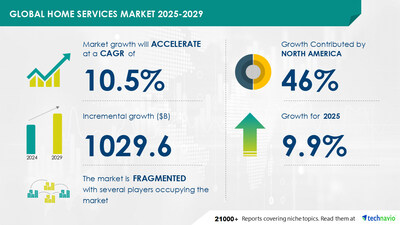
The global home services market is poised for significant growth, with projections indicating an increase of USD 1.03 trillion from 2025 to 2029. This forecasted expansion is attributed to increasing urbanization and the transformative impact of AI on market trends, according to a recent report by Technavio.

Decoding the U.S. Housing Crisis: A Study of Historic Policy Missteps and Demographic Shift

In a revealing study by USC, the roots of the current housing crisis in the United States are traced back to policy missteps and demographic changes that have been unfolding since the early 2000s. The study highlights how these factors have left millennials and people of color disproportionately affected.

Best Real Estate Crowdfunding Platforms for February 2025: Investopedia’s Top Picks

Fundrise stands out for offering investors a chance to diversify their portfolios with real estate exposure through proprietary funds. With a minimum investment as low as $10, it opens doors to beginners and seasoned investors alike.

Top Real Estate Investment Apps of 2025: A Guide for First-Time and Experienced Investors

Business Insider has reviewed a range of platforms available in 2025, focusing on key factors like fees, accessibility for accredited vs. non-accredited investors, and the types of real estate investments offered.