AI and the Future of Finance in Des Moines: Opportunity, Disruption, and a New Era of Talent
The Des Moines metro has long been the beating heart of America’s finance and insurance industries, home to national giants like Wells Fargo, Athene, Farm Bureau Financial Services, Principal Financial, EMC Insurance, and Nationwide. But now, another giant has arrived—one that doesn’t clock in, buy lunch, or pay local taxes.
Artificial Intelligence, including the very technologies powering today’s AI assistants and copilots, is quietly reshaping the region’s economic foundation. In an irony fit for a business school case study, the supercomputer used to train ChatGPT itself once lived inside a Microsoft data center right in West Des Moines—mere minutes from the companies whose future workforce needs may be changed by the technology it helped create.
Will AI Replace Finance Jobs in the Metro?
Leaders like Wells Fargo’s Charlie Scharf and JPMorgan Chase’s Jamie Dimon have been open about AI’s ability to take on certain highly quantitative tasks. The Des Moines Register notes that finance employment in the metro has already been drifting downward since its 2017 peak. Now, with AI advancing rapidly, many wonder if the trend will accelerate.
But the picture isn’t entirely bleak. Interviews with academics, economic forecasters, city planners, and students entering the finance world suggest a more nuanced future—one in which AI handles routine tasks while humans shift toward strategy, interpretation, client counseling, and innovation.
A Community Impact Beyond the Office Walls
AI may be efficient, but it doesn’t move into Waukee, shop at Hy-Vee, or fill up at Casey’s. The ripple effects of workforce shifts matter deeply to local communities. Suburban growth, retail vitality, and even Des Moines’ downtown energy are tied to the thousands of finance professionals who call the metro home.
One big question remains: If AI reduces entry‑level finance jobs, where will the next generation of leaders gain their foundational experience?
The Des Moines Register’s full analysis explores this in depth and is worth a read for anyone watching the crossroads of technology and finance.
In his weekly “From the Archives” series, business editor Bill Steiden brings readers fascinating snapshots of Iowa history—from Jimmy Carter’s momentum‑setting 1976 caucus win, to the days when Iowa’s future ethanol industry was introduced under the name “gasohol”, to proposals to turn the historic state penitentiary into an Alcatraz‑style attraction.
His storytelling highlights how the city’s past is filled with character, ambition, mischief, and vision—a reminder that Des Moines’ identity has always been shaped by strong personalities and bold ideas.
What This Means for Today’s Professionals
Whether you’re in finance, insurance, real estate, or any licensed profession, one truth is clear: AI is shifting the skills landscape. Adaptability and ongoing education are quickly becoming career superpowers.
For professionals navigating these changes, upskilling is no longer optional. Schools like Cameron Academy help future‑focused workers stay ahead—whether through real estate licensing, finance‑adjacent certifications, continuing education, or training that strengthens your competitive edge in an AI‑augmented world.
Getting licensed or staying ahead in your career can be a journey—but it doesn’t have to be overwhelming. Grab your favorite coffee or tea, take a moment to relax, and browse through our articles. Whether you’re just starting out or renewing your expertise, we’ve got tips, insights, and advice to keep you moving forward. Here’s to your success—one sip and one step at a time!
Despite billions poured into proptech and a decade of flashy digital upgrades, the real estate experience remains largely unchanged. Apps made processes smoother, but not more transparent — because the industry’s core structures, data control and power dynamics stayed the same. True disruption will come from platforms that shift information and control to consumers, not just digitize outdated systems.
Early 2026 is delivering a clear message: commercial real estate is entering a recalibration phase. Construction is softening, pending home sales just saw a sharp drop, consumer sentiment is inching upward but remains fragile, and capital markets are tightening as major CRE sectors face rising distress. From data centers powering ahead to CMBS foreclosures climbing and office-to-residential conversions gaining momentum, professionals across real estate, mortgage, insurance, and finance need to stay sharp as the industry shifts.
Discover the real estate roles earning the biggest paychecks in 2026. From investment consultants to commercial leasing managers, this breakdown highlights the salaries, responsibilities, and career paths offering the strongest financial potential in today’s evolving market—perfect for newcomers and seasoned professionals mapping their next big move.
Montana is taking major steps to remove outdated licensing barriers and strengthen its workforce. Governor Greg Gianforte has created a new Licensing Reform Task Force aimed at modernizing regulations, speeding up approvals, and helping more professionals enter high‑demand fields like construction and healthcare. With licensing numbers doubling over the past decade and rural communities facing critical shortages, the state is pushing for faster, more efficient pathways to work. The task force begins meeting in February and will deliver its full reform report by September 2026 — a move that could influence licensing modernization efforts nationwide.
Artificial intelligence has officially moved from novelty to necessity in the real estate world. According to new industry data, 97% of brokerage leaders say their agents now rely on AI tools for everything from listing descriptions to full-scale marketing campaigns. As adoption skyrockets, so do concerns over training, accuracy, and compliance — especially among smaller firms. The message is clear: for today’s real estate professionals, AI literacy isn’t optional anymore.
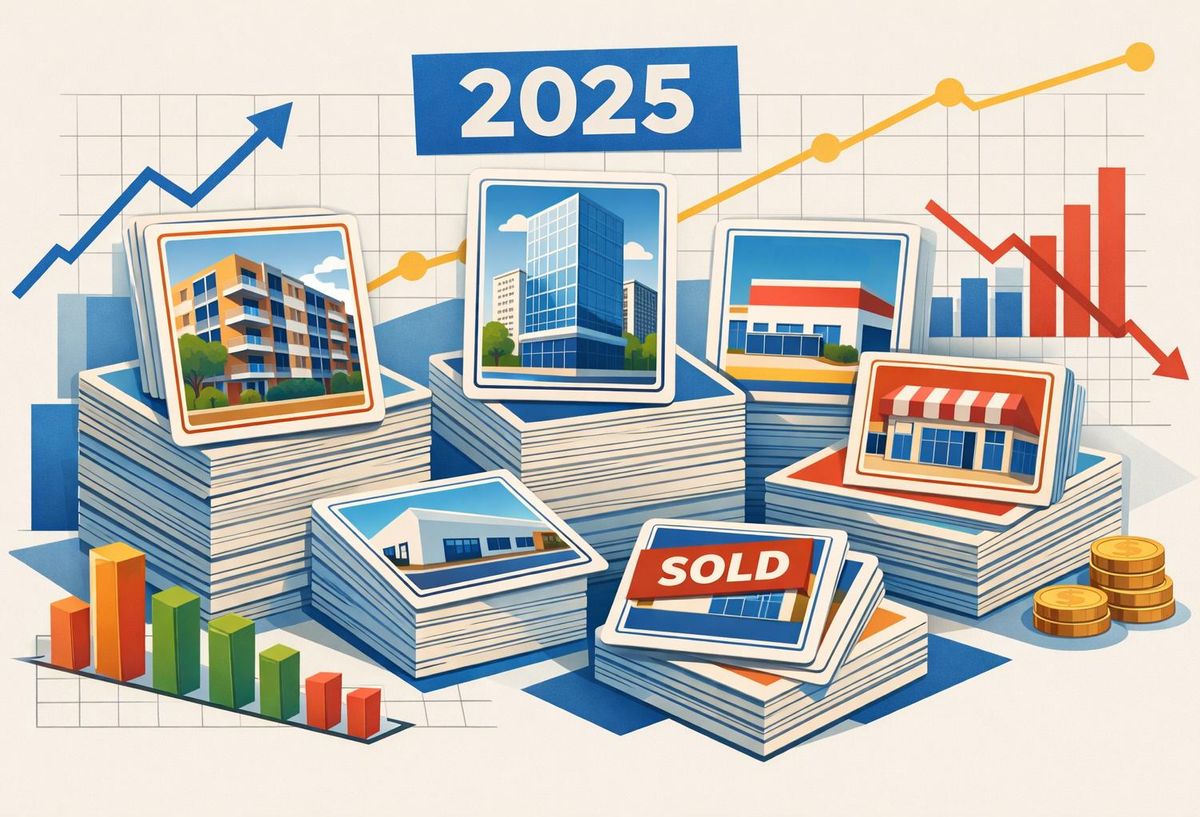
Commercial real estate roared back to life in 2025, with more than $255B pouring into multifamily, industrial, office and retail assets. Major investors moved fast on falling interest rates, improving bond yields and rising confidence across sectors. Multifamily dominated with over $115B in deals, industrial surged under private equity leadership, office saw renewed activity from owner-users and retail proved surprisingly resilient. For today’s real estate and finance professionals, the message is clear: opportunity favors those who stay informed and ready to act.