AI and the Future of Finance in Des Moines: Opportunity, Disruption, and a New Era of Talent
The Des Moines metro has long been the beating heart of America’s finance and insurance industries, home to national giants like Wells Fargo, Athene, Farm Bureau Financial Services, Principal Financial, EMC Insurance, and Nationwide. But now, another giant has arrived—one that doesn’t clock in, buy lunch, or pay local taxes.
Artificial Intelligence, including the very technologies powering today’s AI assistants and copilots, is quietly reshaping the region’s economic foundation. In an irony fit for a business school case study, the supercomputer used to train ChatGPT itself once lived inside a Microsoft data center right in West Des Moines—mere minutes from the companies whose future workforce needs may be changed by the technology it helped create.
Will AI Replace Finance Jobs in the Metro?
Leaders like Wells Fargo’s Charlie Scharf and JPMorgan Chase’s Jamie Dimon have been open about AI’s ability to take on certain highly quantitative tasks. The Des Moines Register notes that finance employment in the metro has already been drifting downward since its 2017 peak. Now, with AI advancing rapidly, many wonder if the trend will accelerate.
But the picture isn’t entirely bleak. Interviews with academics, economic forecasters, city planners, and students entering the finance world suggest a more nuanced future—one in which AI handles routine tasks while humans shift toward strategy, interpretation, client counseling, and innovation.
A Community Impact Beyond the Office Walls
AI may be efficient, but it doesn’t move into Waukee, shop at Hy-Vee, or fill up at Casey’s. The ripple effects of workforce shifts matter deeply to local communities. Suburban growth, retail vitality, and even Des Moines’ downtown energy are tied to the thousands of finance professionals who call the metro home.
One big question remains: If AI reduces entry‑level finance jobs, where will the next generation of leaders gain their foundational experience?
The Des Moines Register’s full analysis explores this in depth and is worth a read for anyone watching the crossroads of technology and finance.
In his weekly “From the Archives” series, business editor Bill Steiden brings readers fascinating snapshots of Iowa history—from Jimmy Carter’s momentum‑setting 1976 caucus win, to the days when Iowa’s future ethanol industry was introduced under the name “gasohol”, to proposals to turn the historic state penitentiary into an Alcatraz‑style attraction.
His storytelling highlights how the city’s past is filled with character, ambition, mischief, and vision—a reminder that Des Moines’ identity has always been shaped by strong personalities and bold ideas.
What This Means for Today’s Professionals
Whether you’re in finance, insurance, real estate, or any licensed profession, one truth is clear: AI is shifting the skills landscape. Adaptability and ongoing education are quickly becoming career superpowers.
For professionals navigating these changes, upskilling is no longer optional. Schools like Cameron Academy help future‑focused workers stay ahead—whether through real estate licensing, finance‑adjacent certifications, continuing education, or training that strengthens your competitive edge in an AI‑augmented world.
Getting licensed or staying ahead in your career can be a journey—but it doesn’t have to be overwhelming. Grab your favorite coffee or tea, take a moment to relax, and browse through our articles. Whether you’re just starting out or renewing your expertise, we’ve got tips, insights, and advice to keep you moving forward. Here’s to your success—one sip and one step at a time!
In 2026, financial advisors are no longer just experimenting with AI — they’re relying on it. Once confined to back-office duties, AI now supports meeting prep, portfolio analysis, and even early-stage financial planning. Advisors say the tech is strengthening client relationships by freeing them from administrative overload, though entry-level roles like paraplanners may feel the squeeze as automation accelerates.
Cybercriminals are weaponizing AI to launch highly convincing email scams and system breaches across the mortgage industry, overwhelming lenders and servicers whose cybersecurity measures can’t keep up. With major companies already hit and regulation lagging behind, experts warn the sector—now considered critical infrastructure—must rapidly upgrade protections, collaborate on threat intelligence, and improve AI governance before the risks escalate further.
Escrow payments are quietly surging across the country as property taxes and insurance premiums spike—pushing many homeowners toward delinquencies and even foreclosure. New data from Cotality shows the sharpest increases hitting the South and Midwest, with Florida among the hardest‑hit states. Even with fixed mortgage rates, rising escrow requirements are driving monthly payments higher and threatening affordability heading into 2026.
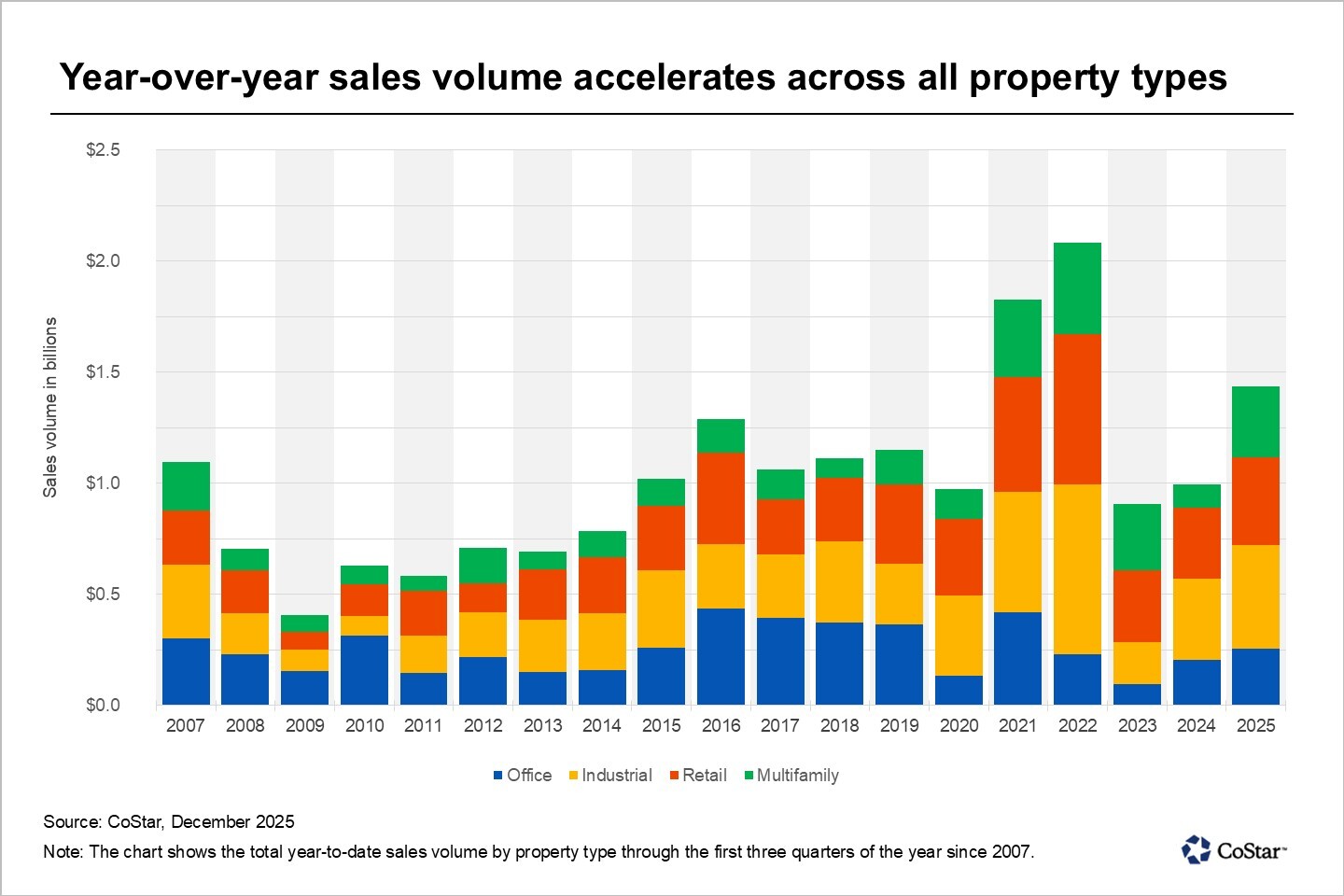
Milwaukee entered 2025 with renewed momentum, posting its strongest commercial real estate sales volume in three years. After a period of uncertainty and high capital costs, investors are returning with a sharper focus on quality assets, realistic pricing, and reliable cash flow. Activity is increasing across industrial, office, multifamily, and retail sectors, signaling a broad-based recovery fueled by stabilizing interest rates and improved market confidence.
As 2026 approaches, the title insurance industry is navigating a complex mix of market recovery, rising fraud threats, and sweeping regulatory changes. Industry leaders say the path forward centers on smarter technology, leaner operations, and stronger support for title agents. With AI-driven workflows, enhanced fraud prevention, and new compliance demands—including FinCEN’s expanded Geographic Targeting Orders—companies like Stewart and First American are reshaping how title work gets done. For real estate and mortgage professionals, the year ahead promises more automation, heightened standards, and major opportunities for those who stay ahead of the curve.
The real estate industry is undergoing a major transformation in 2025 as advancements in AI, proptech, blockchain, and data intelligence redefine how properties are marketed, valued, financed, and experienced. From instant digital valuations and immersive virtual tours to tokenized investments and predictive analytics, technology is reshaping every stage of the real estate lifecycle. Professionals who embrace these innovations—while maintaining the human expertise clients still rely on—will lead the next era of the industry.