AI’s Pervasive Influence in Real Estate: A Transformative Shift
In a revealing report by RISMedia, the 2025 Real Estate Leadership AI Survey conducted by Delta Media Group highlights the sweeping integration of artificial intelligence within the real estate sector. The survey indicates that nearly 90% of brokerage leaders now report their agents’ active use of AI tools, illustrating a 7% increase from the previous year.
Michael Minard, CEO and owner of Delta Media Group, underscores the transformative nature of AI, stating, “AI is no longer a new shiny object; it’s fast become an irreplaceable tool for brokerages and agents alike.” This shift is evident as AI’s role expands beyond marketing and content creation to encompass customer support and administrative automation.
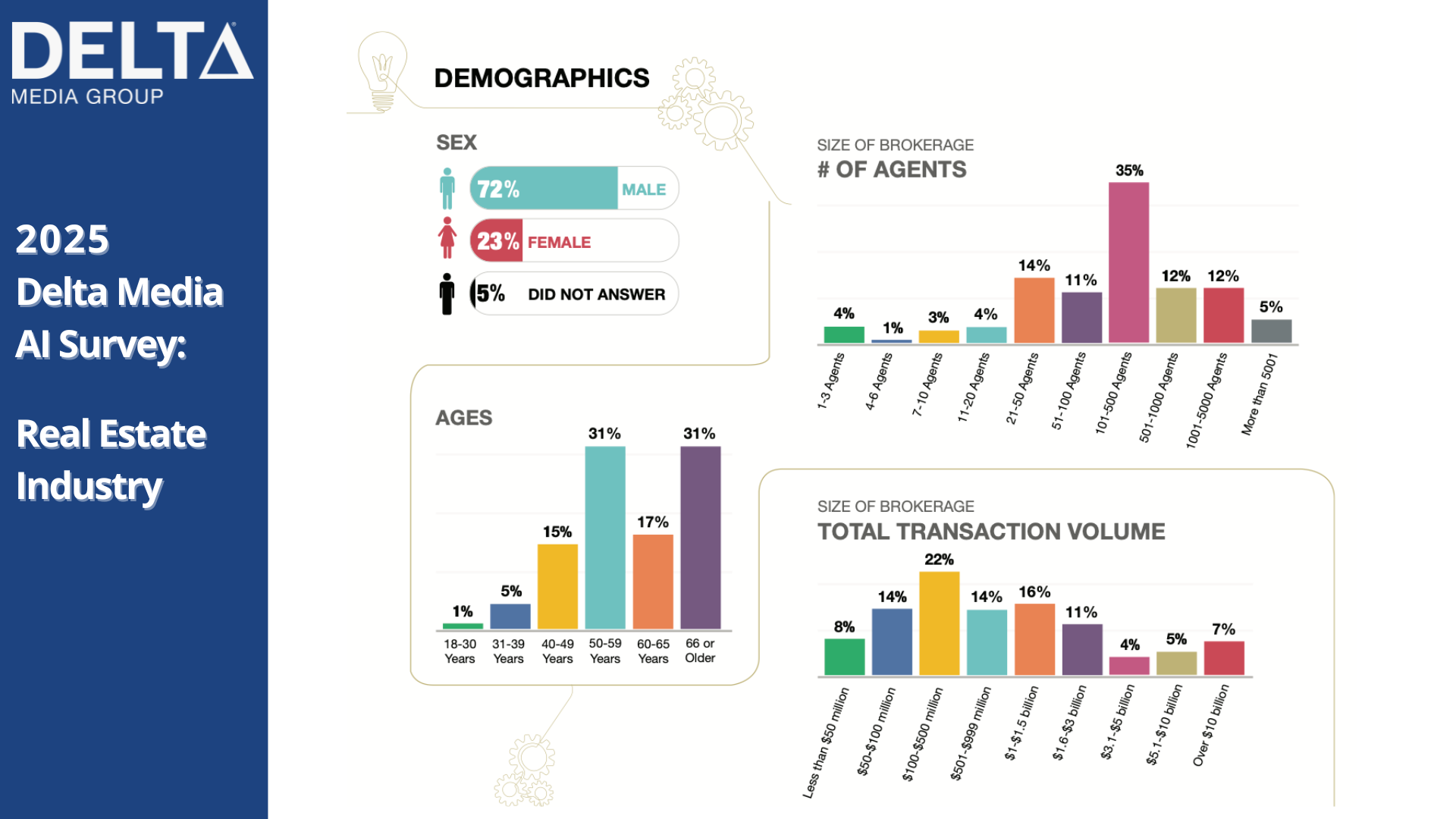
The survey, which gathered insights from over 100 residential brokerage leaders responsible for more than half of all US real estate transactions, reveals a remarkable change in AI adoption and perception. Leaders rated AI’s current significance at 5.9 out of 10, up from 5.0 in 2024, with future importance anticipated to rise to 7.2—a 22% increase.
Key Findings
Broader Demographic Adoption: Age-based disparities in AI usage have vanished, and gender gaps have narrowed, with both male and female leaders reporting high AI engagement.
Top AI Use Cases: While creating property descriptions remains the primary application, AI is increasingly used for digital marketing, client communications, data analysis, and administrative task automation.
Easing Risk Concerns: The percentage of leaders highly concerned about AI risks fell from 50.4% in 2024 to 42.2% in 2025.
Operational Shift: Brokerages are moving from marketing-focused AI applications to broader operational uses, reflecting a strategic shift toward holistic technology integration.
Medium to large brokerages, with their scale and resources, are leading AI adoption, while smaller brokerages face challenges that limit widespread implementation. As we look to the future, Delta anticipates 2025 as a pivotal year for AI in real estate, with expanded usage in automation and customer service poised to redefine operational efficiency.
For a comprehensive understanding, access the full report here.
Getting licensed or staying ahead in your career can be a journey—but it doesn’t have to be overwhelming. Grab your favorite coffee or tea, take a moment to relax, and browse through our articles. Whether you’re just starting out or renewing your expertise, we’ve got tips, insights, and advice to keep you moving forward. Here’s to your success—one sip and one step at a time!
Florida homeowners are getting long‑awaited relief this spring as insurance premiums drop across the state, with some counties seeing reductions of up to 14 percent. After years of skyrocketing rates and insurer withdrawals, a series of legislative reforms has attracted new companies, reduced lawsuits, and restored competition—leading to lower costs for more than 330,000 Citizens policyholders and multiple private‑market rate cuts. This shift is boosting not only homeowners, but also Florida’s broader economy and real estate market, offering valuable insights for professionals in real estate, insurance, mortgage, and finance.
Artificial intelligence has transformed real estate marketing by making it easy to generate polished, digitally enhanced listing photos. But as AI tools increasingly replace reality with idealized versions of homes, a new issue has emerged: housefishing. Buyers and renters are showing up to properties that look nothing like the online images, leading regulators to step in and require transparency. With laws like California’s newly enacted Assembly Bill 723, the industry is being pushed toward clearer labeling and ethical use of AI. As trust becomes a growing concern, real estate professionals must balance innovation with accuracy to stay compliant and credible.
Massachusetts has unanimously advanced bill S.2947, a major push to curb housing discrimination by expanding fair housing education requirements for real estate agents. The proposal increases training hours for both current and future licensees and doubles penalties for violations, marking a significant shift toward stronger consumer protections and higher professional standards across the state’s housing market.
Energy costs have moved from a background expense to a major force influencing affordability, property values, and development across the Hudson Valley. Aging housing stock, grid constraints, and rising utility bills are reshaping both residential and commercial real estate decisions—rewarding energy‑efficient properties and pressuring households already struggling to balance essential expenses.
AI is transforming the daily workflow of real estate pros by speeding up marketing, simplifying client communication, and sharpening pricing strategies. As highlighted in an NBC 6 feature, agents are using AI to draft listing descriptions, generate social media content, organize inquiries, and analyze market data in minutes. Whether you're new to the industry or an experienced agent, AI is quickly becoming an essential tool for working smarter and staying competitive.