Analyzing Mortgage Rate Trends in 2024: A Historical Perspective
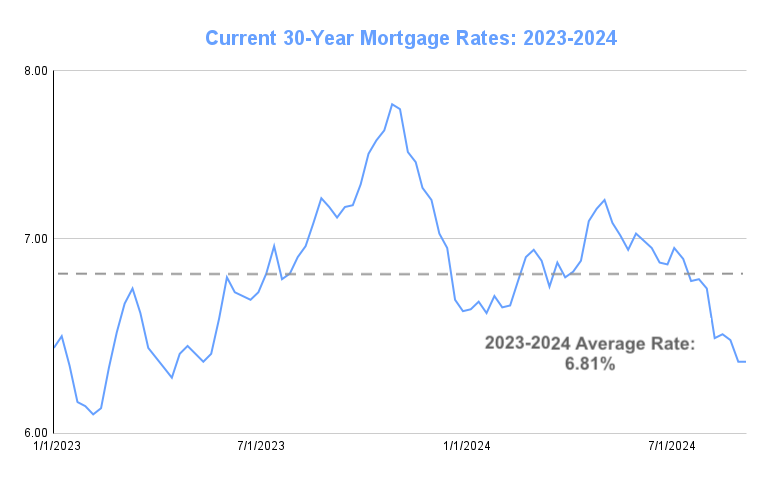
The past few years have presented a challenging landscape for homebuyers, with both mortgage rates and home prices rising sharply. However, recent trends suggest a potential easing of this financial squeeze. As reported by The Mortgage Reports, mortgage rates have been on a gradual decline, raising the question of whether this trend will continue or reverse.
Current Landscape and Historical Context
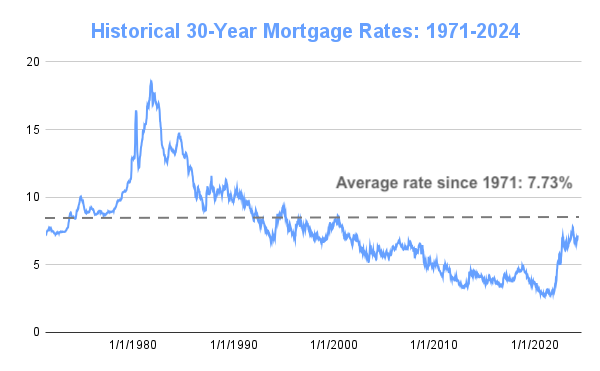
With rates now in the low 6% range, a recent 50-basis-point rate cut by the Federal Reserve has sparked optimism among prospective buyers. Historically, mortgage rates have fluctuated significantly, with Freddie Mac data showing a long-term average of 7.73% for 30-year fixed-rate mortgages since 1971.
Notable Historical Events
1981: The all-time high for mortgage rates, with averages peaking at 16.63%.
2008: The mortgage slump, with rates at 6.03% amidst the financial crisis.
2021: Record-low rates, reaching 2.65% due to pandemic-induced Federal Reserve policies.
The Road Ahead
The Federal Reserve’s recent actions and anticipated future cuts could further influence mortgage rates. Experts predict that rates might fall to between 5.5% and 6.0% by the end of next year, providing potential relief for homebuyers. However, with economic conditions remaining unpredictable, borrowers are advised to focus on their financial readiness rather than attempting to time the market.
For those exploring their mortgage options, understanding the factors affecting rates—such as credit score, down payment, and loan type—is crucial. Personalized rates often diverge from the average, offering opportunities for savvy borrowers to secure favorable terms.
Conclusion
As the housing market navigates these evolving conditions, staying informed about mortgage rate trends and historical context is essential. For more detailed insights, refer to the original article on The Mortgage Reports.
More Articles
Getting licensed or staying ahead in your career can be a journey—but it doesn’t have to be overwhelming. Grab your favorite coffee or tea, take a moment to relax, and browse through our articles. Whether you’re just starting out or renewing your expertise, we’ve got tips, insights, and advice to keep you moving forward. Here’s to your success—one sip and one step at a time!
In an unexpected twist of economic fate, the construction industry finds itself grappling with a steep ascent in building material costs, a trend that began its climb at the dawn of 2024.
In the ever-evolving landscape of commercial real estate, a new challenge has emerged, straining the resilience of landlords and developers alike. The soaring costs of insurance, exacerbated by climate-induced natural disasters, are creating a formidable obstacle for property owners. Particularly affected are coastal cities and towns, where the risk of storms and floods is high.
The Bay Area housing market, a perpetual reflection of its economic vigor and cultural appeal, is navigating a complex terrain as it marches into 2024.
In a significant cyberattack that has disrupted operations across the United States, CDK Global, a leading provider of cloud-based software to automotive dealerships, was forced to shut down most of its systems. This incident has highlighted the vulnerabilities and rising trend of cyberattacks targeting the auto industry.
The commercial real estate landscape has experienced seismic shifts, particularly with properties purchased prior to the Covid-19 pandemic. Many of these assets now hold diminished value compared to the loans used to acquire them.