Are Gen Z Really Giving Up on Homeownership? A New Look at the Data
According to new research highlighted by Fortune, many younger Americans are reaching a breaking point. With housing affordability sinking and the average first-time buyer age hitting 40, a significant portion of Gen Z is beginning to believe they may never own a home at all.
In studies published by researchers from Northwestern University and the University of Chicago, young adults are showing three major behavioral shifts: they’re saving less, working less, and taking on riskier investments—largely because the path to homeownership feels increasingly unattainable.
“No matter how hard I work, I will never be able to afford a home I really love.” — 46% of Gen Z respondents, Harris Poll
1. Spending More Than They Save
Research indicates that when rising home prices push ownership out of reach, many young renters stop saving for a house altogether. Instead, they redirect savings toward lifestyle spending—what some call “doomspending.” Nearly half of Gen Z doesn’t have an emergency fund, and 27% hold more debt than savings.
Some expect to inherit wealth from the massive $124 trillion transfer occurring over the coming decades, though surveys show most won’t receive nearly as much as they anticipate.
2. Rethinking Work Itself
The study also found a measurable drop in work effort among Gen Z renters. When the reward (buying a home someday) feels impossible, motivation declines. Renters were nearly twice as likely as homeowners to report reduced effort at work.
However, economist and creator Kyla Scanlon offers a different interpretation: it’s not that Gen Z doesn’t want to work—it’s that they no longer believe in doing things “the way they’ve always been done.”
3. Turning to Risky Investments
With traditional wealth-building paths like homeownership feeling blocked, many young adults are turning toward higher-risk assets. Cryptocurrencies, speculative investments, and alternative financial trends are more common among Gen Z than retirement accounts.
Researchers explain that when homeownership becomes unrealistic, young people perceive they have “less to lose,” which makes riskier behavior feel more acceptable. Financial experts caution that taking interest in personal finance is good—so long as risk and reward are understood.
What This Means for the Future of Real Estate
For Florida’s real estate industry—and licensing fields across the nation—these trends are reshaping the future of buyers, renters, and professionals alike. As affordability challenges persist, more Gen Z professionals may enter real estate careers to better understand the market and secure financial stability.
At Cameron Academy, we’ve seen a rising number of young professionals pursuing real estate licenses, mortgage certifications, and finance education to gain control over their financial futures. Whether affordability improves or not, knowledge remains one of the few assets no market can devalue.
Explore real estate pathways, licensing education, and career-boosting courses at Cameron Academy—designed for the professionals shaping tomorrow’s market.
Getting licensed or staying ahead in your career can be a journey—but it doesn’t have to be overwhelming. Grab your favorite coffee or tea, take a moment to relax, and browse through our articles. Whether you’re just starting out or renewing your expertise, we’ve got tips, insights, and advice to keep you moving forward. Here’s to your success—one sip and one step at a time!
Despite billions poured into proptech and a decade of flashy digital upgrades, the real estate experience remains largely unchanged. Apps made processes smoother, but not more transparent — because the industry’s core structures, data control and power dynamics stayed the same. True disruption will come from platforms that shift information and control to consumers, not just digitize outdated systems.
Early 2026 is delivering a clear message: commercial real estate is entering a recalibration phase. Construction is softening, pending home sales just saw a sharp drop, consumer sentiment is inching upward but remains fragile, and capital markets are tightening as major CRE sectors face rising distress. From data centers powering ahead to CMBS foreclosures climbing and office-to-residential conversions gaining momentum, professionals across real estate, mortgage, insurance, and finance need to stay sharp as the industry shifts.
Discover the real estate roles earning the biggest paychecks in 2026. From investment consultants to commercial leasing managers, this breakdown highlights the salaries, responsibilities, and career paths offering the strongest financial potential in today’s evolving market—perfect for newcomers and seasoned professionals mapping their next big move.
Montana is taking major steps to remove outdated licensing barriers and strengthen its workforce. Governor Greg Gianforte has created a new Licensing Reform Task Force aimed at modernizing regulations, speeding up approvals, and helping more professionals enter high‑demand fields like construction and healthcare. With licensing numbers doubling over the past decade and rural communities facing critical shortages, the state is pushing for faster, more efficient pathways to work. The task force begins meeting in February and will deliver its full reform report by September 2026 — a move that could influence licensing modernization efforts nationwide.
Artificial intelligence has officially moved from novelty to necessity in the real estate world. According to new industry data, 97% of brokerage leaders say their agents now rely on AI tools for everything from listing descriptions to full-scale marketing campaigns. As adoption skyrockets, so do concerns over training, accuracy, and compliance — especially among smaller firms. The message is clear: for today’s real estate professionals, AI literacy isn’t optional anymore.
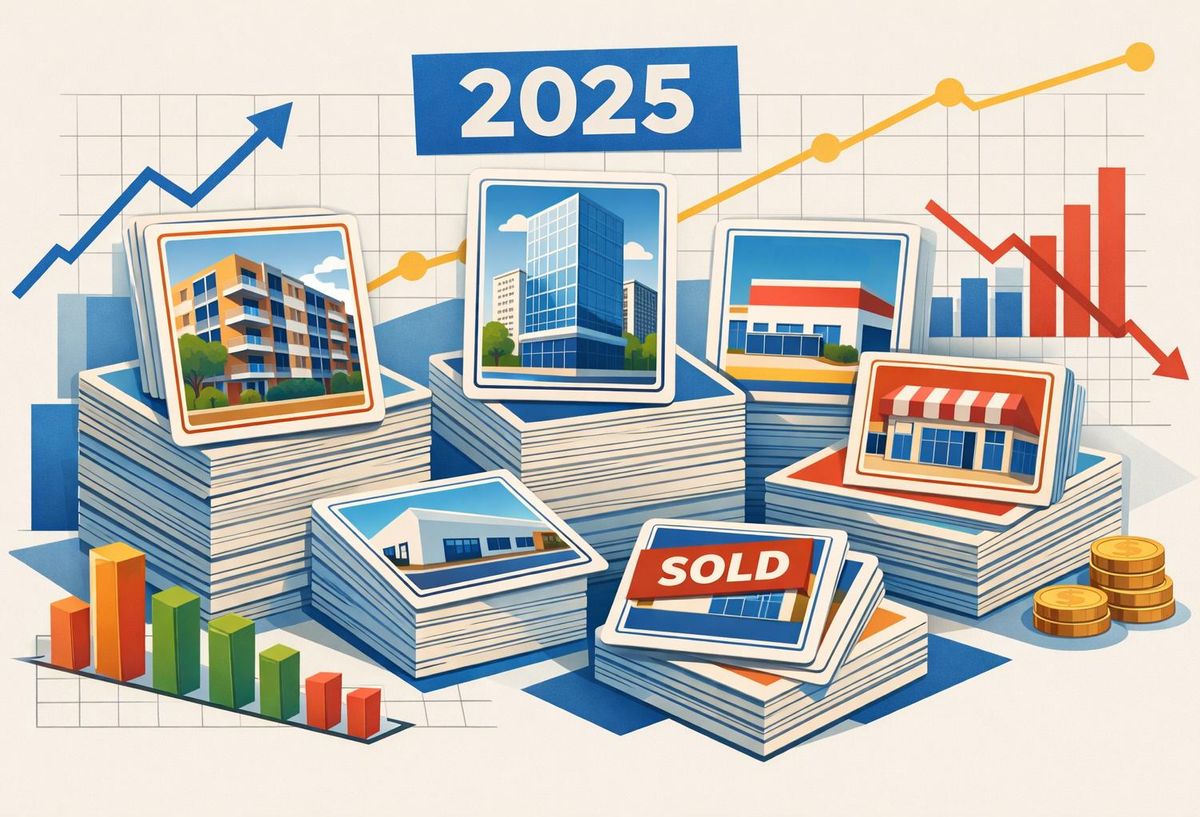
Commercial real estate roared back to life in 2025, with more than $255B pouring into multifamily, industrial, office and retail assets. Major investors moved fast on falling interest rates, improving bond yields and rising confidence across sectors. Multifamily dominated with over $115B in deals, industrial surged under private equity leadership, office saw renewed activity from owner-users and retail proved surprisingly resilient. For today’s real estate and finance professionals, the message is clear: opportunity favors those who stay informed and ready to act.