Are Gen Z Really Giving Up on Homeownership? A New Look at the Data
According to new research highlighted by Fortune, many younger Americans are reaching a breaking point. With housing affordability sinking and the average first-time buyer age hitting 40, a significant portion of Gen Z is beginning to believe they may never own a home at all.
In studies published by researchers from Northwestern University and the University of Chicago, young adults are showing three major behavioral shifts: they’re saving less, working less, and taking on riskier investments—largely because the path to homeownership feels increasingly unattainable.
“No matter how hard I work, I will never be able to afford a home I really love.” — 46% of Gen Z respondents, Harris Poll
1. Spending More Than They Save
Research indicates that when rising home prices push ownership out of reach, many young renters stop saving for a house altogether. Instead, they redirect savings toward lifestyle spending—what some call “doomspending.” Nearly half of Gen Z doesn’t have an emergency fund, and 27% hold more debt than savings.
Some expect to inherit wealth from the massive $124 trillion transfer occurring over the coming decades, though surveys show most won’t receive nearly as much as they anticipate.
2. Rethinking Work Itself
The study also found a measurable drop in work effort among Gen Z renters. When the reward (buying a home someday) feels impossible, motivation declines. Renters were nearly twice as likely as homeowners to report reduced effort at work.
However, economist and creator Kyla Scanlon offers a different interpretation: it’s not that Gen Z doesn’t want to work—it’s that they no longer believe in doing things “the way they’ve always been done.”
3. Turning to Risky Investments
With traditional wealth-building paths like homeownership feeling blocked, many young adults are turning toward higher-risk assets. Cryptocurrencies, speculative investments, and alternative financial trends are more common among Gen Z than retirement accounts.
Researchers explain that when homeownership becomes unrealistic, young people perceive they have “less to lose,” which makes riskier behavior feel more acceptable. Financial experts caution that taking interest in personal finance is good—so long as risk and reward are understood.
What This Means for the Future of Real Estate
For Florida’s real estate industry—and licensing fields across the nation—these trends are reshaping the future of buyers, renters, and professionals alike. As affordability challenges persist, more Gen Z professionals may enter real estate careers to better understand the market and secure financial stability.
At Cameron Academy, we’ve seen a rising number of young professionals pursuing real estate licenses, mortgage certifications, and finance education to gain control over their financial futures. Whether affordability improves or not, knowledge remains one of the few assets no market can devalue.
Explore real estate pathways, licensing education, and career-boosting courses at Cameron Academy—designed for the professionals shaping tomorrow’s market.
Getting licensed or staying ahead in your career can be a journey—but it doesn’t have to be overwhelming. Grab your favorite coffee or tea, take a moment to relax, and browse through our articles. Whether you’re just starting out or renewing your expertise, we’ve got tips, insights, and advice to keep you moving forward. Here’s to your success—one sip and one step at a time!
In 2026, financial advisors are no longer just experimenting with AI — they’re relying on it. Once confined to back-office duties, AI now supports meeting prep, portfolio analysis, and even early-stage financial planning. Advisors say the tech is strengthening client relationships by freeing them from administrative overload, though entry-level roles like paraplanners may feel the squeeze as automation accelerates.
Cybercriminals are weaponizing AI to launch highly convincing email scams and system breaches across the mortgage industry, overwhelming lenders and servicers whose cybersecurity measures can’t keep up. With major companies already hit and regulation lagging behind, experts warn the sector—now considered critical infrastructure—must rapidly upgrade protections, collaborate on threat intelligence, and improve AI governance before the risks escalate further.
Escrow payments are quietly surging across the country as property taxes and insurance premiums spike—pushing many homeowners toward delinquencies and even foreclosure. New data from Cotality shows the sharpest increases hitting the South and Midwest, with Florida among the hardest‑hit states. Even with fixed mortgage rates, rising escrow requirements are driving monthly payments higher and threatening affordability heading into 2026.
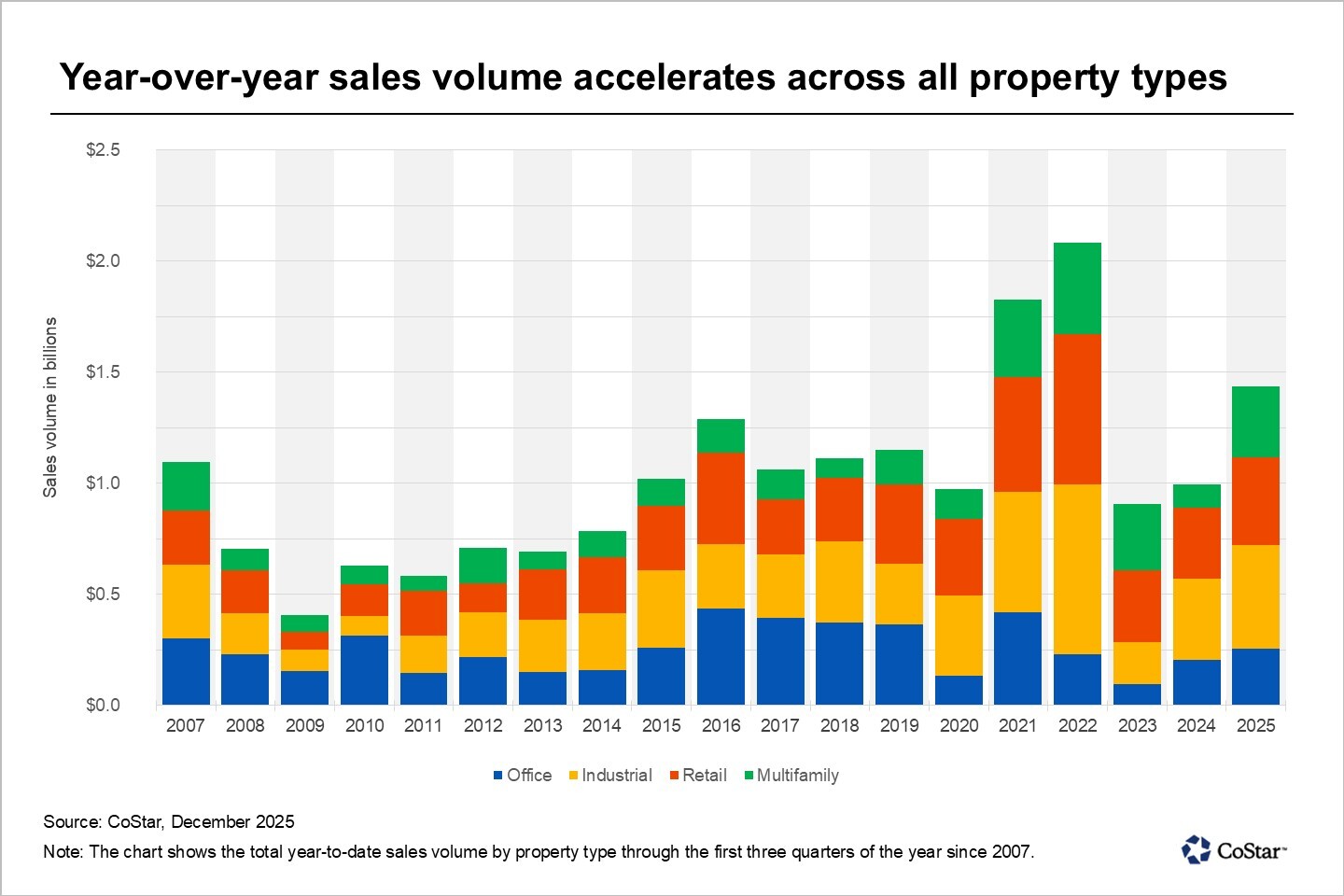
Milwaukee entered 2025 with renewed momentum, posting its strongest commercial real estate sales volume in three years. After a period of uncertainty and high capital costs, investors are returning with a sharper focus on quality assets, realistic pricing, and reliable cash flow. Activity is increasing across industrial, office, multifamily, and retail sectors, signaling a broad-based recovery fueled by stabilizing interest rates and improved market confidence.
As 2026 approaches, the title insurance industry is navigating a complex mix of market recovery, rising fraud threats, and sweeping regulatory changes. Industry leaders say the path forward centers on smarter technology, leaner operations, and stronger support for title agents. With AI-driven workflows, enhanced fraud prevention, and new compliance demands—including FinCEN’s expanded Geographic Targeting Orders—companies like Stewart and First American are reshaping how title work gets done. For real estate and mortgage professionals, the year ahead promises more automation, heightened standards, and major opportunities for those who stay ahead of the curve.
The real estate industry is undergoing a major transformation in 2025 as advancements in AI, proptech, blockchain, and data intelligence redefine how properties are marketed, valued, financed, and experienced. From instant digital valuations and immersive virtual tours to tokenized investments and predictive analytics, technology is reshaping every stage of the real estate lifecycle. Professionals who embrace these innovations—while maintaining the human expertise clients still rely on—will lead the next era of the industry.