Ares Commercial Real Estate Insider Shake‑Up: What Professionals Should Know This Week
If your morning coffee pairs well with a dash of market intrigue, today’s spotlight lands squarely on
Ares Commercial Real Estate Corporation (NYSE:ACRE). The company’s CEO & Director,
Bryan Donohoe, recently sold US$107k worth of shares at an average price of
US$4.93—a move that trimmed his personal stake by roughly 13%.
Insider activity doesn’t always spell trouble, but it always sparks questions. And in today’s evolving market landscape,
Florida real estate agents, mortgage professionals, and investment‑minded specialists nationwide should keep an eye on moves like these.
Understanding market behavior is part of staying competitive—something we take seriously at Cameron Academy as we help professionals stay informed, licensed, and ahead of industry shifts.
A Bigger Pattern? Understanding ACRE Insider Behavior
This isn’t Donohoe’s first sale of the year. Earlier, he sold approximately US$133k worth of shares
at US$5.68 per share—meaning his earlier sale happened at a stronger price point. While insider selling
is common, repeated sales without any insider buying can raise eyebrows among seasoned investors.
According to the data, insiders at Ares Commercial Real Estate made no purchases in the past 12 months.
That doesn’t automatically signal danger, but it does create a tone of caution from within the leadership ranks.
See the Full Insider Activity Chart
Want to explore every insider transaction from the past year?
View the interactive chart here
and dig into dates, prices, and individual trades.
How Much Skin Do Insiders Have in the Game?
Insider ownership sits at about 1.6%—worth roughly US$4.6 million. While not insignificant,
it isn’t especially high either. Lower insider ownership often correlates with lower long-term alignment, though it doesn’t always indicate poor performance.
As the Simply Wall St analysis suggests, many companies show stronger internal confidence through larger insider holdings.
ACRE’s numbers are conservative but not alarming.
What Should Professionals Take Away?
Insiders sold stock recently, and none showed buying activity. Combined with modest insider ownership, the indicators suggest
a measured caution. Still, insider selling by itself is not a forecast of decline—it’s simply one piece of a much larger
market puzzle.
For professionals navigating real estate, finance, and investment spaces, this serves as a reminder of the importance of
market literacy. Whether you’re evaluating REITs, shaping a portfolio, or watching economic signals, staying informed is essential.
If you’re growing your career or expanding your license portfolio,
Cameron Academy provides the educational backbone to help keep you competitive and current.
More From the Source
Explore the full analysis, discover small-cap stocks insiders are buying, or try their free portfolio tools:
And as always: this information isn’t financial advice—but it does help you stay sharp, curious,
and one step ahead as you navigate the day’s headlines.
More Articles
Getting licensed or staying ahead in your career can be a journey—but it doesn’t have to be overwhelming. Grab your favorite coffee or tea, take a moment to relax, and browse through our articles. Whether you’re just starting out or renewing your expertise, we’ve got tips, insights, and advice to keep you moving forward. Here’s to your success—one sip and one step at a time!
In 2026, financial advisors are no longer just experimenting with AI — they’re relying on it. Once confined to back-office duties, AI now supports meeting prep, portfolio analysis, and even early-stage financial planning. Advisors say the tech is strengthening client relationships by freeing them from administrative overload, though entry-level roles like paraplanners may feel the squeeze as automation accelerates.
Cybercriminals are weaponizing AI to launch highly convincing email scams and system breaches across the mortgage industry, overwhelming lenders and servicers whose cybersecurity measures can’t keep up. With major companies already hit and regulation lagging behind, experts warn the sector—now considered critical infrastructure—must rapidly upgrade protections, collaborate on threat intelligence, and improve AI governance before the risks escalate further.
Escrow payments are quietly surging across the country as property taxes and insurance premiums spike—pushing many homeowners toward delinquencies and even foreclosure. New data from Cotality shows the sharpest increases hitting the South and Midwest, with Florida among the hardest‑hit states. Even with fixed mortgage rates, rising escrow requirements are driving monthly payments higher and threatening affordability heading into 2026.
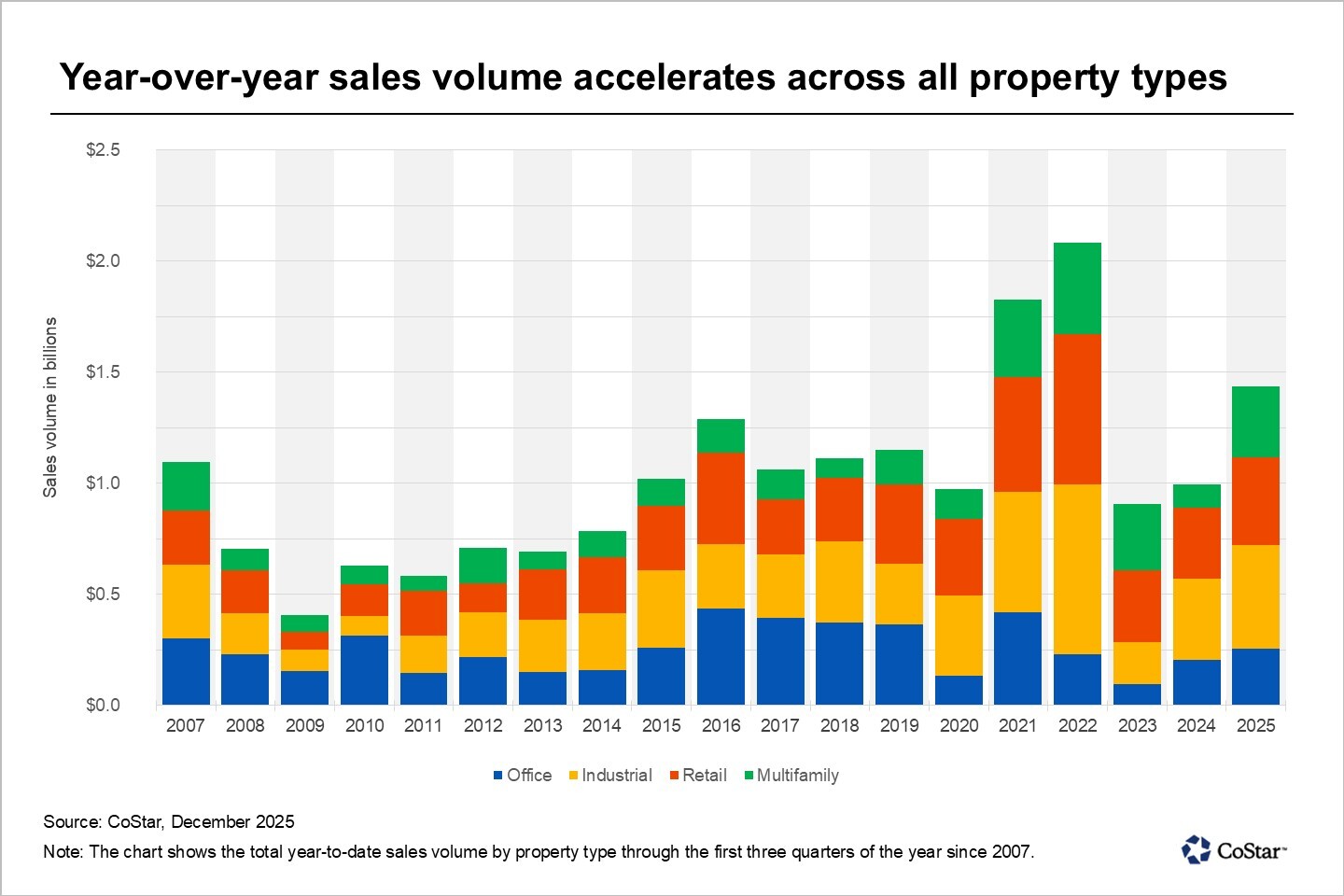
Milwaukee entered 2025 with renewed momentum, posting its strongest commercial real estate sales volume in three years. After a period of uncertainty and high capital costs, investors are returning with a sharper focus on quality assets, realistic pricing, and reliable cash flow. Activity is increasing across industrial, office, multifamily, and retail sectors, signaling a broad-based recovery fueled by stabilizing interest rates and improved market confidence.
As 2026 approaches, the title insurance industry is navigating a complex mix of market recovery, rising fraud threats, and sweeping regulatory changes. Industry leaders say the path forward centers on smarter technology, leaner operations, and stronger support for title agents. With AI-driven workflows, enhanced fraud prevention, and new compliance demands—including FinCEN’s expanded Geographic Targeting Orders—companies like Stewart and First American are reshaping how title work gets done. For real estate and mortgage professionals, the year ahead promises more automation, heightened standards, and major opportunities for those who stay ahead of the curve.
The real estate industry is undergoing a major transformation in 2025 as advancements in AI, proptech, blockchain, and data intelligence redefine how properties are marketed, valued, financed, and experienced. From instant digital valuations and immersive virtual tours to tokenized investments and predictive analytics, technology is reshaping every stage of the real estate lifecycle. Professionals who embrace these innovations—while maintaining the human expertise clients still rely on—will lead the next era of the industry.