Average Life Insurance Rates for March 2026: What Professionals Need To Know
The average cost of life insurance in 2026 is holding steady at around 26 dollars a month for a healthy 40-year-old seeking a 20-year, 500,000 dollar term policy. These figures, highlighted by NerdWallet, show how age, health, tobacco use, and risk class continue to shape what Americans pay for coverage.
If you work in real estate, insurance, mortgage, or any field where financial planning matters, understanding how these premiums are set can help you advise clients or make informed choices for yourself. And for those preparing for insurance licensing, Cameron Academy continues to support learners nationwide with a success-focused curriculum built for modern professionals.
To explore the original data source behind these insights, visit NerdWallet at https://www.nerdwallet.com/insurance/life/learn/average-life-insurance-rates.
Why Life Insurance Rates Vary
Life insurance premiums are calculated based on life expectancy. The younger and healthier the applicant, the lower the insurer’s risk. This translates into more affordable premiums. Underwriting factors include age, gender, smoking habits, medical history, weight, family health background, driving record, and lifestyle decisions.
Permanent policies cost significantly more than term policies because they last a lifetime and accumulate cash value. Add-ons such as riders for children or living benefits can further increase premiums.
What Does Not Affect Your Premium
Certain aspects have no influence on life insurance pricing. These include ethnicity, race, sexual orientation, marital status, number of beneficiaries, and number of policies owned. Credit score itself does not directly affect premiums, though insurers may still review credit history when evaluating overall risk.
Average Term Life Insurance Costs by Age
Based on recent LifeStein.com data, here is a general look at average annual rates for a 500,000 dollar, 20-year term policy for healthy nonsmokers:
Men: Age 20 at 212 dollars, 30 at 215 dollars, 40 at 330 dollars, 50 at 815 dollars, 60 at 2,342 dollars, 70 at 10,968 dollars.
Women: Age 20 at 176 dollars, 30 at 184 dollars, 40 at 280 dollars, 50 at 640 dollars, 60 at 1,650 dollars, 70 at 7,785 dollars.
Smokers see a sharp increase across all age brackets. For example, a 40-year-old male smoker can expect to pay around 1,482 dollars annually compared to 330 dollars for a nonsmoker.
Whole Life Insurance Rates
Whole life policies are much more expensive due to lifetime coverage and cash value growth. A healthy 40-year-old man pays around 5,524 dollars annually, while a woman of the same age pays about 4,967 dollars. Smokers at this age often exceed 7,500 dollars per year.
No-Exam Life Insurance Costs
No-exam policies provide convenience but cost more because insurers receive limited medical information. For a 40-year-old woman, preferred plus rates begin around 280 dollars annually, while standard rates reach approximately 494 dollars. A 40-year-old male no-exam applicant pays between 330 and 640 dollars based on risk class.
Rates by Risk Class
Risk classes such as preferred plus, preferred, and standard create significant pricing gaps. For example, a nonsmoking 50-year-old male sees preferred plus rates around 816 dollars annually, while standard rates rise to about 1,501 dollars.
Rates by Term Length
Healthy 40-year-old applicants pay roughly 201 dollars annually for a 10-year policy, while women pay around 175 dollars. Extending to a 20-year term raises rates to 331 dollars and 281 dollars respectively. Longer 30-year terms increase prices further due to higher long-term insurer liability.
How To Save on Life Insurance
Pro Tips To Lower Your Premiums:
Choose term life insurance for affordability.
Take the medical exam if you are healthy.
Purchase coverage early.
Quit smoking to significantly reduce premiums.
Round up coverage to access better rate tiers.
Document treatment for pre-existing conditions.
Compare multiple insurer quotes.
These principles are essential for insurance professionals and also heavily emphasized in modern licensing coursework. Those preparing for insurance, mortgage, or real estate careers can benefit from the structured, exam-focused training that Cameron Academy provides nationwide.
Explore Your Options
Life insurance remains a powerful component of long-term financial stability. Compare quotes, understand your risk class, and choose coverage that aligns with your goals. For more insights, tools, and licensing pathways across real estate, mortgage, insurance, and finance, explore Cameron Academy and take charge of your professional future.
More Articles
Getting licensed or staying ahead in your career can be a journey—but it doesn’t have to be overwhelming. Grab your favorite coffee or tea, take a moment to relax, and browse through our articles. Whether you’re just starting out or renewing your expertise, we’ve got tips, insights, and advice to keep you moving forward. Here’s to your success—one sip and one step at a time!
Florida families are feeling the squeeze as everyday costs, insurance premiums, and homeownership barriers continue to climb. House District 102 candidate Jayden D’Onofrio is calling for a broader, more unified affordability strategy—one that tackles the state’s insurance crisis, supports first‑time homebuyers, and restores real competition in the market. His message centers on transparency, practical solutions, and keeping Florida livable for the professionals, workers, and families who power its economy.
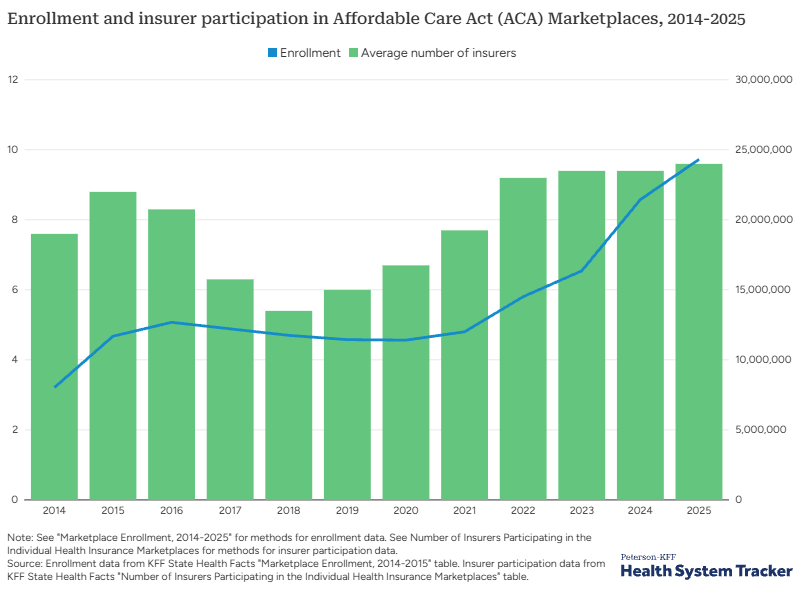
A decade of dramatic change is reshaping America’s health insurance markets. Employer group plans are becoming increasingly dominated by a few powerful insurers, while the ACA individual marketplace is experiencing record‑breaking competition and enrollment. Self‑funded plans are surging, small‑group premiums are driving employers to new coverage models, and major policy shifts in 2025 could redefine affordability for millions. This data‑driven Peterson‑KFF analysis breaks down the trends every insurance, finance, and business professional needs to understand as the industry enters a transformative new era.
Sarasota County is inching closer to approving Winchester Ranch, a massive 8,999‑home community planned for more than 3,100 acres in North Port. With a 7‑1 vote from the Planning Commission and a final decision expected in early 2026, the project could become one of Southwest Florida’s largest developments in decades—bringing new housing, commercial space, and industry while raising fresh questions about growth, the environment, and the region’s rapidly evolving real estate market.
Lument Finance Trust has closed a major $663.8 million commercial real estate CLO, marking one of the standout CRE finance deals of 2025. The transaction, LMNT 2025-FL3, features a strong reinvestment period, non‑recourse and non‑mark‑to‑market financing, and a diversified pool of 32 loans tied to 49 properties nationwide. With J.P. Morgan leading the structuring and more than $585 million placed in investment‑grade securities, the deal highlights renewed stability in transitional CRE debt—making it a development real estate and finance professionals will want to watch closely.
Walmart has partnered with Alquist 3D to roll out the nation’s first large‑scale wave of 3D‑printed commercial buildings, signaling a major shift in how future retail and industrial spaces will be constructed. After completing an 8,000‑square‑foot 3D‑printed expansion in Tennessee—the largest of its kind—the company is moving forward with over a dozen new projects nationwide, accelerating a tech‑driven transformation in commercial real estate.
Citizens Property Insurance Corp. is recommending statewide rate reductions for 2026—the first proposed decrease in more than a decade. Most Citizens policyholders could see an average 11.5% drop, reflecting recent insurance‑market reforms that have stabilized Florida’s turbulent property sector. With hundreds of thousands of policies moving back to private insurers and state‑backed Citizens shrinking to record‑low enrollment, real estate and insurance professionals should prepare for how lower premiums may influence affordability, buyer confidence, and market activity heading into 2026.