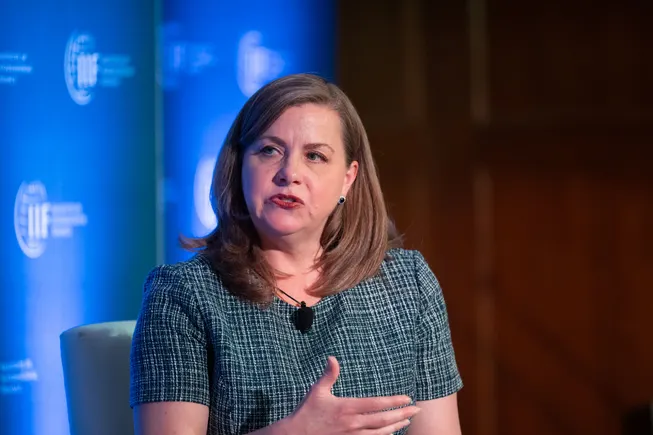
In the heart of Texas, Amanda Overcash juggles a full-time real estate career with a unique side hustle that has caught the attention of many. By day, she’s closing deals in real estate; by night, she’s training artificial intelligence at her kitchen table. This dual role has allowed her to earn a substantial income, but as she candidly shares, it’s far from easy money.
Overcash’s journey into the world of AI training, as reported by Business Insider, began as a means to supplement her income. In just three weeks, she managed to earn nearly $8,000, a testament to her dedication and the lucrative nature of this demanding work.
“Sometimes, I’m at the kitchen table until midnight,” Overcash revealed. Her routine often involves setting a 4 a.m. alarm to squeeze in additional work hours before her day job commences. This commitment underscores the demanding nature of AI training, a field critical to the development of intelligent systems but fraught with challenges and uncertainties.
Despite the financial rewards, Overcash emphasizes the rigorous demands of the job. The work is flexible, allowing her to balance parenting and professional responsibilities, but it comes with strict audits and no long-term guarantees. “It doesn’t feel like easy money,” she admits, highlighting the intense focus and effort required to meet project deadlines and quality standards.
Overcash’s experience is part of a broader trend, where freelancers play a pivotal role in the AI industry. Platforms like Appen, OneForma, and Amazon Mechanical Turk rely on these workers to train and test AI models. As Overcash notes, “LLM projects usually pay closer to $20 an hour,” but the complexity and intensity of the work can be overwhelming.
The story of Amanda Overcash, as detailed in Business Insider, sheds light on the hidden workforce powering the AI revolution. Her journey is a testament to the possibilities and challenges of the gig economy, where flexibility and financial gain often come with significant personal and professional trade-offs.
For those considering a similar path, Overcash offers a word of caution: “It’s definitely not a fast way to make money.” Yet, for her, the rewards are tangible, providing financial stability and the ability to be present for her daughter.
As the AI industry continues to evolve, stories like Overcash’s offer valuable insights into the realities of this burgeoning field, where human expertise remains indispensable, and the promise of technology meets the grit of personal determination.
More Articles
Getting licensed or staying ahead in your career can be a journey—but it doesn’t have to be overwhelming. Grab your favorite coffee or tea, take a moment to relax, and browse through our articles. Whether you’re just starting out or renewing your expertise, we’ve got tips, insights, and advice to keep you moving forward. Here’s to your success—one sip and one step at a time!
Florida’s insurance market is under intense pressure as millions of residents and trillions in property wealth cluster along hurricane‑vulnerable coastlines. This article breaks down how decades of growth in high‑risk zones created today’s crisis, why traditional pricing models can’t keep up, and what real estate and insurance professionals must do to stay ahead. It offers actionable insights on underwriting, risk communication, policy partnerships, and resilience planning—critical knowledge for anyone advising Florida homeowners or navigating the state’s evolving insurance landscape.
Florida’s homeowners insurance market may have stabilized, but not in the way residents hoped. After years of runaway increases, premiums have stopped spiking—but they’re holding at painfully high levels. Coastal properties remain the hardest hit, with some policies topping $15,000 a year, while insurers continue demanding costly upgrades and resisting calls for transparency. For real estate professionals, understanding these pricing pressures is becoming essential as insurance costs increasingly shape buyer decisions across the state.
Florida homeowners face soaring premiums, shrinking insurer options, and storms that grow stronger each year. This article breaks down what hurricane insurance actually covers, how deductibles really work, why flood insurance is essential, and what professionals in real estate, mortgage, and insurance must understand to protect clients and properties before the next major storm hits.
Teresa King Kinney, one of the most influential executives in modern real estate, is retiring after 33 years as CEO of the MIAMI Association of Realtors. Under her leadership, the organization grew from 5,000 members to 60,000, became a global real estate powerhouse, and built the nation’s largest association‑owned MLS. As she transitions into CEO Emeritus, MIAMI prepares for a new era shaped by the foundation she spent decades building.
Miami’s commercial property market is heating up again, posting an 11% jump in investment volume for 2025. The surge is driven largely by a revitalized retail sector fueled by population growth, strong tourism, and new mixed‑use development. While office and industrial activity remains steady but softer, investor confidence is returning as Miami’s CRE landscape matures and buyers re‑enter the market with renewed interest in high‑traffic retail opportunities.
The Federal Reserve is preparing major changes to mortgage regulations in an effort to pull more mortgage activity back into the banking sector. With banks losing significant market share to nonbank lenders over the past decade, Fed Vice Chair for Supervision Michelle Bowman says new proposals may ease capital requirements and make mortgage servicing more attractive for banks. These shifts could have wide‑ranging effects on real estate professionals, lenders, and borrowers as the balance of power in the mortgage market begins to shift once again.