Blockchain and Microcredit: A New Dawn for Financial Inclusion in Kenya?
In the heart of Kenya, a financial revolution is quietly unfolding. As traditional banking systems grapple with challenges of accessibility and trust, a new player emerges on the scene—blockchain-based microcredit. This innovative approach could potentially transform financial inclusion in the region, a topic explored in a recent article by Monash Lens.
The story of microcredit is not new. Pioneered by the Grameen Bank, microcredit has been a beacon of hope, offering financial lifelines to entrepreneurs in developing countries. Its success in Bangladesh, with a loan recovery rate surpassing traditional systems, underscores its potential. But in Kenya, the narrative takes a digital twist with blockchain technology.
The Blockchain Advantage
Blockchain offers a decentralized, secure alternative to conventional banking. By eliminating intermediaries, it reduces costs and enhances transaction security. This is particularly beneficial in regions like Sub-Saharan Africa, where financial inclusion lags behind the global average, as noted by the World Bank.
However, the journey is fraught with challenges. Financial literacy remains a significant barrier, as highlighted by research by Schuetz and Venkatesh. Low education levels and a lack of awareness impede the adoption of financial services. Yet, the introduction of blockchain-based systems could serve as a catalyst for education and empowerment.
Overcoming Barriers
The integration of blockchain with existing platforms like M-Pesa could be transformative. While M-Pesa has revolutionized mobile banking in Kenya, it faces challenges such as privacy and security. Blockchain’s encrypted, immutable transactions offer a solution, enhancing transparency and reducing fraud risks.
For blockchain to succeed, strategic implementation and comprehensive education are crucial. Our recent study funded by the Ethereum Foundation, reveals that understanding the platform’s benefits motivates users to learn. Solutions include localized education, practical use cases, and continuous engagement through community initiatives.
A Promising Future
As PricewaterhouseCoopers emphasizes, blockchain-based financial products must be accessible, reliable, and user-friendly to foster inclusion. The potential is promising, but success hinges on overcoming educational and infrastructural hurdles.
Kenya stands on the brink of a financial transformation. By blending blockchain’s innovative capabilities with M-Pesa’s established network, a more inclusive and resilient financial future is within reach. The question remains: can blockchain-based microcredit truly transform financial inclusion in Kenya? The answer, as the Monash Lens article suggests, is a hopeful yet conditional yes.
More Articles
Getting licensed or staying ahead in your career can be a journey—but it doesn’t have to be overwhelming. Grab your favorite coffee or tea, take a moment to relax, and browse through our articles. Whether you’re just starting out or renewing your expertise, we’ve got tips, insights, and advice to keep you moving forward. Here’s to your success—one sip and one step at a time!
The detailed study, conducted in February 2025, scrutinized nine popular institutions based on 38 criteria across four pivotal categories: fees, customer satisfaction, features, and availability.
The digital landscape is rapidly evolving, capturing public interest as virtual and physical environments blend seamlessly. In this new age, Virtual Reality (VR), the Metaverse, and Blockchain emerge as transformative forces reshaping how we interact with digital content, form business models, and enhance personal experiences.
In the heart of New Zealand's real estate landscape, a quiet revolution is taking place. The age-old practice of property valuation, once a labor-intensive and opaque process, is being transformed by the rise of artificial intelligence (AI). Yet, this transformation is not without its challenges.
We believe in empowering initiatives that bring people together and create lasting value." The redevelopment of the BCM property is poised to become a vital hub for student life at Georgia Southern University, enhancing the campus's appeal and functionality.
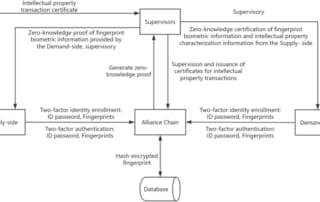
The research introduces a two-factor authentication model that leverages the power of alliance chain technology, aiming to enhance security and trustworthiness in IP transactions.

 In the heart of Kenya, a financial revolution is quietly unfolding. As traditional banking systems grapple with challenges of accessibility and trust, a new player emerges on the scene—blockchain-based microcredit. This innovative approach could potentially transform financial inclusion in the region, a topic explored in a recent