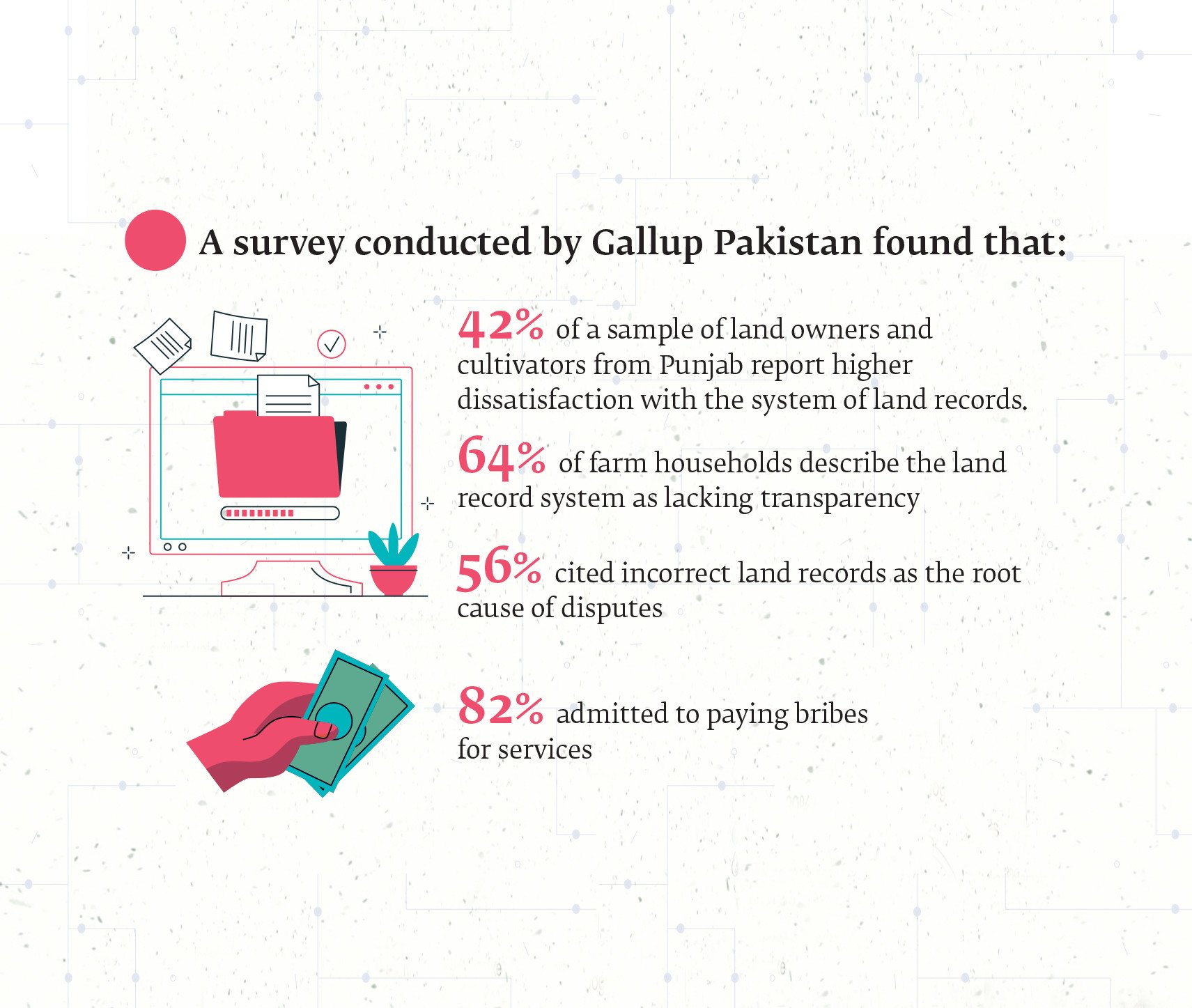

In the heart of Pakistan’s bustling cities and sprawling rural landscapes lies a persistent challenge that has long stifled economic growth and social stability: land management. For decades, the system has been mired in inefficiencies, corruption, and outdated colonial-era practices, leaving millions frustrated and the nation’s economic potential untapped.


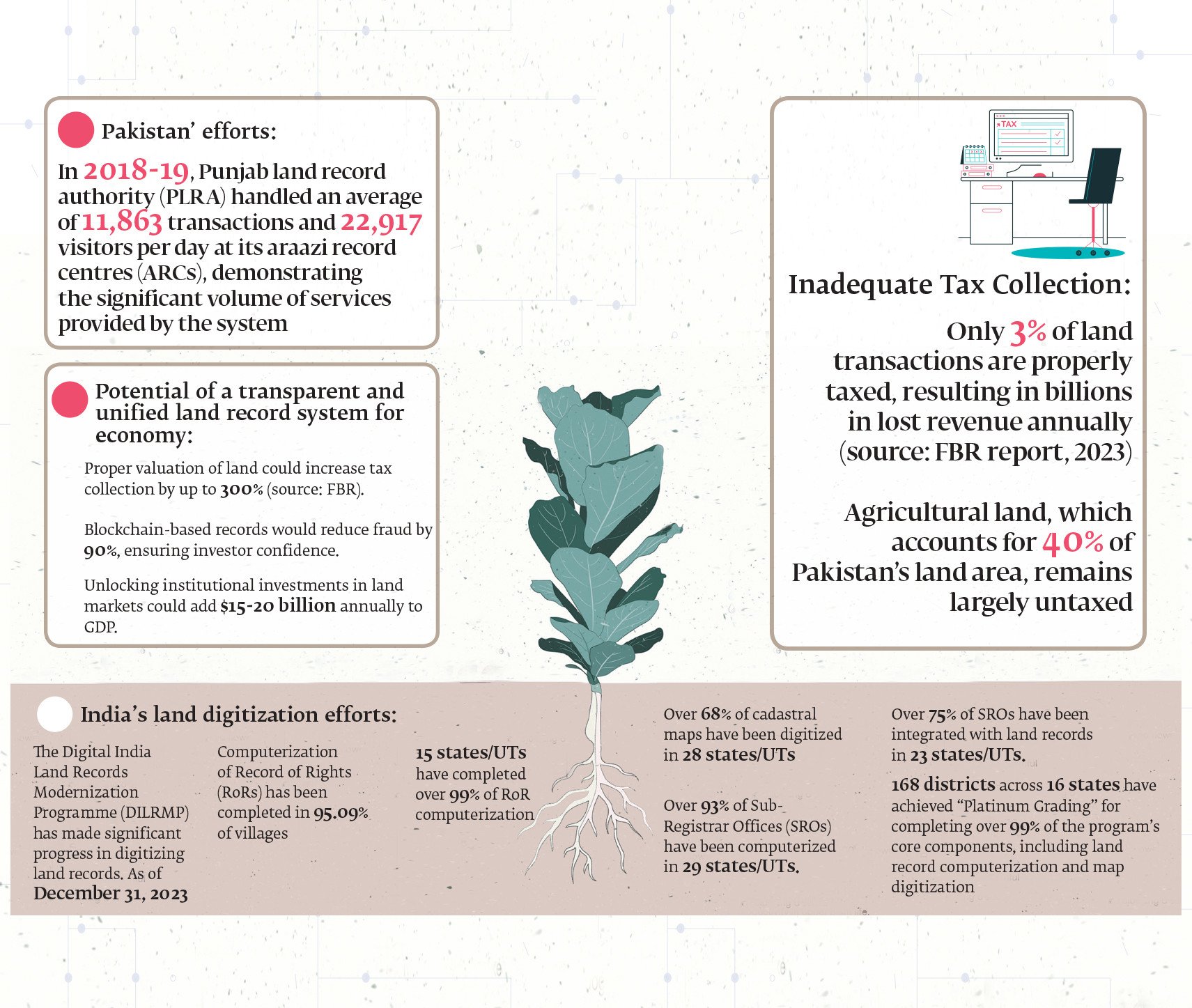
Efforts to modernize this convoluted system have been made, notably through initiatives like Punjab’s Land Record Management Information System (LRMIS). However, these efforts remain fragmented and limited in scope. The slow pace of digitization and the continued reliance on manual records mean that the full benefits of these initiatives are yet to be realized. According to a recent article in The Express Tribune, the ongoing challenges in land ownership and management are a significant hurdle to Pakistan’s progress.


Land management in pakistan

Blockchain: A Beacon of Hope

Amidst these challenges, blockchain technology emerges as a promising solution. Known for its secure and transparent nature, blockchain could revolutionize land management in Pakistan by ensuring clear and immutable land titles. This technology has the potential to reduce corruption and fraudulent transactions, offering a path towards a more efficient and equitable system.


International examples provide a blueprint for success. Georgia’s blockchain land registry, for instance, has been hailed as a triumph in transparency and fraud prevention. By storing land records on an immutable digital ledger, Georgia has effectively eliminated disputes arising from document manipulation. This model offers valuable lessons for Pakistan, highlighting the transformative potential of blockchain in governance.


Blockchain technology

Challenges and the Road Ahead

Despite its promise, implementing blockchain in Pakistan is not without challenges. Political resistance, bureaucratic inertia, and a lack of technical expertise pose significant hurdles. Moreover, vested interests benefiting from the current system’s opacity are likely to oppose such reforms. Overcoming these obstacles will require strong political will and collaboration across federal and provincial levels.


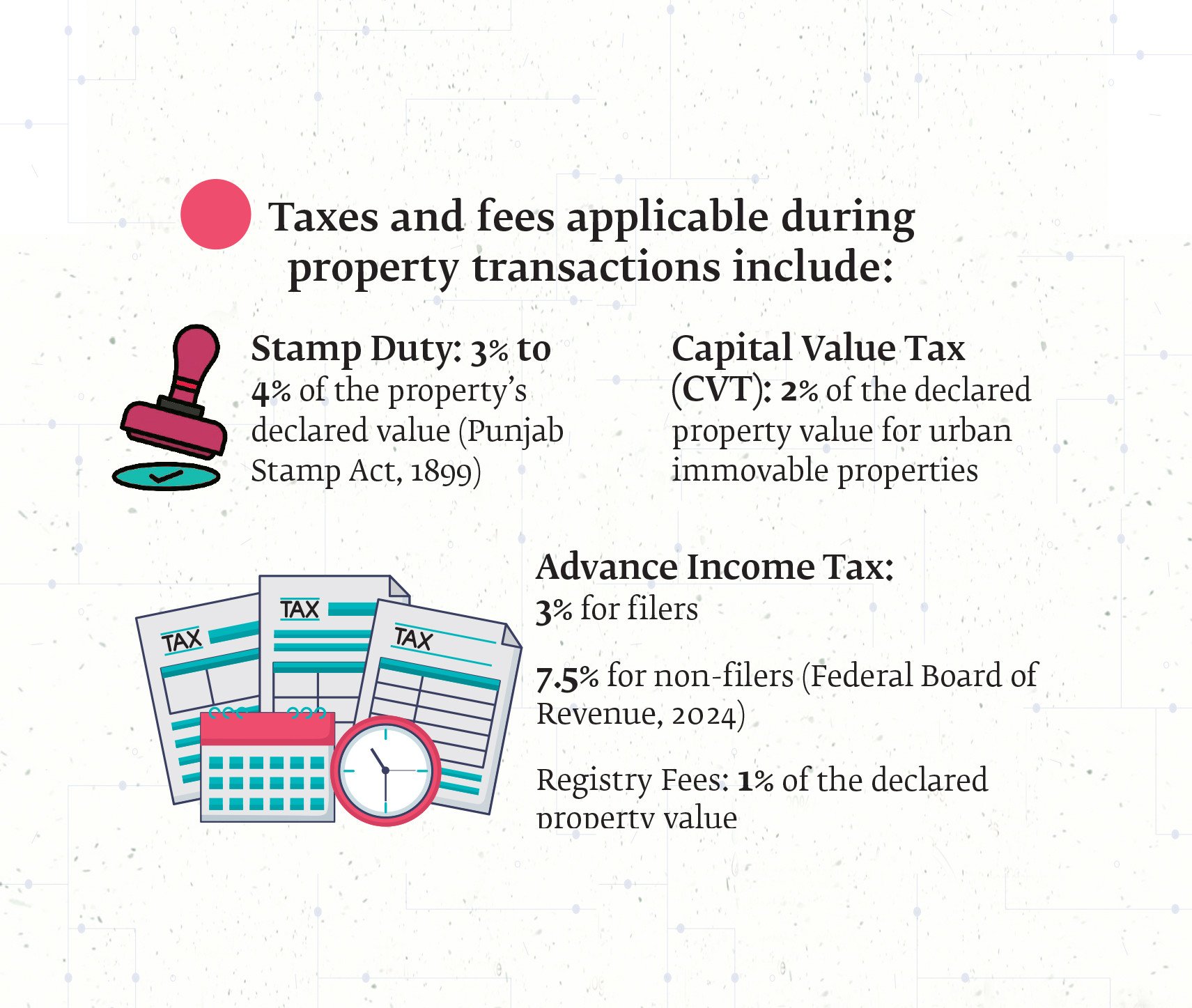
To pave the way for blockchain adoption, Pakistan must first consolidate existing digitization efforts, integrating provincial databases into a unified national platform. Legislation should standardize land valuation methods, eliminating disparities and closing loopholes that allow tax evasion. Public awareness campaigns will also be crucial in ensuring widespread adoption and trust in the new system.


Land registry

Conclusion: A Call for Urgent Reform

The inefficiencies in Pakistan’s land management system have persisted for too long, hindering economic growth and legal transparency. However, with the right reforms and the adoption of cutting-edge technology, Pakistan has the potential to revolutionize its land administration. By learning from global examples and embracing blockchain’s capabilities, the country can unlock billions in economic value, boost investor confidence, and strengthen tax revenues.


The need for reform is urgent — Pakistan cannot afford to let its land management crisis continue unchecked. As highlighted in The Express Tribune, the time for action is now.

More Articles

Getting licensed or staying ahead in your career can be a journey—but it doesn’t have to be overwhelming. Grab your favorite coffee or tea, take a moment to relax, and browse through our articles. Whether you’re just starting out or renewing your expertise, we’ve got tips, insights, and advice to keep you moving forward. Here’s to your success—one sip and one step at a time!

Berlin-based Aignostics Secures €31.4 Million Series B Funding

In a significant stride for precision medicine, Aignostics, a pioneering artificial intelligence company, has announced the successful closure of a €31.4 million Series B funding round.

AI in Health Care: Opportunities and Challenges Ahead

In a world where technology is rapidly reshaping industries, the intersection of artificial intelligence (AI) and health care stands as a beacon of transformative potential. The Bipartisan Policy Center (BPC), a nonprofit organization dedicated to fostering bipartisan solutions, has recently addressed this critical synergy, emphasizing both the opportunities and challenges that lie ahead.

By |November 3, 2024|Categories: Article, Artificial Intelligence (AI), Health Care|Tags: , |0 Comments

Top 7 Construction Industry Trends in 2024

As we step into 2024, the construction industry is navigating a complex landscape marked by both challenges and opportunities. Labor shortages and supply chain disruptions continue to pose significant hurdles. Yet, there are bright spots on the horizon, with environmentally responsible projects and AI-driven innovations leading the charge.

AI in Healthcare: Pioneering Precision Health at Northeastern University

"If AI is working the way that we envision it, you actually won’t notice a lot of direct impact," says Sam Scarpino, the AI+Life Sciences director at Northeastern University. The vision is for AI to operate quietly in the background, much like a well-oiled engine, enhancing the efficiency of medical processes and enabling earlier detection of diseases, such as cancer.

U.S. Department of Transportation Unveils Roadmap for V2X Technology

The U.S. Department of Transportation has released a comprehensive plan to accelerate the rollout of this transformative technology across American roads. V2X technology allows cars and trucks to exchange critical information such as speed, position, and road conditions with each other and with road infrastructure. This system is designed to prevent collisions and reduce the impact of crashes, potentially saving thousands of lives annually.

Unveiling the Genetic Secrets: Groundbreaking Study on Rare Diseases in Germany

In a groundbreaking effort to unravel the mysteries of rare diseases, a recent Germany-wide study has leveraged cutting-edge genetic diagnostics to make significant strides in understanding these elusive conditions.


By |November 2, 2024|Categories: Article, Health, Technology|Tags: , |0 Comments