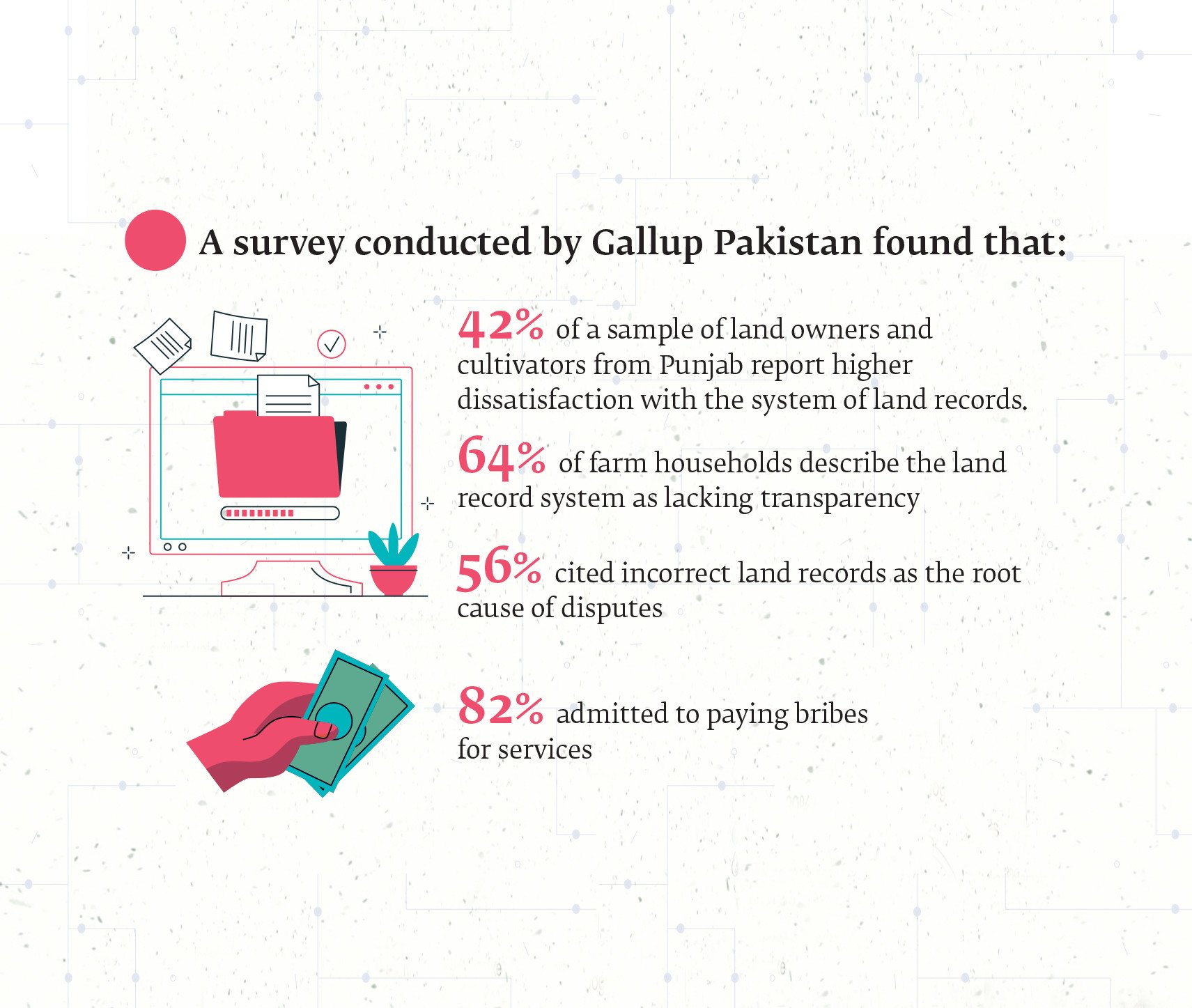

In the heart of Pakistan’s bustling cities and sprawling rural landscapes lies a persistent challenge that has long stifled economic growth and social stability: land management. For decades, the system has been mired in inefficiencies, corruption, and outdated colonial-era practices, leaving millions frustrated and the nation’s economic potential untapped.


Efforts to modernize this convoluted system have been made, notably through initiatives like Punjab’s Land Record Management Information System (LRMIS). However, these efforts remain fragmented and limited in scope. The slow pace of digitization and the continued reliance on manual records mean that the full benefits of these initiatives are yet to be realized. According to a recent article in The Express Tribune, the ongoing challenges in land ownership and management are a significant hurdle to Pakistan’s progress.


Land management in pakistan

Blockchain: A Beacon of Hope

Amidst these challenges, blockchain technology emerges as a promising solution. Known for its secure and transparent nature, blockchain could revolutionize land management in Pakistan by ensuring clear and immutable land titles. This technology has the potential to reduce corruption and fraudulent transactions, offering a path towards a more efficient and equitable system.


International examples provide a blueprint for success. Georgia’s blockchain land registry, for instance, has been hailed as a triumph in transparency and fraud prevention. By storing land records on an immutable digital ledger, Georgia has effectively eliminated disputes arising from document manipulation. This model offers valuable lessons for Pakistan, highlighting the transformative potential of blockchain in governance.


Blockchain technology

Challenges and the Road Ahead

Despite its promise, implementing blockchain in Pakistan is not without challenges. Political resistance, bureaucratic inertia, and a lack of technical expertise pose significant hurdles. Moreover, vested interests benefiting from the current system’s opacity are likely to oppose such reforms. Overcoming these obstacles will require strong political will and collaboration across federal and provincial levels.


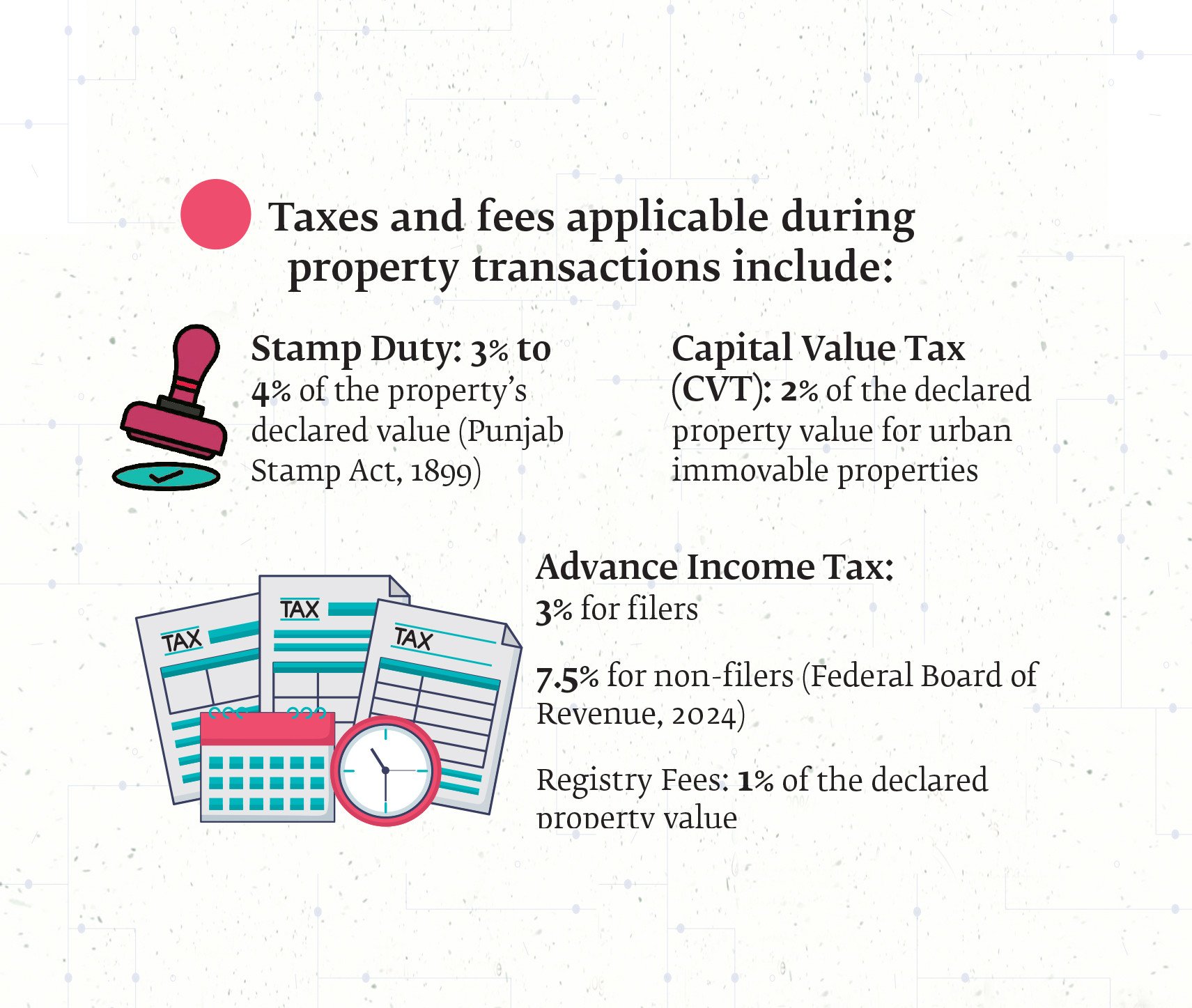
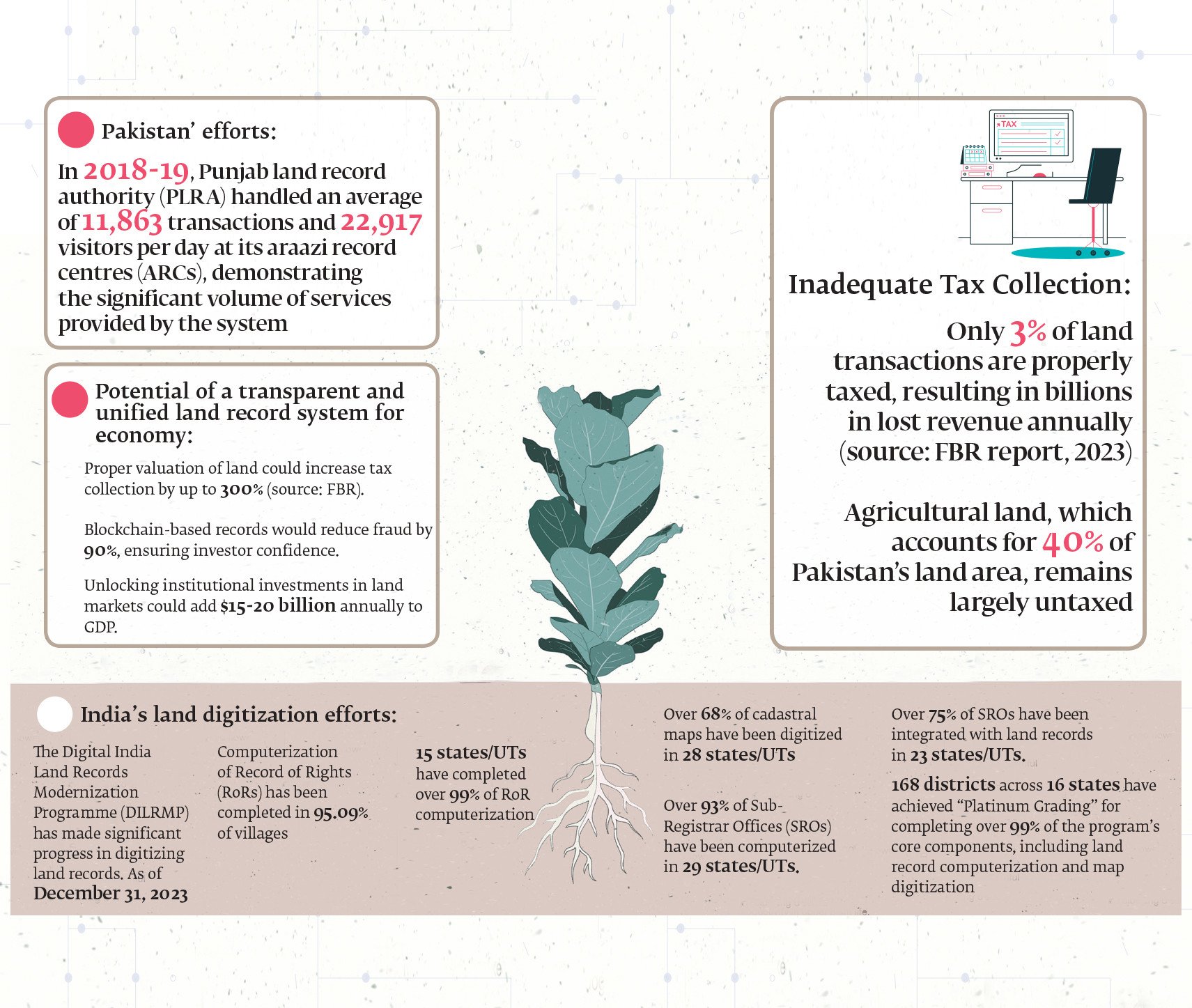
To pave the way for blockchain adoption, Pakistan must first consolidate existing digitization efforts, integrating provincial databases into a unified national platform. Legislation should standardize land valuation methods, eliminating disparities and closing loopholes that allow tax evasion. Public awareness campaigns will also be crucial in ensuring widespread adoption and trust in the new system.


Land registry

Conclusion: A Call for Urgent Reform

The inefficiencies in Pakistan’s land management system have persisted for too long, hindering economic growth and legal transparency. However, with the right reforms and the adoption of cutting-edge technology, Pakistan has the potential to revolutionize its land administration. By learning from global examples and embracing blockchain’s capabilities, the country can unlock billions in economic value, boost investor confidence, and strengthen tax revenues.


The need for reform is urgent — Pakistan cannot afford to let its land management crisis continue unchecked. As highlighted in The Express Tribune, the time for action is now.

More Articles

Getting licensed or staying ahead in your career can be a journey—but it doesn’t have to be overwhelming. Grab your favorite coffee or tea, take a moment to relax, and browse through our articles. Whether you’re just starting out or renewing your expertise, we’ve got tips, insights, and advice to keep you moving forward. Here’s to your success—one sip and one step at a time!

Biden Unveils New Student Debt Relief Plan Aiming for Long-term Impact

President Joe Biden has unveiled a comprehensive plan aimed at providing relief to millions of borrowers, seeking to cancel accrued interest for 23 million borrowers, completely eliminate student loan debt for 4 million individuals, and offer at least $5,000 in relief for over 10 million more.

By |October 19, 2024|Categories: Article, Education, Politics|Tags: , |0 Comments

The 2025 Commercial Real Estate Outlook: Navigating Change and Embracing Innovation

The Deloitte report emphasizes the importance of adaptability and innovation. As consumer expectations evolve, real estate leaders are encouraged to leverage technology and sustainable practices to meet these demands.

California’s Housing Crisis: Innovative Solutions and Collaborative Efforts

California's housing crisis is an ongoing challenge, but recent innovations and collaborative efforts offer a glimmer of hope. The Chan Zuckerberg Initiative outlines seven transformative approaches to rebuilding the state's housing system, emphasizing affordability and community inclusion.

By |October 19, 2024|Categories: Affordable Housing, Article, Housing|Tags: , |0 Comments

2024 Dallas Housing Market: Resilience, Trends, and Opportunities

As we delve into 2024, the Dallas housing market remains a hot topic among real estate enthusiasts and potential homeowners. Known for its economic vigor and cultural diversity, Dallas is an attractive hub for new residents, offering diverse job opportunities and a vibrant community life. This year, staying informed about market dynamics is key for anyone looking to buy, sell, or invest in real estate.

Florida’s Legislative Response to Medicaid During COVID-19

In the midst of the COVID-19 pandemic, significant legislative measures have been enacted in Florida to address the challenges faced by Medicaid recipients. Since the onset of the national public health emergency on January 27, 2020, Medicaid eligibility protections have been a focal point, ensuring that recipients do not lose coverage during these trying times.


By |October 18, 2024|Categories: Article, COVID-19 Response, Health Policy|Tags: , |0 Comments