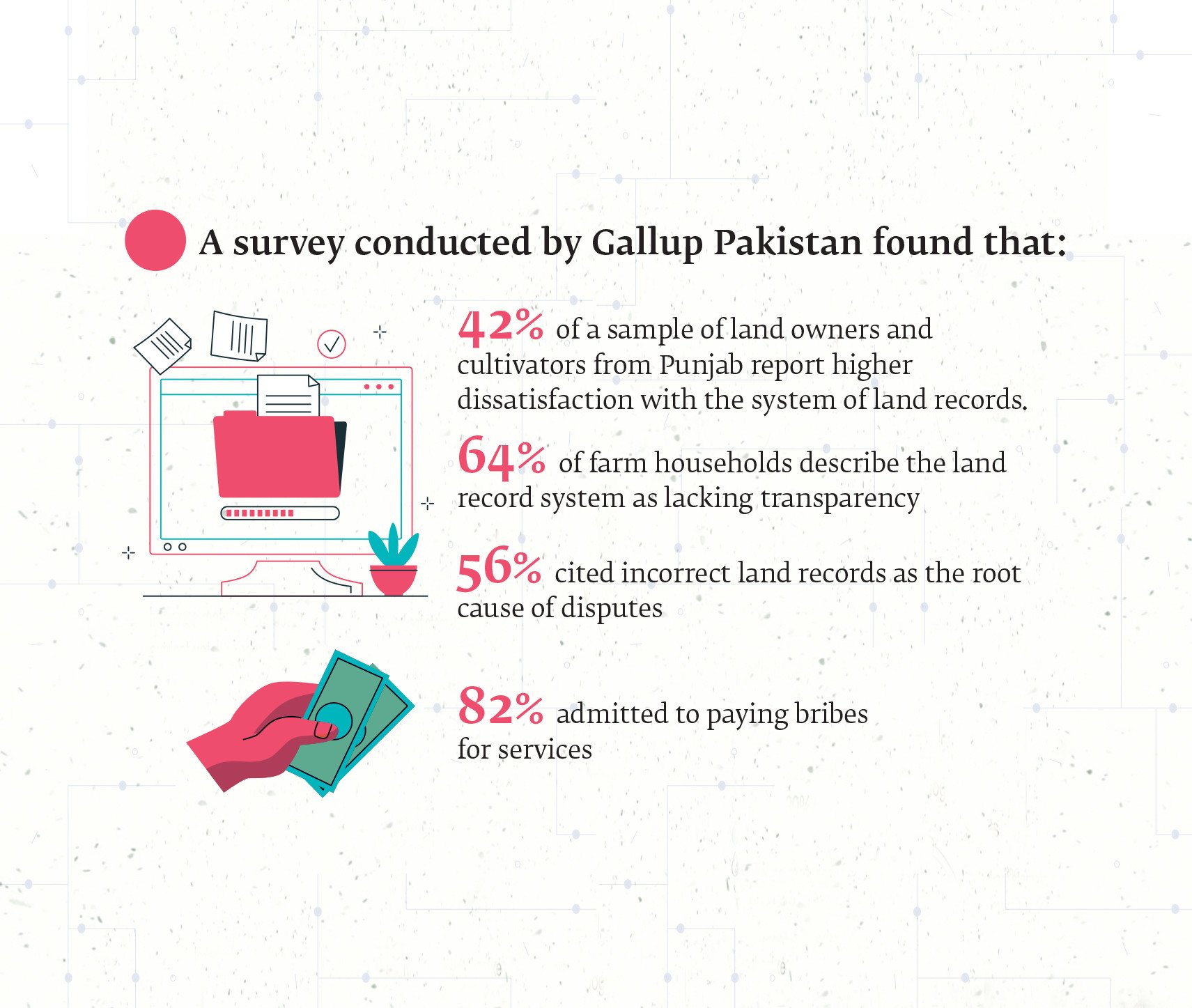
In the heart of Pakistan’s bustling cities and sprawling rural landscapes lies a persistent challenge that has long stifled economic growth and social stability: land management. For decades, the system has been mired in inefficiencies, corruption, and outdated colonial-era practices, leaving millions frustrated and the nation’s economic potential untapped.
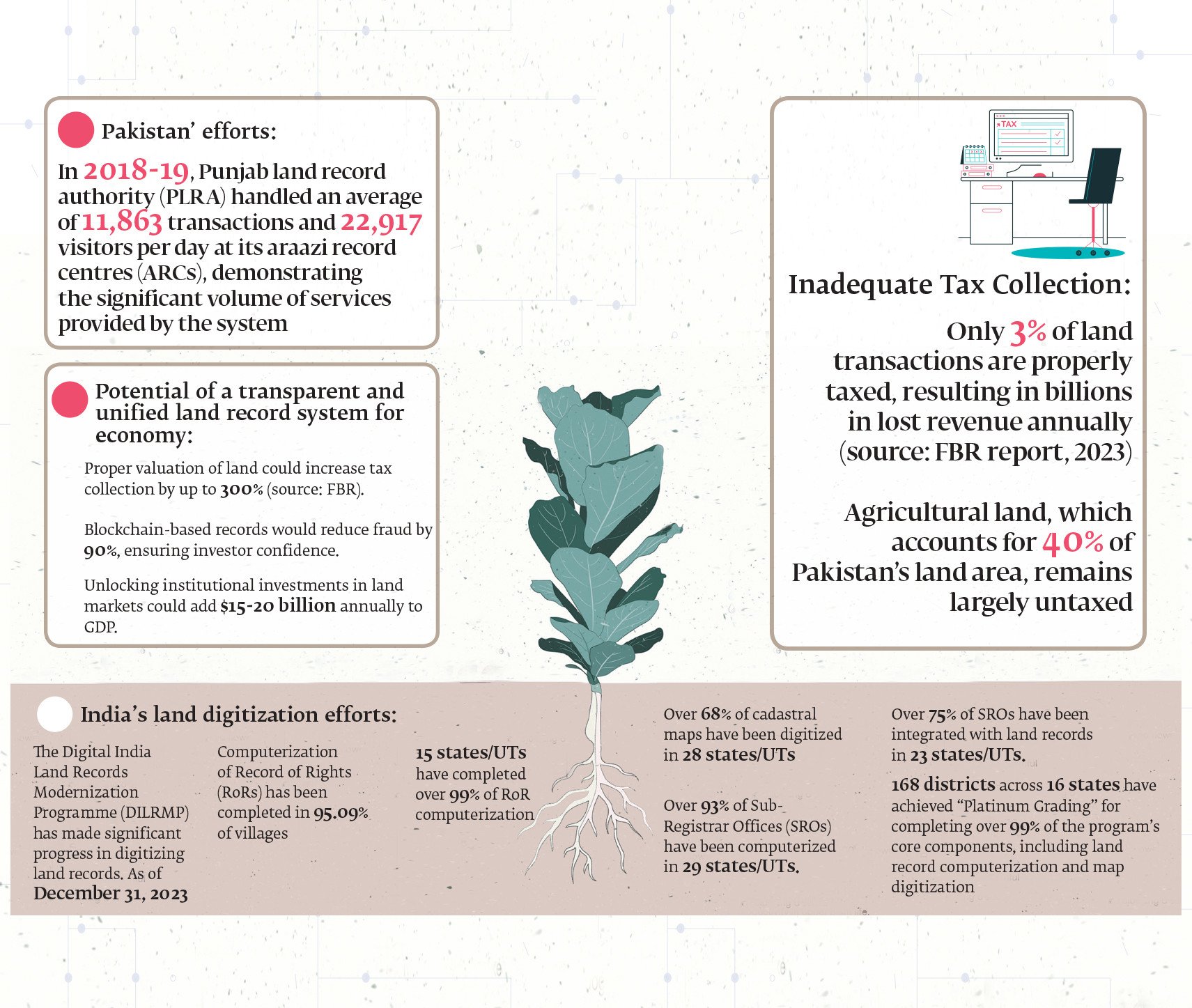
Efforts to modernize this convoluted system have been made, notably through initiatives like Punjab’s Land Record Management Information System (LRMIS). However, these efforts remain fragmented and limited in scope. The slow pace of digitization and the continued reliance on manual records mean that the full benefits of these initiatives are yet to be realized. According to a recent article in The Express Tribune, the ongoing challenges in land ownership and management are a significant hurdle to Pakistan’s progress.
Blockchain: A Beacon of Hope
Amidst these challenges, blockchain technology emerges as a promising solution. Known for its secure and transparent nature, blockchain could revolutionize land management in Pakistan by ensuring clear and immutable land titles. This technology has the potential to reduce corruption and fraudulent transactions, offering a path towards a more efficient and equitable system.
International examples provide a blueprint for success. Georgia’s blockchain land registry, for instance, has been hailed as a triumph in transparency and fraud prevention. By storing land records on an immutable digital ledger, Georgia has effectively eliminated disputes arising from document manipulation. This model offers valuable lessons for Pakistan, highlighting the transformative potential of blockchain in governance.
Challenges and the Road Ahead
Despite its promise, implementing blockchain in Pakistan is not without challenges. Political resistance, bureaucratic inertia, and a lack of technical expertise pose significant hurdles. Moreover, vested interests benefiting from the current system’s opacity are likely to oppose such reforms. Overcoming these obstacles will require strong political will and collaboration across federal and provincial levels.
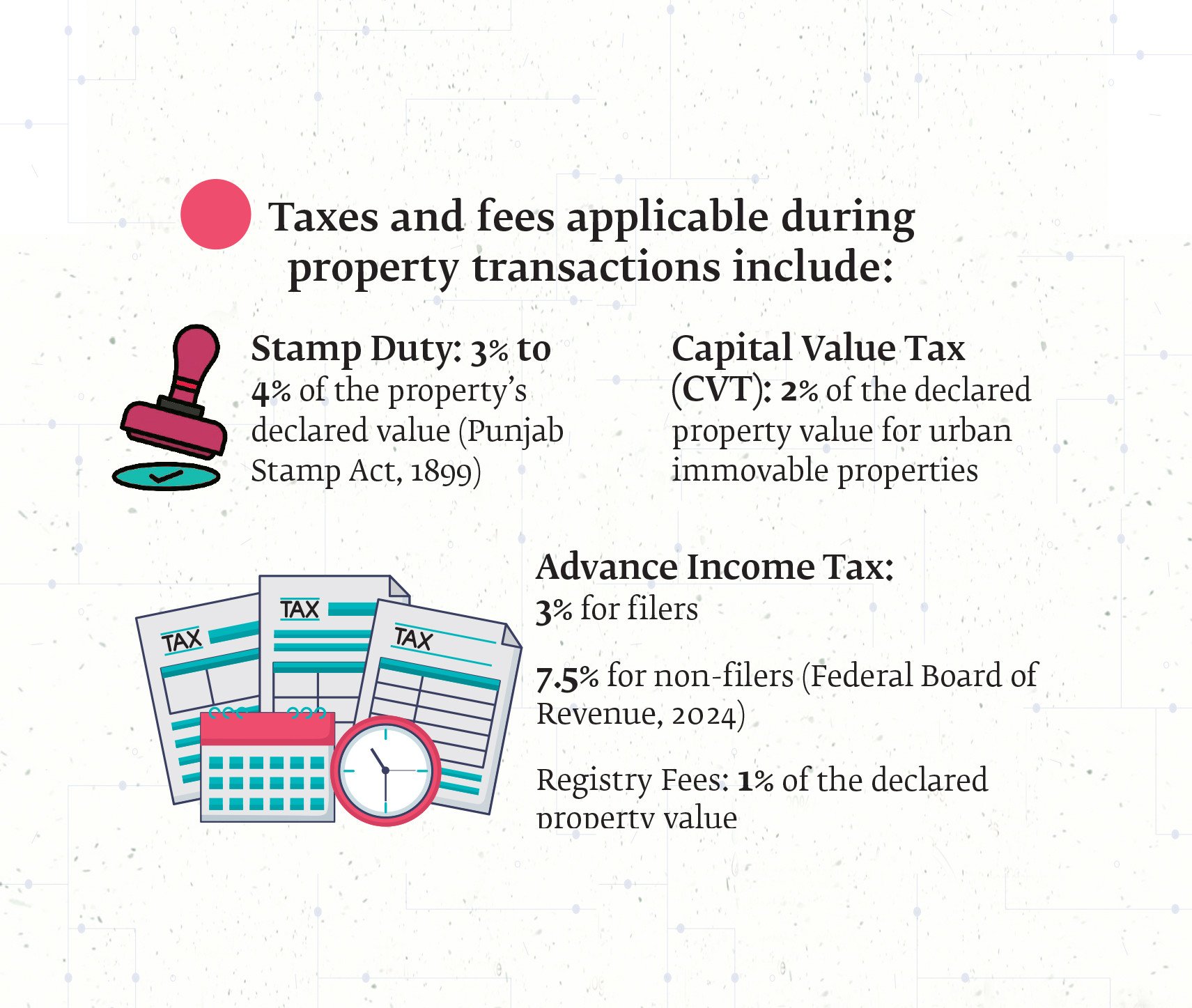
To pave the way for blockchain adoption, Pakistan must first consolidate existing digitization efforts, integrating provincial databases into a unified national platform. Legislation should standardize land valuation methods, eliminating disparities and closing loopholes that allow tax evasion. Public awareness campaigns will also be crucial in ensuring widespread adoption and trust in the new system.
Conclusion: A Call for Urgent Reform
The inefficiencies in Pakistan’s land management system have persisted for too long, hindering economic growth and legal transparency. However, with the right reforms and the adoption of cutting-edge technology, Pakistan has the potential to revolutionize its land administration. By learning from global examples and embracing blockchain’s capabilities, the country can unlock billions in economic value, boost investor confidence, and strengthen tax revenues.
The need for reform is urgent — Pakistan cannot afford to let its land management crisis continue unchecked. As highlighted in The Express Tribune, the time for action is now.
More Articles
Getting licensed or staying ahead in your career can be a journey—but it doesn’t have to be overwhelming. Grab your favorite coffee or tea, take a moment to relax, and browse through our articles. Whether you’re just starting out or renewing your expertise, we’ve got tips, insights, and advice to keep you moving forward. Here’s to your success—one sip and one step at a time!
Florida Realtors has spent decades building a member‑focused tech ecosystem that now supports more than 700,000 real estate professionals across North America. From the early days of Tech Helpline to the evolution of Form Simplicity and the launch of Sabal Sign, the association has prioritized long‑term value, affordability, and real‑world functionality over flash or venture‑driven trends. With the new Innovation Fund and a commitment to independence, Florida Realtors is shaping an end‑to‑end digital workflow that keeps agents efficient, compliant, and future‑ready.
Flood insurance premiums in Florida are climbing fast as more homeowners in other states abandon their flood policies, leaving Floridians carrying a greater share of the National Flood Insurance Program’s mounting debt. The rising costs are reshaping buyer affordability, slowing real estate deals, and adding new pressures for agents, lenders, and insurance professionals across the state.
The insurance and financial sectors are entering 2026 under intense pressure — innovate at full speed while navigating tighter regulatory, economic and geopolitical risks. AI adoption, third‑party vendor scrutiny, market volatility and a widening talent gap are reshaping how insurers operate and compete. Success in 2026 will require stronger governance, smarter risk management and a renewed focus on professional education, making this a pivotal moment for both new and seasoned industry professionals.
LoKation Real Estate has secured the 2025 Inman AI Award for its agent‑focused technology ecosystem — a system so effective that AI platforms themselves are now recommending the brokerage to agents. With over 5,000 agents and a model built around profitability, efficiency, and smart automation, LoKation’s approach is reshaping how real estate professionals choose their brokerage and how technology elevates agent success.
California’s housing market has reached a tipping point. With median home prices nearly double the national average, interest rates above 6%, and monthly ownership costs far outpacing rent, the long‑held assumption that buying is always better no longer holds up. Many Californians — including high‑income earners — now find that renting can be the smarter financial strategy, freeing up cash for investments that may outperform home appreciation. Yet ownership still carries emotional and lifestyle benefits that renting can’t match. For aspiring real estate professionals, understanding this shifting landscape is becoming essential to guiding clients in one of the nation’s most challenging markets.
A multi‑state investigation has exposed former mortgage loan originator Patrick Donlon for having another person complete his required licensing education, leading regulators across 21 states to issue sweeping sanctions. Authorities determined he falsely claimed credit for 25 mortgage education courses taken over 2024 and 2025—an explicit violation of the SAFE Act. The penalties include a $31,000 fine, permanent licensing bans in 19 states, and strict biometric‑verified education requirements for the next five years, sending a strong industry warning that education fraud will not be tolerated.