“`html

Boosting Broker Efficiency: A Guide to Faster Closings

In the ever-changing landscape of the brokerage industry, speed has become a critical factor in maintaining a competitive edge. As the market continues to fluctuate, brokers are finding that faster closings not only enhance their business operations but also significantly improve client satisfaction and retention.


According to a recent article by MPA Mag, provided by RCN Capital, brokers who can close deals swiftly are better positioned to thrive in 2025. The article highlights several strategies to achieve this, including the importance of organization, the use of technological tools, and leveraging private lending.


Building a Solid Foundation

One of the key strategies for faster closings is ensuring that brokers have a well-organized system in place. This includes accurate project tracking and compliant storage of documentation. Technological tools can assist brokers in these areas, especially as tech continues to expand within the real estate industry.


Leveraging Private Lending

Private lending offers a significant advantage in achieving faster closings. These lenders specialize in the asset classes they lend on, allowing them to quickly vet deals and streamline the process. Their flexibility in requirements and underwriting often results in reduced turn times compared to traditional lending.


Expertise and Client Management

For brokers, assuming the role of industry expert is crucial, even when dealing with experienced clients. This involves having practical expertise in generating comparable property lists and determining deal viability. A clear business strategy and organized project paperwork can lead to smoother processes and fewer questions from financiers and contractors.


In conclusion, as brokers navigate the challenges of 2025, the ability to close deals quickly and efficiently will be essential. By implementing these strategies, brokers can not only survive but thrive in the evolving market landscape.

“`

More Articles

Getting licensed or staying ahead in your career can be a journey—but it doesn’t have to be overwhelming. Grab your favorite coffee or tea, take a moment to relax, and browse through our articles. Whether you’re just starting out or renewing your expertise, we’ve got tips, insights, and advice to keep you moving forward. Here’s to your success—one sip and one step at a time!

Artificial Intelligence in Diagnostics: A Revolution in Healthcare

The global market for artificial intelligence in diagnostics is poised for remarkable growth, with projections estimating it to reach USD 7.3 billion by 2032.

By |December 10, 2024|Categories: Article, Artificial Intelligence, Healthcare|Tags: , |0 Comments

Revolutionizing Medical Education with Extended Reality

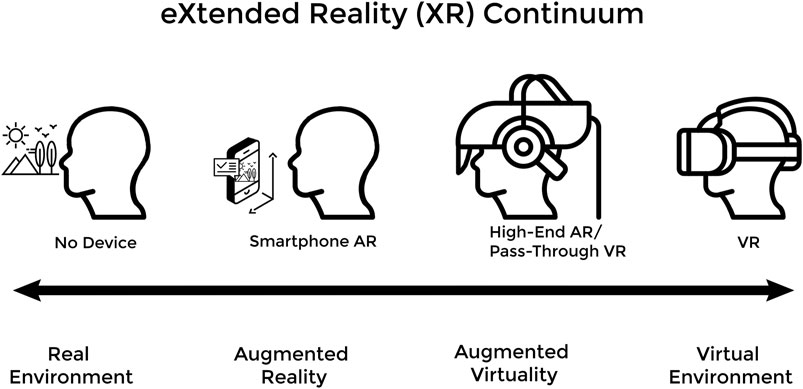
In the ever-evolving landscape of medical education, a new player has emerged, promising to revolutionize the way future doctors are trained. The integration of eXtended Reality (XR) technologies is reshaping the educational landscape by addressing the limitations of traditional methods.

Genetic Testing: A New Dawn in Healthcare

Genetic testing represents more than just a scientific advancement; it signifies a fundamental shift in how we approach health and wellness.

Sustainable Architecture: Blending Innovation with Ecological Responsibility

The journey toward sustainable architecture is ongoing, with each project serving as a beacon of what's achievable when creativity meets ecological awareness.

By |December 9, 2024|Categories: Architecture, Article, Sustainability|Tags: |0 Comments

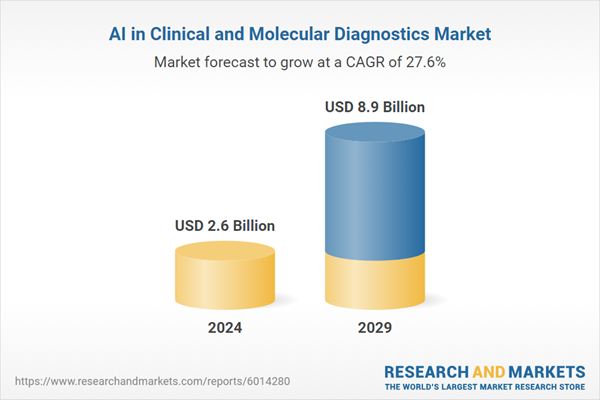
AI in Clinical and Molecular Diagnostics: A Market on the Rise

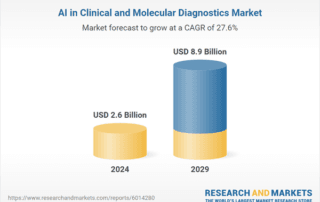
AI in Clinical and Molecular Diagnostics Market is set to experience remarkable growth, projected to surge from USD 2.6 billion in 2024 to USD 8.9 billion by 2029. This growth is driven by the integration of advanced AI technologies such as machine learning and deep learning into traditional diagnostic methodologies like imaging, genomics, and laboratory testing.

AI: A Revolution in Healthcare’s Future

AI is not a distant dream but a present reality, already integrated into everyday life through virtual assistants like Alexa and Siri. AI shows promise in enhancing medical accuracy, such as in predicting mesothelioma survival and improving colonoscopy accuracy, it is not intended to replace healthcare professionals.