California’s Real Estate: A Market on the Cusp of Transformation
The real estate landscape in California is bracing for a seismic shift over the next five years. With population growth, evolving economic conditions, and housing supply challenges at the forefront, the market is on the brink of significant transformation. As detailed in a recent report by Norada Real Estate Investments, these factors are set to shape the Golden State’s housing market from 2024 to 2029.
The Inventory Impasse
California’s chronic housing shortage remains a pressing issue. The limited availability of land, coupled with stringent regulations and lengthy permitting processes, has stifled new construction. This scarcity, particularly in affordable housing, is expected to persist, posing a challenge to the market’s growth.
Price Predictions and Interest Rates
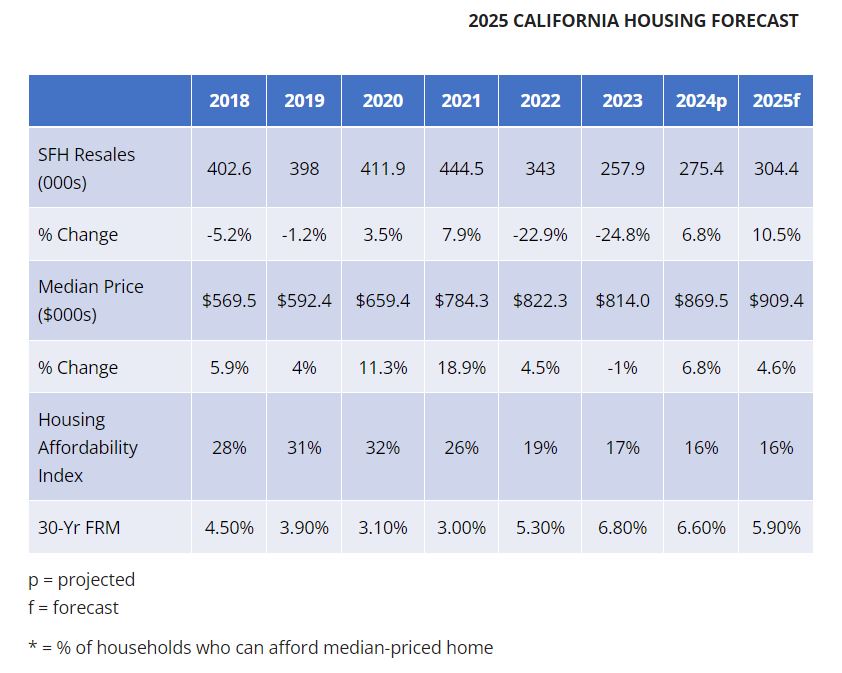
Forecasting home prices is akin to peering into a murky crystal ball. The California Association of Realtors (C.A.R.) projects a modest 6.2% increase in the median home price for 2024, reaching $860,300. Over the next five years, experts anticipate a price appreciation of 15% to 25%, though regional variations are expected. Areas with robust job markets and limited housing stock may see price hikes outpacing the national average.
Interest rates, a critical factor in affordability, are predicted to decline from 6.7% in 2023 to 6.0% in 2024, potentially sparking renewed buyer interest. The Federal Reserve’s monetary policy, however, remains a significant wildcard in this equation.
Emerging Trends and Regulatory Changes
The California housing market is more than just numbers. Emerging trends such as the rise of iBuyers, shifting demographics, and technological innovations are reshaping the landscape. Millennials and Gen Z are influencing development patterns with their preference for walkable neighborhoods and proximity to amenities.
Policy changes also loom large. Rent control debates continue, with potential implications for both affordability and investment in new rental properties. Regulations on short-term rentals like Airbnb could tighten, impacting both the rental inventory and the tourism industry.
The Road Ahead
As we look to the future, the California housing market presents a cautious yet optimistic outlook. While challenges around affordability persist, the anticipated decrease in interest rates and a slight boost in housing inventory offer a glimmer of hope. For prospective buyers and sellers, staying informed and adaptable will be key to navigating this ever-evolving landscape.
For further insights, explore California Housing Market Predictions 2025 and Will Housing Prices Drop in 2025 in California?.
More Articles
Getting licensed or staying ahead in your career can be a journey—but it doesn’t have to be overwhelming. Grab your favorite coffee or tea, take a moment to relax, and browse through our articles. Whether you’re just starting out or renewing your expertise, we’ve got tips, insights, and advice to keep you moving forward. Here’s to your success—one sip and one step at a time!
Commercial real estate is entering a decade of major transformation driven by interest rate pressures, evolving work culture, rapid proptech innovation, and growing demand for AI-focused infrastructure. While the global CRE market is projected to reach $133.5 trillion by 2028, rising rates, shifting office demand, and increasing sustainability requirements are reshaping how professionals invest, manage, and develop properties. By 2030, the biggest opportunities will center on mixed‑use conversions, data center growth, premium office spaces, and ESG‑driven upgrades.
The National Association of Realtors’ landmark antitrust settlement is transforming how real estate agents negotiate compensation, work with buyers, and handle transparency in transactions. With MLS‑posted buyer‑broker commissions eliminated and written buyer agreements now required, both consumers and professionals are navigating a new, more transparent landscape. While commission levels have only dipped slightly, the real shift is in how openly compensation is discussed and negotiated—creating new challenges and opportunities for agents who adapt quickly.
Artificial intelligence is no longer a novelty in real estate — 2025 marks its breakthrough year as a dependable pillar of the proptech industry. With investors pouring capital into AI‑powered forecasting, security, automation, and property management tools, the sector is shifting from experimentation to full‑scale adoption. Brokerages, developers, and institutional players now rely on AI to streamline due diligence, enhance market modeling, reduce risk, and optimize building operations. As adoption accelerates, professionals who understand and leverage these technologies are gaining a decisive competitive edge in fast‑moving markets like Florida.
A new episode of Current Account breaks down why the insurance industry is heading into 2026 with more uncertainty — and more opportunity — than ever. From shifting global regulations and rising catastrophe risks to FSOC’s evolving role in the U.S., industry leaders Jérôme Haegeli and Philippe Brahin explain how insurers are being pushed to rethink strategy in real time. With global premium growth expected to slow and regulatory pressures rising, professionals in insurance and financial services are turning to education and new skills to stay ahead in a rapidly changing market.
New Jersey is quietly becoming one of the hottest commercial real estate markets in the nation, with Jersey City and North Jersey breaking into the top 10 in PwC’s 2026 Emerging Trends report. Fueled by redevelopment momentum, data‑center demand, mixed‑use transformations and a surge in health‑care projects, the state is drawing major investors while still battling rising construction costs and municipal fatigue. For real estate professionals, the Garden State’s evolution signals fresh opportunity—and a market worth watching closely heading into 2026.
The National Council of Insurance Legislators is pushing back against President Trump’s new executive order on artificial intelligence, arguing that it threatens decades of state‑based insurance oversight. NCOIL leaders say federal attempts to centralize AI authority could disrupt markets, weaken consumer protections, and limit states’ ability to innovate—setting the stage for a significant legal and political battle with major implications for insurance professionals who rely on AI‑driven tools and regulatory clarity.