Central Bank Digital Currencies: Bridging Innovation and Stability
In a world increasingly dominated by digital innovation, the emergence of central bank digital currencies (CBDCs) marks a pivotal evolution in the financial sector. Unlike traditional money, CBDCs offer a digital alternative that is both backed and issued by national central banks, combining the benefits of digital transactions with the stability of government-backed currency. Understanding the depth and breadth of CBDCs is crucial for financial experts navigating the future of finance.
The Evolution of Money and Introduction of CBDCs
Money has seen significant transformations over the centuries, evolving from barter systems to banknotes and now to digital banking. CBDCs represent the next step, aiming to modernize financial services to be more resilient and inclusive. Central banks like the European Central Bank and the Federal Reserve are exploring CBDCs to stay at the forefront of technological innovation while safeguarding monetary sovereignty.
Technological Underpinnings
CBDCs are digital currencies issued by central banks that hold legal tender status, bridging the gap between digital and physical economies. While some countries opt for blockchain technology to leverage decentralization, transparency, and security, others prefer a centralized approach to maintain tighter control. Key technological considerations for CBDCs include:
Scalability: Ensuring the system can handle large volumes of transactions.
Security: Implementing robust defenses against cyber threats and fraud.
Interoperability: Facilitating seamless integration with existing financial technologies.
Privacy: Balancing transparency with individual rights to privacy.
Worldwide Implementation Efforts
Different nations have taken unique approaches to deploying CBDCs, reflecting their diverse economic contexts and objectives:
Sweden’s E-krona: Developed in response to dwindling cash usage, aiming to secure public access to trusted money in a digital format.
China’s Digital Yuan: Part of a broader initiative to increase China’s influence in the global financial system.
Eastern Caribbean’s DCash: Implemented to improve financial accessibility and resilience in a region prone to natural disasters.
Advantages of CBDCs
CBDCs offer numerous advantages, including:
Efficiency: Streamlining payments and settlements, enhancing economic activity and reducing transaction costs.
Financial Inclusion: Providing a gateway for financial services to populations typically outside the banking system.
Reduced Operational Costs: Digital formats decrease costs related to printing, distributing, and securing physical currency.
Monetary Sovereignty: Helping countries assert control over their monetary systems.
Stability: Offering a secure alternative to private digital currencies and volatile cryptocurrencies.
Economic and Market Implications
The implementation of CBDCs could significantly impact monetary policy and financial stability. By providing central banks with a new tool for conducting monetary policy, CBDCs could enhance control over the money supply and interest rates. They may also influence the banking system by providing individuals with direct access to the central bank’s resources, potentially reducing transaction costs and increasing speed.
CBDCs carry significant implications for the global financial marketplace, including:
Banking Sector Dynamics: With the potential to hold funds directly with the central bank, consumers might choose CBDCs over traditional bank deposits.
International Trade: Facilitating easier and cheaper cross-border transactions, potentially reshaping economic engagement.
Innovation and Competition: Spurring innovation within the private sector, pushing financial institutions to enhance their service offerings.
Despite the potential benefits, CBDCs raise significant issues, particularly regarding privacy and data security. Ensuring a CBDC system is secure against cyberattacks while maintaining user privacy is a complex challenge.
Regulatory and Policy Frameworks
The successful rollout of CBDCs will require comprehensive regulatory frameworks to address potential risks and ensure smooth operation. These frameworks need to tackle issues related to cybersecurity, privacy, legal tender status, and international cooperation.
As digital currencies become more integrated into the global financial system, they may offer a more inclusive and efficient financial framework but will require careful implementation to balance innovation with stability. CBDCs present a profound opportunity to enhance financial transactions, promoting greater efficiency, inclusivity, and stability. However, their successful integration demands careful consideration of technological choices, impact assessments on existing financial structures, and robust regulatory measures.
The information provided here is not investment, tax, or financial advice. You should consult with a licensed professional for advice concerning your specific situation.
More Articles
Getting licensed or staying ahead in your career can be a journey—but it doesn’t have to be overwhelming. Grab your favorite coffee or tea, take a moment to relax, and browse through our articles. Whether you’re just starting out or renewing your expertise, we’ve got tips, insights, and advice to keep you moving forward. Here’s to your success—one sip and one step at a time!
A growing share of American homeowners now carry mortgage rates above 5%—a dramatic shift that’s reshaping refinancing, inventory, and buyer behavior nationwide. With more than 30% of borrowers locked into rates over 5% and 20% above 6%, the market is split between owners holding on to low pandemic‑era loans and new buyers taking on higher‑rate mortgages. Federal efforts to push rates down could unlock millions of refinancing opportunities, while buyers see only modest monthly savings. For real estate professionals, understanding these rate dynamics is crucial as they increasingly drive inventory levels, affordability, and market activity.
New Moody’s data shows commercial real estate deal volume slipped 20% in December, marking a second monthly decline. Yet the full year tells a different story: 2025 ended with a 17% gain, signaling a quiet but resilient recovery. The biggest surprise came from the office sector, which posted a 21% jump in activity as return‑to‑office trends and AI‑driven job growth boosted demand. Multifamily, retail, and alternative assets like data centers also saw strong momentum, giving real estate professionals a market full of fresh opportunities heading into 2026.
Florida drivers and industry professionals are heading into 2026 with good news: auto insurance rates are dropping across the state as the market shows strong signs of stabilization. USAA leads the latest wave with a 7% average rate decrease expected in May 2026, saving members more than $125 million annually. They join several major insurers — including State Farm, Progressive, AAA, Allstate, and Florida Farm Bureau — all approving significant reductions. Officials credit recent legislative reforms, especially tort reform, for the improved loss ratios and renewed insurer confidence. With both auto and home insurance markets strengthening, Florida’s real estate, mortgage, and insurance professionals can expect more consumer confidence, smoother transactions, and expanding career opportunities.
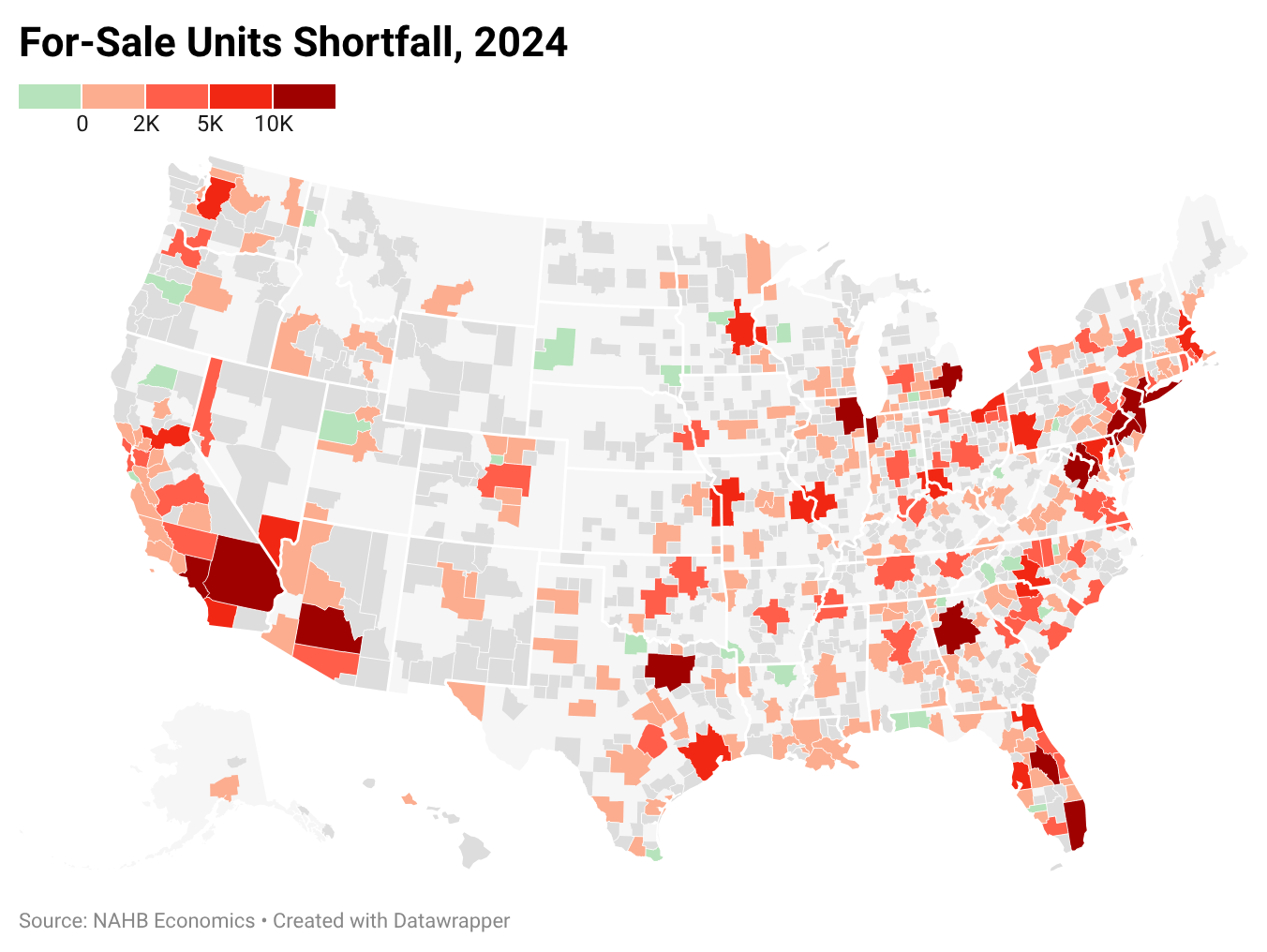
New data from Eye On Housing and the NAHB shows the U.S. remains short more than 1.2 million housing units, keeping pressure on both rents and home prices. Record‑low vacancy rates, slow single‑family construction, and restrictive zoning continue to fuel intense competition in 2024. Major metros like Chicago, New York, and Atlanta face some of the deepest deficits, and the true nationwide shortfall may be even higher when accounting for overcrowding and aging homes. For real estate professionals, the ongoing shortage means sustained demand, tighter inventory, and major opportunities for those who understand the evolving market.
Top real estate coach Jason Pantana says the divide between agents today isn’t about who has “tried” AI — it’s about who is immersed in it. In a new HousingWire interview, he explains why AI isn’t a gimmick but a full business system that amplifies output, improves authenticity, and reshapes how clients search for agents. From prompt mastery to AI‑driven visibility on Google, Pantana reveals how agents who commit even 15 minutes a day to learning AI are already outperforming those who hesitate.
Dallas–Fort Worth’s commercial real estate market closed 2025 with a split personality. Industrial dominated with massive new deliveries and soaring leasing demand, retail held steady with some of the market’s strongest fundamentals in years, and office continued to falter under remote‑work pressures. High vacancies, weak absorption, and rising demand for top‑tier space show the sector’s ongoing reset. Meanwhile, industrial and retail strength position the Metroplex for another powerhouse year heading into 2026.

 The information provided here is not investment, tax, or financial advice. You should consult with a licensed professional for advice concerning your specific situation.