Citizens Insurance Recommends 2026 Rate Cuts: What Florida Property Professionals Need to Know
Big news for Florida homeowners and the professionals who serve them: Citizens Property Insurance Corp. is officially recommending rate reductions for many policyholders in 2026. If approved, this would mark the first decrease since 2015—a meaningful shift in a market that has endured years of turbulence.
A Rare Break for Florida Homeowners
After years of steep rate hikes, Citizens’ Board of Governors has voted to recommend a statewide average premium drop of 2.6% for personal‑line policies. According to Citizens’ official rate kit, nearly three out of five Floridians insured through Citizens may receive an average reduction of 11.5%—an estimated savings of $359.
“Critical reforms championed by Gov. Ron DeSantis and approved by the Florida Legislature have done what they were supposed to do: provide rate relief to policyholders and stability to the Florida market,” said Tim Cerio, Citizens’ President, CEO, and Executive Director.
Insurance Market Reforms Are Shaping the Future
Citizens officials attribute the proposed cuts to major regulatory reforms across Florida’s insurance landscape in recent years. These changes—designed to reduce frivolous litigation and increase market stability—have attracted 17 new insurance companies and reduced Citizens’ role as the state’s fallback insurer.
After peaking at a record-breaking 1.42 million policies in 2023, Citizens has now shrunk to 385,000 policies—its lowest total ever. More than 546,000 Floridians were transitioned to private insurers in 2024 alone.
Not All Counties Will See Decreases
While the announcement is promising, Citizens’ county‑by‑county report reveals that reductions will not be universal. Some counties may still experience increases depending on local risk factors, storm exposure, and claims trends.
What Happens Next?
The proposed rate decreases must now be formally submitted to the Florida Office of Insurance Regulation (OIR). Regulators will review the filings, hold public hearings, and determine final approval. If adopted, new rates would take effect on June 1, 2026.
Why This Matters for Real Estate & Insurance Professionals
Insurance pricing has a powerful impact on Florida’s housing affordability, buyer confidence, appraisal outcomes, and investor planning. For real estate agents, mortgage originators, inspectors, and insurance specialists, staying informed is more than smart—it’s essential.
That’s why thousands of professionals across Florida turn to Cameron Academy to keep their licenses current, sharpen their skills, and stay ahead of industry‑shaping changes like these.
For full original reporting, visit Florida Politics at
this link.
More Articles
Getting licensed or staying ahead in your career can be a journey—but it doesn’t have to be overwhelming. Grab your favorite coffee or tea, take a moment to relax, and browse through our articles. Whether you’re just starting out or renewing your expertise, we’ve got tips, insights, and advice to keep you moving forward. Here’s to your success—one sip and one step at a time!
In 2026, financial advisors are no longer just experimenting with AI — they’re relying on it. Once confined to back-office duties, AI now supports meeting prep, portfolio analysis, and even early-stage financial planning. Advisors say the tech is strengthening client relationships by freeing them from administrative overload, though entry-level roles like paraplanners may feel the squeeze as automation accelerates.
Cybercriminals are weaponizing AI to launch highly convincing email scams and system breaches across the mortgage industry, overwhelming lenders and servicers whose cybersecurity measures can’t keep up. With major companies already hit and regulation lagging behind, experts warn the sector—now considered critical infrastructure—must rapidly upgrade protections, collaborate on threat intelligence, and improve AI governance before the risks escalate further.
Escrow payments are quietly surging across the country as property taxes and insurance premiums spike—pushing many homeowners toward delinquencies and even foreclosure. New data from Cotality shows the sharpest increases hitting the South and Midwest, with Florida among the hardest‑hit states. Even with fixed mortgage rates, rising escrow requirements are driving monthly payments higher and threatening affordability heading into 2026.
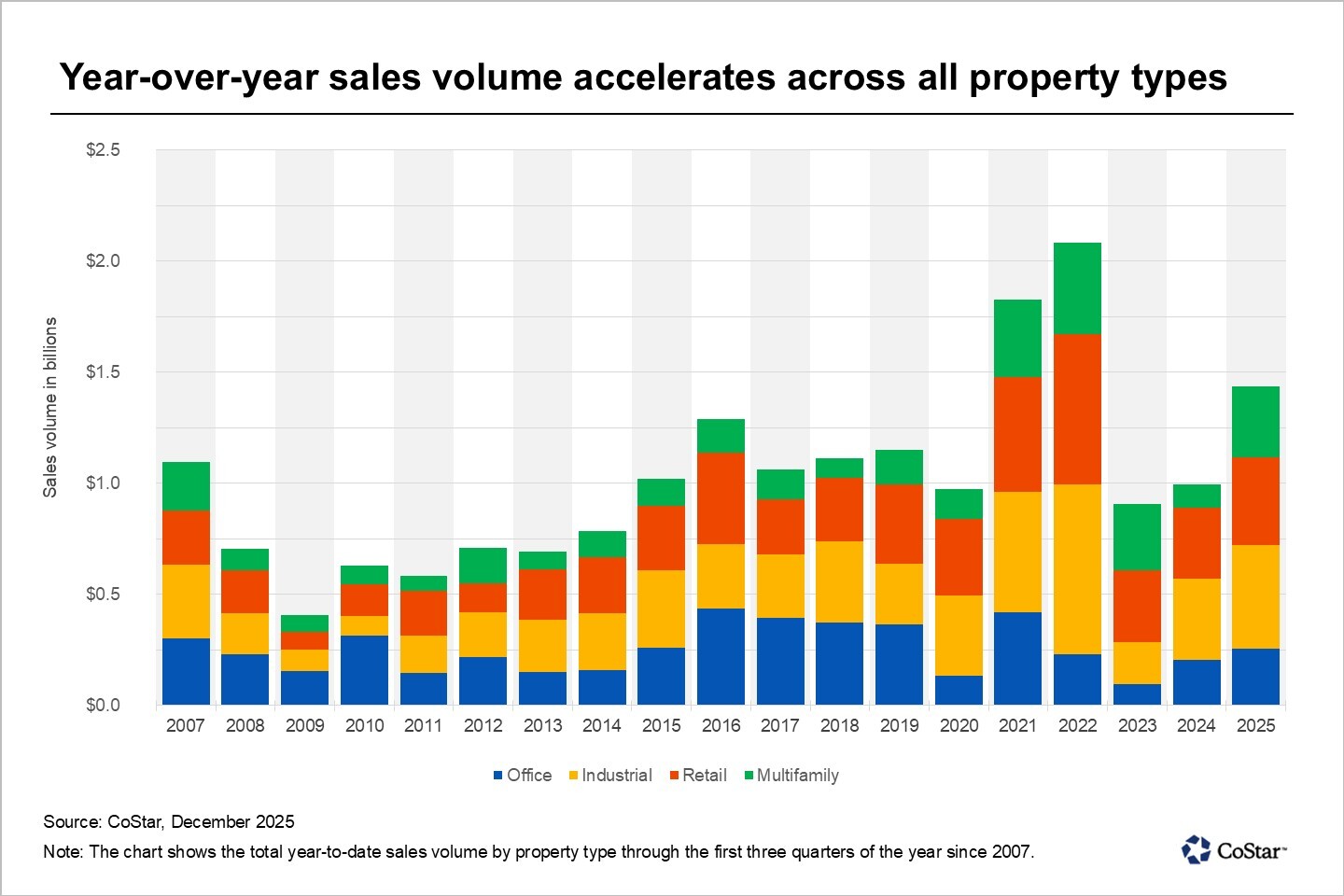
Milwaukee entered 2025 with renewed momentum, posting its strongest commercial real estate sales volume in three years. After a period of uncertainty and high capital costs, investors are returning with a sharper focus on quality assets, realistic pricing, and reliable cash flow. Activity is increasing across industrial, office, multifamily, and retail sectors, signaling a broad-based recovery fueled by stabilizing interest rates and improved market confidence.
As 2026 approaches, the title insurance industry is navigating a complex mix of market recovery, rising fraud threats, and sweeping regulatory changes. Industry leaders say the path forward centers on smarter technology, leaner operations, and stronger support for title agents. With AI-driven workflows, enhanced fraud prevention, and new compliance demands—including FinCEN’s expanded Geographic Targeting Orders—companies like Stewart and First American are reshaping how title work gets done. For real estate and mortgage professionals, the year ahead promises more automation, heightened standards, and major opportunities for those who stay ahead of the curve.
The real estate industry is undergoing a major transformation in 2025 as advancements in AI, proptech, blockchain, and data intelligence redefine how properties are marketed, valued, financed, and experienced. From instant digital valuations and immersive virtual tours to tokenized investments and predictive analytics, technology is reshaping every stage of the real estate lifecycle. Professionals who embrace these innovations—while maintaining the human expertise clients still rely on—will lead the next era of the industry.