Commercial Real Estate Deal Growth Stalls: What Professionals Need to Know for 2026
Image courtesy of Cameron Academy
Commercial real estate investors tapped the brakes in October, delivering the first year‑over‑year slowdown in nearly two years and raising new questions about pricing expectations, interest rates, and what 2026 might hold for dealmakers. According to a recent report from Mortgage Professional America, the drop reflects a deepening disconnect between buyers and sellers — one shaped by persistent rate pressure and policy uncertainty.
A Market Caught in a Stalemate
Kevin Fagan, head of CRE capital market research at Moody’s, described the shift as less of a downturn and more of a “stalemate.” After a year of strength — especially across industrial and multifamily sectors — October marked the moment when the U‑shaped recovery from 2023’s lows began dragging.
Despite the slowdown, the month still brought in approximately $24.4 billion in sales, roughly 70% of October 2019 levels and above 2024 volumes. Yet transaction momentum has cooled sharply since 2023 as the cost of capital reshapes underwriting standards and reduces leverage across CMBS structures.
Multifamily Pulls Back While Hotels Push Forward
Multifamily — the darling of early‑2025 dealmaking — saw volumes fall 27% year‑over‑year in October. Many properties still trade above historical pricing, showing that investors value stable, income‑producing assets but want clearer rate direction before making aggressive offers.
Hotels, however, are telling a different story. Hospitality was the only sector to post higher year‑over‑year growth, up roughly 6%. A standout example: the New York Edition hotel at 5 Madison Avenue, purchased by Kam Sang Company for $231.2 million — a striking case of adaptive reuse and revitalized demand.
Similar wins at properties like the Woolworth Building highlight how conversions continue breathing life into once struggling office assets.
Office Sector: Discounts, Distress, and New Demand Drivers
Office investors are navigating both tough realities and fresh opportunities. The sale of Sotheby’s headquarters to Weill Cornell shows how medical and life‑science tenants are becoming essential in filling outdated space. Meanwhile, New York Life’s acquisition of a distressed Manhattan tower at nearly half its 2015 pricing reveals institutional appetite for discounted yet promising assets.
These shifts hint at a potential floor forming for office valuations — not a rapid rebound, but a healthier stabilization as we approach 2026.
Commercial Mortgage Originations Surge
Even as deal flow cools, mortgage activity is heating up. The Mortgage Bankers Association reported a 36% year‑over‑year jump in commercial and multifamily mortgage originations during Q3 2025, driven by a remarkable 181% surge in office lending.
Still, today’s lending climate is “volatile” and “unpredictable,” with strong preferences for industrial and multifamily over troubled office space.
Why This Matters for Professionals — and How Education Helps
For real estate, mortgage, finance, and insurance professionals, this shifting environment demands sharper analysis, stronger financial literacy, and a deep understanding of capital and market cycles.
Cameron Academy provides industry‑leading training for real estate, mortgage, insurance, finance, and more. Whether you’re beginning your professional journey or sharpening competitive skills, continuing education gives you the edge needed to thrive in evolving markets.
As the market awaits clarity on rates, pricing, and risk, informed professionals will be first to identify — and capitalize on — emerging opportunities in 2026.
More Articles
Getting licensed or staying ahead in your career can be a journey—but it doesn’t have to be overwhelming. Grab your favorite coffee or tea, take a moment to relax, and browse through our articles. Whether you’re just starting out or renewing your expertise, we’ve got tips, insights, and advice to keep you moving forward. Here’s to your success—one sip and one step at a time!
The financial landscape in South Korea is poised for a seismic shift as KBank, a major digital bank, grapples with a legislative curveball. The bank, which is heavily reliant on deposits from Upbit, Korea’s dominant cryptocurrency exchange, is facing a potential profit squeeze. The new Virtual Asset User Protection Act, set to take effect on July 19, 2024, mandates that banks must pay interest on crypto exchange deposits, a move that could severely impact KBank's bottom line.
AI's ability to analyze vast amounts of data is paving the way for a profound change in medical diagnostics. Khosla predicted that AI could take over up to 80% of standard medical tasks, reducing errors and biases in human diagnosis. This is particularly evident in fields like radiology and pathology, where AI's proficiency in analyzing medical imaging allows for the early detection of diseases such as cancer, significantly improving treatment outcomes.
The COVID-19 pandemic has dramatically reshaped the housing market landscape, resulting in an unprecedented surge in home prices throughout the United States.
In a world where technology is rapidly evolving, artificial intelligence (AI) is proving to be a game-changer in the healthcare sector. AI-powered tools are improving patient outcomes, enhancing operational efficiency, and reducing costs, reshaping the very fabric of healthcare delivery.
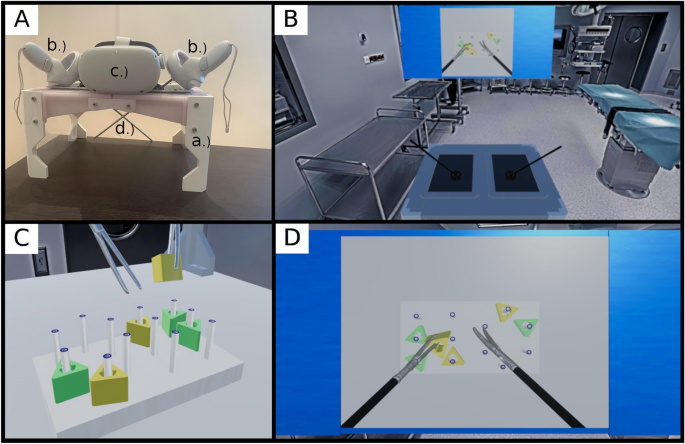
In a groundbreaking study published by Nature, researchers have unveiled a novel approach to surgical training using a low-fidelity virtual reality (VR) simulator enhanced with artificial intelligence (AI) for objective assessment. This pioneering method is poised to transform how medical students acquire laparoscopic skills, offering a cost-effective and efficient alternative to traditional training models.
AI in healthcare is projected to grow into a $188 billion industry worldwide by 2030, promising to revolutionize the field. From drug development to improved diagnostics, AI is already making significant strides, transforming medical practices and enhancing patient care efficiency.