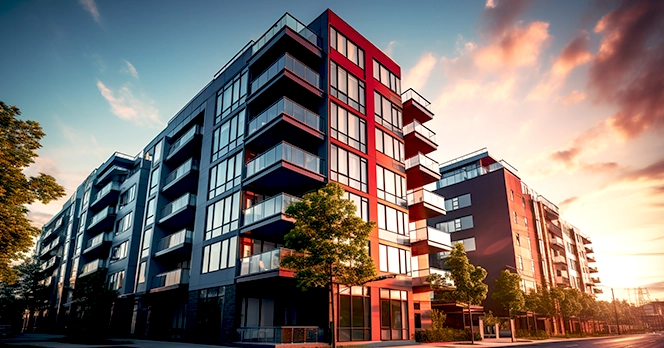
Commercial Real Estate Trends: Caution, Cool Spaces, and the Art of Rightsizing
If you’ve ever heard the phrase “location, location, location,” you know the rule. Today, that timeless real estate mantra has taken on a modern twist — especially in Maine, where companies are now using office location and design as strategic tools for attracting top-tier talent.
This insight comes from Jennifer Small, partner at Malone Commercial Brokers and vice president of MEREDA, who recently shared her market outlook during the Mainebiz Five on the Future forum. Mainebiz later followed up with her to dig deeper — and the trends she outlined paint a picture of a market cautiously preparing for what’s next.
A Shift Toward High‑Quality Spaces and “Rightsizing”
For companies trying to lure skilled graduates from competitive hubs like Cambridge, Massachusetts, the office’s surroundings have become a major selling point.
“Is it near places where they can do some shopping at lunch and go to a cool restaurant after work?” Small asked. Today’s workforce expects more from their environment — and businesses are adapting quickly.
Many companies are downsizing or “rightsizing” their spaces to match hybrid work realities. The emerging trend? Smaller, high‑quality offices with amenities that make employees genuinely want to come in.
“We’re seeing a lot of kitchens in offices that look like a Starbucks — very trendy,” Small added. It’s part of a broader flight to quality, where workspace evolves into an experience.
Downtown Strong, Suburban Spaces Not So Much
The downtown Portland office market remains solid, with vacancy around 9% — slightly higher than last year but still steady. Suburban markets, however, such as South Portland near the mall, show more noticeable vacancy over the last 12 to 24 months.
Single‑tenant users for large suburban offices? “Few and far between,” Small noted.
Lease rates have stayed stable, but landlords are offering more incentives: tenant improvement allowances, free rent periods, and creative deal sweeteners. Meanwhile, older buildings are being evaluated for adaptive reuse — ranging from residential to hospitality to mixed‑use concepts.
Industrial Market: From Pandemic Surge to Gentle Cooldown
Industrial real estate had one of the hottest runs of the last decade. Lease rates jumped from a long‑standing $3.50 per square foot to as high as $14. Now, the intensity is cooling slightly.
Vacancy has crept up to 3.4% from 2.6% last year, and demand — especially for larger industrial spaces — has slowed. Still, smaller spaces under 5,000 square feet remain in strong demand.
Inventory is sitting longer, Small said, though sales activity appears stronger than leasing as supply remains limited.
Developers Hesitate, but Multifamily and Hotels Show Promise
“If we’re seeing construction happen, it’s a strong indicator of confidence,” Small explained. But many developers are cautiously filing permits… then waiting. They’re watching construction costs and interest rates closely before taking the next step.
Still, there’s bright news: multifamily housing and hospitality projects continue to move forward. Small expects two to three new hotels — and noted she once believed Portland was “full” six hotels ago.
A Market Holding Its Breath for 2026
Across nearly every sector, one theme stands out: caution. Businesses are staying put, waiting for the market to clarify and watching interest rates closely.
“Stagnation and patience are the trends in real estate for 2026,” Small said.
For professionals navigating today’s shifting commercial landscape, understanding these trends is essential — and staying educated is more important than ever. Organizations like Cameron Academy continue to help professionals in real estate, mortgage, insurance, and finance stay ahead of industry shifts that shape tomorrow’s opportunities.
Getting licensed or staying ahead in your career can be a journey—but it doesn’t have to be overwhelming. Grab your favorite coffee or tea, take a moment to relax, and browse through our articles. Whether you’re just starting out or renewing your expertise, we’ve got tips, insights, and advice to keep you moving forward. Here’s to your success—one sip and one step at a time!
Data from 2023 forecasts a potential "Multifamily Real Estate Decline 2024" due to rising cap rates and slowed NOI. However, resources from Cameron Academy help real estate professionals navigate "Investment Risks in Multifamily Properties" through real-time, accurate insights.
Investing in real estate can be rewarding but finding the right financing can be challenging. One popular option is the BRRRR (Buy, Rehab, Rent, Refinance, Repeat) method, which involves purchasing distressed properties, renovating them, renting them out, and then refinancing to repeat the process. Traditional banks, private money lenders, portfolio lenders, and online lending platforms are all potential sources for BRRRR loans. Another financing option to consider is the DSCR (Debt Service Coverage Ratio) loan, which assesses the property's cash flow rather than just the borrower's income. DSCR loans are commonly used in commercial real estate investments and offer advantages like better cash flow assessment and flexibility for investors. However, they also come with drawbacks such as higher interest rates and stricter qualification requirements. Choosing the right financing option depends on investment strategy, financial considerations, qualification requirements, risk profile, and expert advice. By understanding the available options and considering individual circumstances, investors can select the financing option that aligns with their goals.
In this blog excerpt, we discuss the forecast for catastrophic declines in the multifamily market by the end of 2024. Factors such as market saturation, economic uncertainty, and changing lifestyle preferences among renters contribute to this forecast. Potential risks for investors include oversupply, economic volatility, and shifts in tenant demand. Thorough research, analysis, and seeking advice from professionals are crucial for navigating the multifamily market. Being knowledgeable and making informed decisions are key to successful investments in real estate. To get started in the industry, visit CameronAcademy.com for licensing in Real Estate, Mortgage, Insurance, or Finance.
In the world of mortgages, the debate between fixed rate and adjustable rate mortgages (FRM and ARM) rages on. FRMs provide consistency and protection against rising rates, while ARMs offer lower initial rates and flexibility. When choosing between the two, factors such as financial goals, economic conditions, time horizon, and risk tolerance must be considered. Ultimately, homeowners must weigh the pros and cons and seek professional advice before making a decision. After all, the right mortgage choice can have a lasting impact on one's financial well-being.
Navigating the complexities of the current housing market can be a daunting task for buyers and sellers alike. Affordability concerns, limited inventory, credit tightening, rising interest rates, and firming home prices are all factors contributing to the challenges in today's market. However, by conducting thorough research, partnering with knowledgeable real estate agents, planning for your budget and mortgage, seeking out alternative financing options, and being patient and flexible, you can overcome these obstacles. With perseverance, informed decision-making, and adaptability, success in real estate transactions can be achieved in any market environment.