Commercial Real Estate in 2026: A Year of Stabilization, Strategy, and Smart Opportunities
Commercial real estate is entering 2026 with a renewed sense of momentum — something investors, brokers, and seasoned professionals have been eagerly anticipating. According to a fresh analysis from
CNBC’s Property Play, the market is finally pulling away from a rocky 2025 and sliding into a more stable phase shaped by improved visibility,
price floors, and strategic capital flows.
For learners and professionals sharpening their edge through Cameron Academy — especially in real estate, mortgage, insurance, and financial licensing — these insights provide powerful
context for the opportunities ahead.
General Investment Outlook
2026 is showing cautious optimism. Research from Colliers, Cushman & Wakefield, KBW, and CoStar highlights an environment of “equilibrium” and “price stability”.
Deloitte’s survey of 850 CRE executives reveals that 83% expect revenue growth by the end of the year — a huge confidence boost.
Tap to Expand: Why Investors Are Shifting Strategies
Higher operating expenses and selective capital deployment continue to reshape investor strategy. And while growth expectations softened slightly from 2025, investor confidence remains stronger than in 2023.
Lenders and institutional players are gradually returning — meaning fresh opportunities for those positioned early.
Capital Markets Reawaken
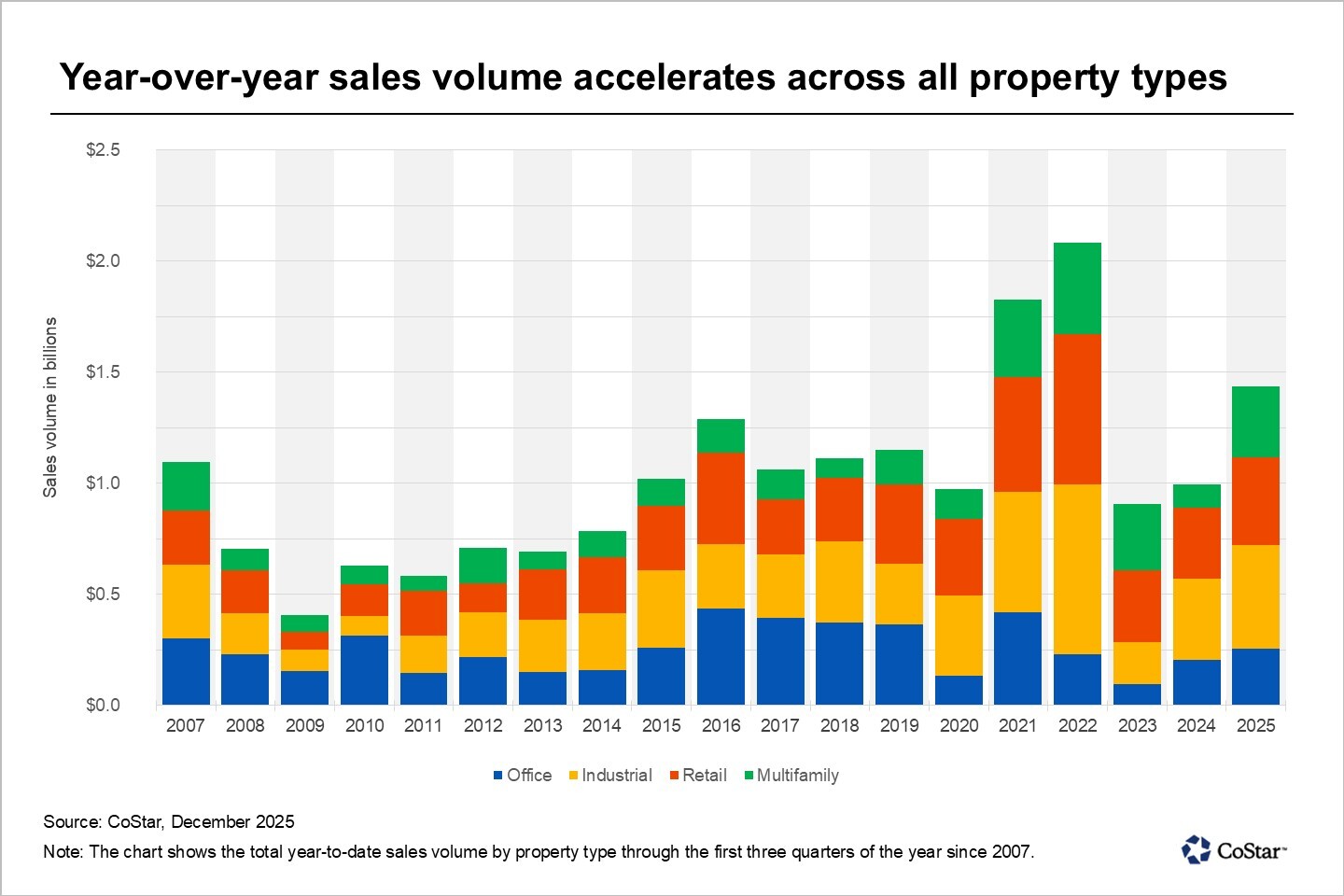
Colliers expects a 15%–20% rise in sales volume in 2026. CoStar adds that cap rates may decline as confidence gradually returns.
Bond markets are also showing renewed risk appetite — a promising combination for liquidity and deal‑making.
Tap to Expand: Key Capital Market Shifts
• Banks are easing restrictions on CRE loans.
• Q3 sales volume surged 40% year over year.
• Investors are moving cautiously, but steadily, back into risk‑on territory.
More liquidity means more competition — and more openings for skilled professionals.
After several turbulent years, office demand has finally found its floor. Vacancy rates are projected to fall below 18% as employers push toward premium, hospitality‑driven workspaces
designed for hybrid teams.
Growth hotspots include San Francisco, Austin, Atlanta, and Nashville.
Industrial Market
Industrial construction is down 63% from 2022, yet demand is roaring back thanks to reshoring, AI‑enhanced manufacturing, and massive data center growth. Net absorption could reach
220 million square feet.
Retail Market
Retail continues its evolution. Over 26 million square feet of retail was leased in previously non‑retail spaces in 2025. Brands like Starbucks, Chick‑fil‑A, and Jersey Mike’s
are leading the movement toward smaller footprints and high‑traffic walkable zones.
Tariffs may create pricing pressure, but consumer demand remains solid.
Multifamily & Data Centers
Multifamily rents are stabilizing as new supply floods key markets. Meanwhile, data centers have become the rockstars of commercial real estate — with some global markets reaching
100% pre‑leasing on new pipelines.
Still, zoning, financing, and local resistance could tap the brakes on future builds.
REIT Outlook
Although REITs underperformed in 2025, experts expect a strong rebound in 2026. PwC forecasts rising M&A activity as firms search for value.
Nareit also projects that pricing gaps between REIT markets and private CRE will narrow — setting the stage for potential investor gains.
What This Means for You
Commercial real estate is entering a smarter, more stable chapter — offering big opportunity for professionals who understand where the market is headed.
If you’re preparing for licensing or professional advancement through Cameron Academy, this is the perfect time to elevate your knowledge and strategy.
Special thanks to
CNBC’s Property Play
for their outstanding analysis and industry insights.
More Articles
Getting licensed or staying ahead in your career can be a journey—but it doesn’t have to be overwhelming. Grab your favorite coffee or tea, take a moment to relax, and browse through our articles. Whether you’re just starting out or renewing your expertise, we’ve got tips, insights, and advice to keep you moving forward. Here’s to your success—one sip and one step at a time!
In 2026, financial advisors are no longer just experimenting with AI — they’re relying on it. Once confined to back-office duties, AI now supports meeting prep, portfolio analysis, and even early-stage financial planning. Advisors say the tech is strengthening client relationships by freeing them from administrative overload, though entry-level roles like paraplanners may feel the squeeze as automation accelerates.
Cybercriminals are weaponizing AI to launch highly convincing email scams and system breaches across the mortgage industry, overwhelming lenders and servicers whose cybersecurity measures can’t keep up. With major companies already hit and regulation lagging behind, experts warn the sector—now considered critical infrastructure—must rapidly upgrade protections, collaborate on threat intelligence, and improve AI governance before the risks escalate further.
Escrow payments are quietly surging across the country as property taxes and insurance premiums spike—pushing many homeowners toward delinquencies and even foreclosure. New data from Cotality shows the sharpest increases hitting the South and Midwest, with Florida among the hardest‑hit states. Even with fixed mortgage rates, rising escrow requirements are driving monthly payments higher and threatening affordability heading into 2026.
Milwaukee entered 2025 with renewed momentum, posting its strongest commercial real estate sales volume in three years. After a period of uncertainty and high capital costs, investors are returning with a sharper focus on quality assets, realistic pricing, and reliable cash flow. Activity is increasing across industrial, office, multifamily, and retail sectors, signaling a broad-based recovery fueled by stabilizing interest rates and improved market confidence.
As 2026 approaches, the title insurance industry is navigating a complex mix of market recovery, rising fraud threats, and sweeping regulatory changes. Industry leaders say the path forward centers on smarter technology, leaner operations, and stronger support for title agents. With AI-driven workflows, enhanced fraud prevention, and new compliance demands—including FinCEN’s expanded Geographic Targeting Orders—companies like Stewart and First American are reshaping how title work gets done. For real estate and mortgage professionals, the year ahead promises more automation, heightened standards, and major opportunities for those who stay ahead of the curve.
The real estate industry is undergoing a major transformation in 2025 as advancements in AI, proptech, blockchain, and data intelligence redefine how properties are marketed, valued, financed, and experienced. From instant digital valuations and immersive virtual tours to tokenized investments and predictive analytics, technology is reshaping every stage of the real estate lifecycle. Professionals who embrace these innovations—while maintaining the human expertise clients still rely on—will lead the next era of the industry.